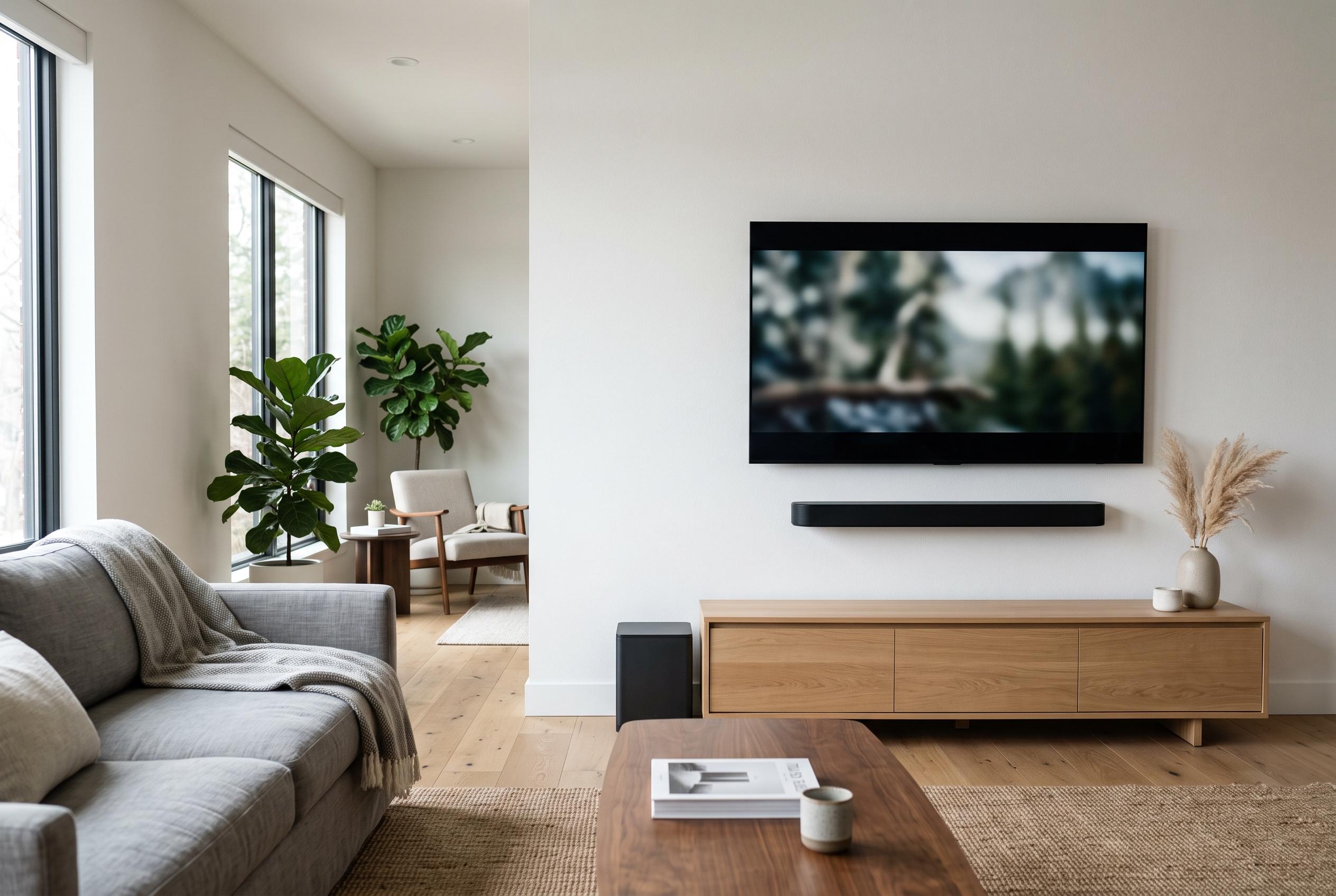

New wireless Dolby Atmos systems aim to simplify home theatre setups by removing cables and reducing installation complexity, offering a more seamless immersive sound experience for streaming and gaming enthusiasts.
Dolby Atmos Wireless is designed for people who want immersive television sound without turning the living room into a cable run. The appeal is straightforward: fewer visible connections, less disruption behind the TV cabinet and a simpler setup for streaming films, series and live sport. But the promise is not that every wire disappears. Power is still needed, and in many systems the wireless link only replaces the audio connection between the television and the soundbar.
At its core, Dolby Atmos is an object-based audio format. Rather than locking sounds into fixed channels, it places them in three-dimensional space so effects can move around the listener and above them. Dolby says the system can support up to 128 simultaneous audio objects in home mixes, which is why it is often associated with a more cinematic presentation than conventional stereo or standard surround sound. In practice, that extra height and movement are most noticeable with films and games, while the gain is usually smaller for casual viewing.
The wireless version changes the path from TV to soundbar. On compatible systems, the audio signal is sent without HDMI eARC, reducing clutter and making installation easier in already furnished rooms. That convenience is especially useful in streaming-first households, where most viewing now comes from services rather than physical discs. The practical advantage is not technical novelty so much as a cleaner fit with how people actually watch television.
Set-up is usually meant to be simple. The soundbar is powered on, the television detects it, and pairing is handled through on-screen prompts or the manufacturer’s app. Some systems also include automatic room calibration, adjusting playback for walls, reflections and speaker placement. Even so, placement still matters. A soundbar that is blocked in a cabinet or positioned poorly will not produce the same overhead effect as one placed centrally and left unobstructed.
There are limits. Wireless Atmos does not eliminate every cable, and it can be less suitable for users who rely on uncompressed audio from Blu-ray players or who want the most robust path for lossless sound. Interference from crowded home networks, routers and other connected devices can also affect reliability, which is why firmware updates and careful placement remain important. The market is moving towards more wireless home cinema products, but for now the system is still fragmented. Samsung has pushed hardest with its Wireless Dolby Atmos implementation on selected soundbars and recent televisions, while LG has built related features such as WOW Orchestra and WOWCAST into its newer TV and soundbar ranges. Other brands still commonly depend on HDMI eARC for Atmos playback.
Disclaimer: This content is intended for informational purposes only. Readers are advised to exercise their own judgement, conduct due diligence, or consult a qualified expert before acting on any information provided.