
EcoFlow’s Delta 3 Plus emerges as a versatile mid-sized portable power station, combining rapid charging, extensive ports, and uninterruptible power supply capabilities for both outdoor adventures and home backup, challenging existing market leaders.
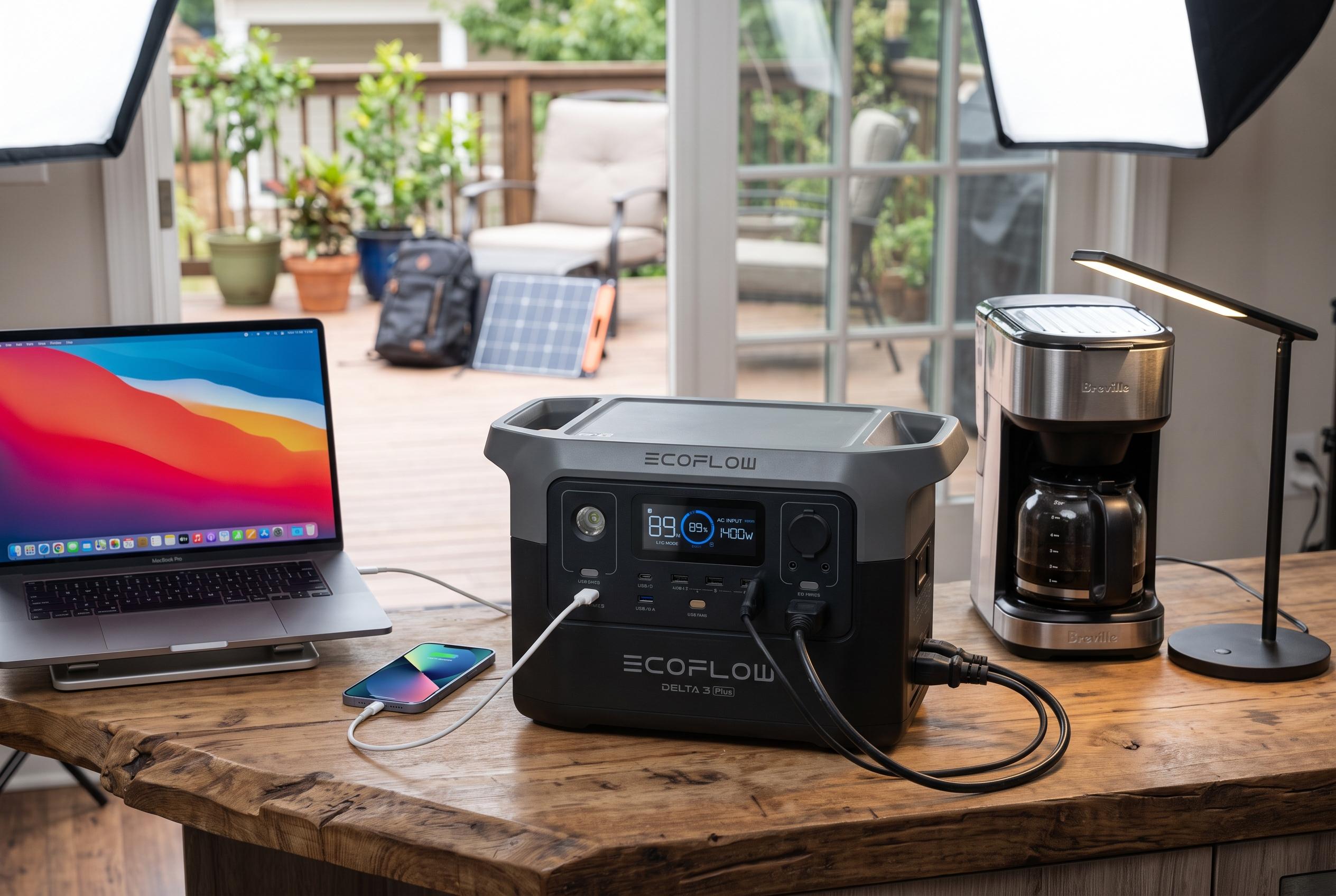
EcoFlow’s Delta 3 Plus sits in the middle of a fast-growing class of portable power stations that are increasingly used for both home backup and outdoor trips. According to EcoFlow, the unit pairs a 1,024Wh LiFePO4 battery with 1,800W of continuous output and a 3,600W surge rating, putting it in the same performance band as many mid-sized rivals. The company says it can recharge in about 56 minutes from AC power, while solar charging can reach up to 1,000W, making it a practical option for users who want fast turnaround as well as battery capacity.
Wired described the Delta 3 Plus as a stylish, compact unit with ports concentrated at one end, and said its dual XT60i solar inputs allow up to 1,000W of solar input in the right conditions. EcoFlow’s specifications also list six AC outlets, two USB-A fast-charge ports, two USB-C ports and two DC5521 outputs, while third-party retailer listings confirm the same core battery and output figures. The unit also doubles as an uninterruptible power supply, with a switchover time of less than 10 milliseconds, which matters for keeping sensitive electronics running during an outage. EcoFlow says the power station operates at about 30dB under a 600W load and weighs roughly 12.5kg.
That combination makes the Delta 3 Plus more versatile than many smaller portable batteries, though it is not the lightest option for hiking. Wired pointed readers seeking something more compact towards EcoFlow’s River 2 Pro, which has lower capacity and solar input but is easier to carry. For users who need a larger, more robust system, Wired also highlighted Anker’s 1,024Wh model and Goal Zero’s Yeti 1500, both of which are aimed at longer backup use or van life rather than short excursions.
The broader buying advice is cautious. Wired recommends steering clear of unfamiliar brands with few reviews and avoiding products that rely on proprietary ports or special adapters, because those can lock buyers into a narrow accessory ecosystem. It said brands such as Vtoman and Dabbsson had underwhelmed in testing. For readers choosing between solar generators, the key trade-offs remain the same: charging speed, usable output, port selection, portability and how closely the unit ties you to the maker’s own panels and cables.
Disclaimer: This content is intended for informational purposes only. Readers are advised to exercise their own judgement, conduct due diligence, or consult a qualified expert before acting on any information provided.