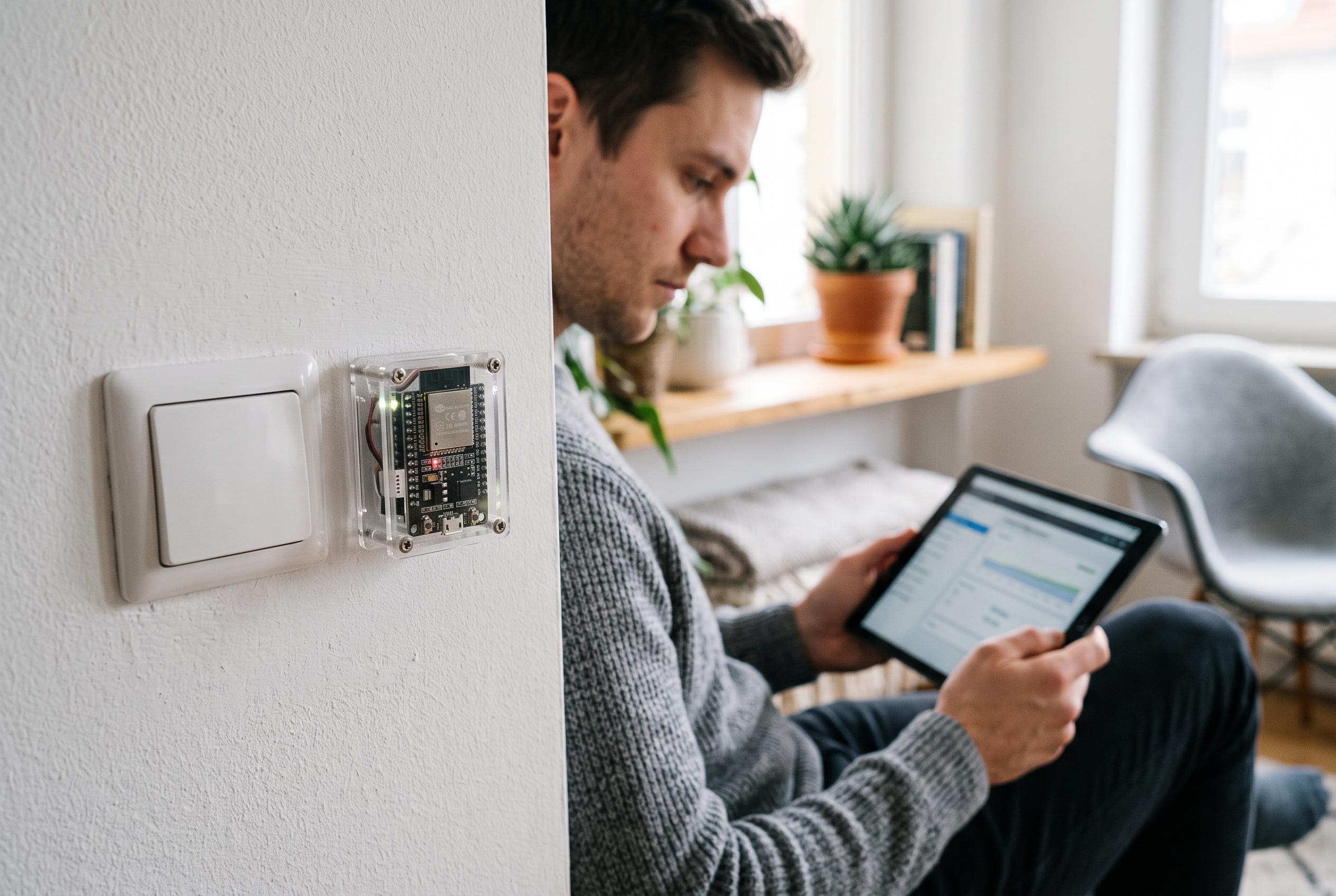

ESPHome lets beginners build locally controlled sensors, proxies and other smart home hardware by turning visual or configuration-based designs into firmware.
ESPHome has become a practical route into custom smart home hardware because it removes much of the low-level work that usually puts hobbyists off. According to ESPHome’s own documentation, the platform generates firmware for Wi-Fi microcontrollers from configuration files, then links those devices into Home Assistant for control, monitoring and over-the-air updates. The appeal is straightforward: users can focus on the device they want to build rather than writing embedded code from scratch.
That matters because boards such as the ESP32 are inexpensive, compact and widely used in home automation projects. They can host sensors, buttons and indicator lights, while the heavier logic sits elsewhere. ESPHome’s getting started guide explains that a device can be configured, flashed and then connected to Home Assistant without any C++ programming, which is a major shift for people who want custom hardware without a steep development burden.
For simpler projects, ESPHome also provides ready-made components that can be installed with little more than a compatible board and a USB cable. One common example is a Bluetooth proxy, which extends the range between Bluetooth devices and Home Assistant by placing the ESP32 closer to the accessory and relaying data over Wi-Fi. ESPHome’s project catalogue also includes options such as voice assistants, media players and infrared or RF proxies, widening the number of useful devices a beginner can attempt.
For more tailored builds, the visual Device Builder inside Home Assistant reduces the need to hand-write YAML. ESPHome’s documentation and third-party guides explain that users can choose the microcontroller model, add sensors or other hardware, and define actions through a graphical interface that automatically generates the configuration file. In practice, that means someone can create a temperature sensor, link a humidity threshold to an LED, and have the platform turn those choices into firmware ready to install.
The integration with Home Assistant is what makes the system especially flexible. ESPHome handles communication with the hardware, while Home Assistant manages the automation logic, so behaviour can often be changed without rebuilding firmware. That separation also supports local automation, which is attractive to users who want to avoid cloud dependency. For many home builders, that combination of simple setup, local control and broad hardware support is what makes ESPHome stand out.
Disclaimer: This content is intended for informational purposes only. Readers are advised to exercise their own judgement, conduct due diligence, or consult a qualified expert before acting on any information provided.