

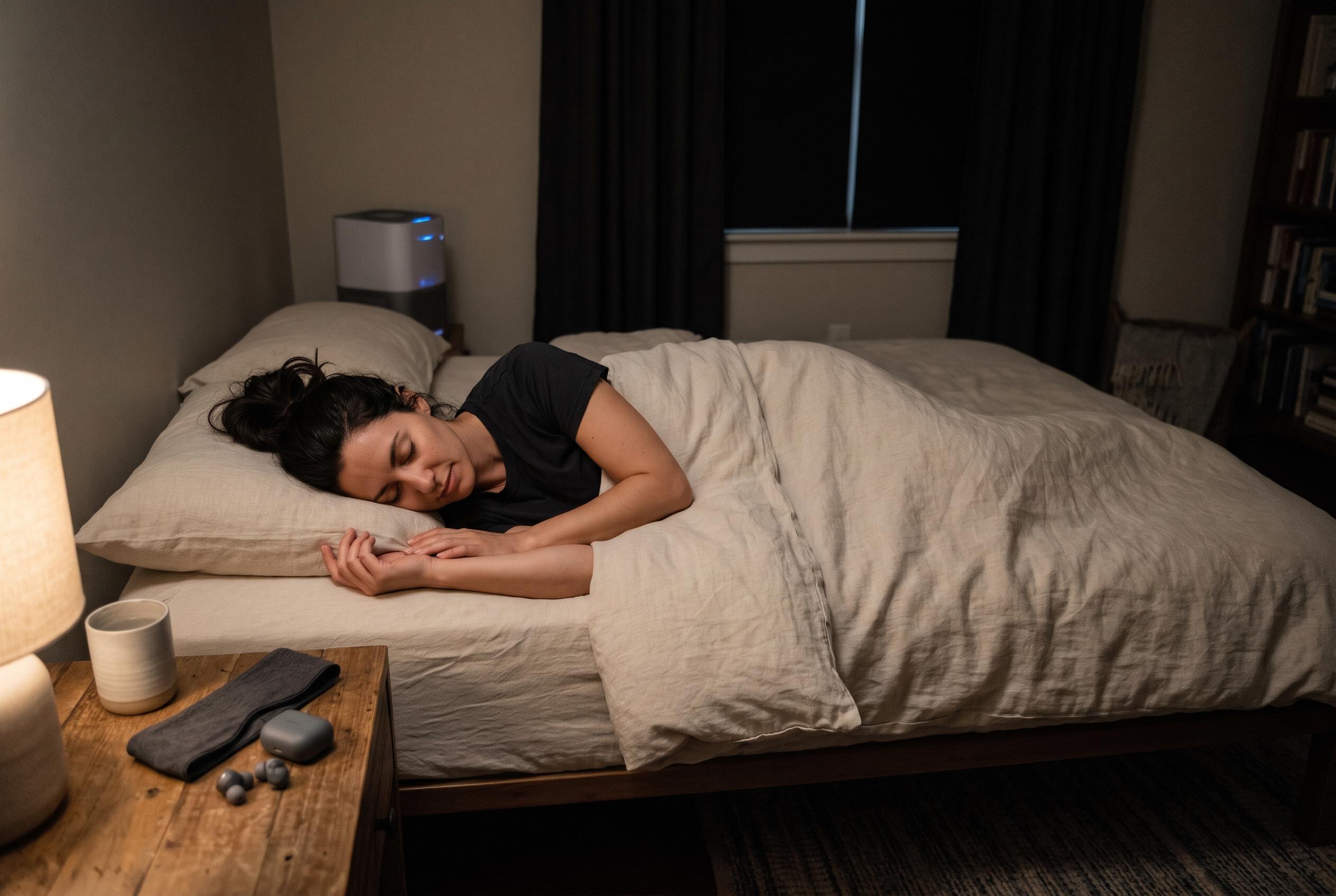

A new wave of devices aims to tackle the heat, noise and light that interrupt sleep, with options ranging from adaptive mattresses to sound-masking earbuds.
There is a familiar kind of wakefulness that arrives at 3am: the room is silent, the mind is not, and sleep feels further away with every glance at the clock. For many people, the problem is not restlessness alone but the bedroom conditions that keep breaking it. Heat, noise and early light can all turn a brief stir into a full wake-up, which is why a new generation of sleep gadgets is aimed less at dreaming and more at controlling the environment around the bed. According to Stuff’s feature and the manufacturers’ own product descriptions, the most useful devices are those that cool, muffle, darken or gently disguise the disturbances that pull people out of sleep.
At the high end, Eight Sleep’s Pod 6 is designed to make the bed itself adaptive. The company says the mattress cover can control each side of the bed separately, with temperatures ranging from 12°C to 43°C, and that its sensors can make repeated adjustments through the night based on the sleeper and the room. For couples, that split-zone approach matters as much as the temperature control itself. Eight Sleep also offers an add-on base that lifts automatically when it detects snoring, while the company positions the system as a way to tailor the sleep set-up rather than settle for one fixed room temperature.
BedJet takes a different approach by pushing conditioned air into the bedding rather than cooling the mattress from beneath. The company says the BedJet 3 can warm, cool and dry the bed, and its Biorhythm function allows users to programme different temperatures across the night. That is the key benefit for people who fall asleep comfortably but wake later feeling too hot or too cold. BedJet also says the system can be used with a remote control and offers a dual-zone version for couples who want different settings on either side of the bed.
For people kept awake by light as well as sound, the Manta SOUND Sleep Mask combines blackout coverage with built-in Bluetooth speakers. Manta says the mask uses C-shaped eye cups to reduce pressure on the eyes while blocking out light, and that its 5mm-thick speakers are intended to sit comfortably for side sleepers. The company also claims up to 24 hours of battery life at full volume and says the electronics can be removed so the mask can be washed. It is a straightforward idea, but a practical one: remove light leakage and add personal audio without filling the room with noise.
Anker’s Soundcore Sleep A20 is aimed at sleepers who do not want to wear bulky earbuds. The company describes the buds as light enough for side sleeping, with soft tips designed to improve passive noise blocking and masking sounds to cover whatever gets through. Soundcore also says the earbuds can switch from a podcast to sleep sounds once they detect that the wearer has dropped off, which is useful for anyone who wakes in the small hours and does not want a spoken-word programme to become part of the problem. Battery life is listed at up to 14 hours in Sleep mode, or 80 hours with the charging case.
Jabees’ PEACE Pillow Speaker is for those who dislike anything in their ears. The company presents it as an ultra-thin Bluetooth speaker that sits under the pillow and uses bone conduction to send audio through the pillow surface. That means rain noise, a podcast or an audiobook can be heard without a separate speaker waking a partner. It is a low-cost way to create a more private listening environment, and one that avoids the discomfort some people feel from sleep earbuds or headphones.
The most direct intervention on the list is the Elemind Sleep Headband, which the company says measures EEG brain signals and responds with precisely timed sounds intended to help the wearer fall asleep. Elemind describes the device as a non-drug way to break wakeful patterns, and it includes a back-to-sleep function that can restart the process if the user wakes during the night. The company says clinical studies found that 76 per cent of participants fell asleep faster, with an average improvement of 48 per cent, although it also notes that availability is currently limited to the United States and Canada.
Ozlo’s Sleepbuds 2 sit somewhere between a masking device and a sleep monitor. The company says the tiny earbuds use soft silicone tips to block sound, while masking audio fills in what remains. Ozlo also says the battery lasts up to 14 hours, which is enough for a full night, and that the charging case carries sensors for noise, temperature and light. Those readings feed into the app, which is meant to help users work out what is actually disturbing their sleep over time. For people trying to identify whether the culprit is traffic, a heating system or a partner’s snoring, that kind of data may be as useful as the earbuds themselves.
None of these products can stop intrusive thoughts at 3am, but they can reduce the most common physical triggers for broken sleep. The clearest pattern is that the best devices do not simply promise rest; they try to control temperature, noise and light with enough precision that the bedroom becomes easier to sleep in rather than merely a place to collapse. For people who wake repeatedly in the middle of the night, that distinction may be the difference between staring at the ceiling and actually getting back to sleep.
Disclaimer: This content is intended for informational purposes only. Readers are advised to exercise their own judgement, conduct due diligence, or consult a qualified expert before acting on any information provided.



