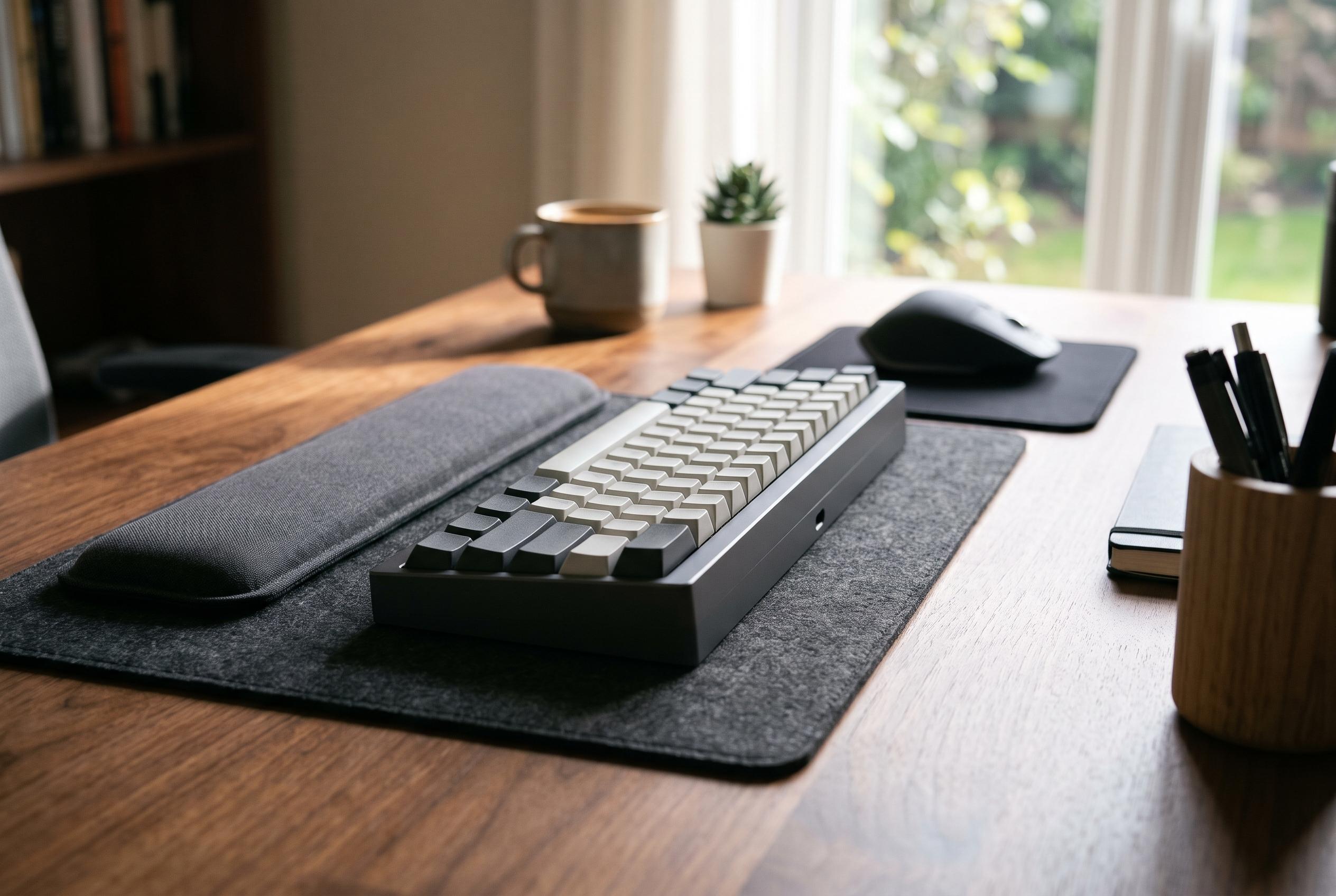

The compact G-LAB Keyz Elite 300 GRG combines triple-mode connectivity, a gasket-mounted design and hot-swappable switches in a versatile mechanical keyboard that prioritises comfort over competitive gaming features.
The G-LAB Keyz Elite 300 GRG sits in a part of the mechanical-keyboard market that is often crowded with compromise. It is not trying to be an elaborate premium model, and that restraint is precisely what defines it. Xataka’s review describes a compact 75 per cent layout with wireless and wired use, pre-lubricated linear switches, a gasket-mounted frame and PBT keycaps, all aimed at users who want a practical keyboard that feels more refined than its price might suggest. According to the review, the result is a board that is well suited to everyday writing, casual play and mixed-device use without demanding a large investment.
The specification sheet supports that positioning. The official product page says the keyboard offers triple-mode connectivity through 2.4 GHz wireless, Bluetooth and USB-C, alongside hot-swappable switches, double-shot PBT keycaps, RGB lighting and macro support. It is also listed as compatible with Windows and Mac, while the launch coverage from Geektopia adds that the board uses an 83-key 75 per cent layout and measures 337 mm by 142 mm by 43 mm. That combination makes it clear the device is designed to save desk space without abandoning arrow keys or the function row.
In practice, Xataka reports that the keyboard’s plastic construction is simple rather than luxurious, but still feels solid enough for its category. The same review highlights the gasket structure, which separates the plate from the shell using multiple layers and helps produce a softer typing feel. That matters because the Keyz Elite 300 GRG is not only compact; it is also intended to be quiet and comfortable over long sessions. Customer feedback on LDLC broadly matches that impression, with reviewers praising its responsiveness, design and lighting modes, while one notes that the lack of a numeric keypad is simply part of the format rather than a fault.
Performance appears to be pitched at mainstream users rather than competitive players. Xataka says the board runs at up to 1,000Hz, supports full NKRO and avoids ghosting, which should be more than enough for general gaming and everyday typing. The review also notes that the linear switches feel smooth and that the keyboard’s silent character is one of its strongest qualities. At the same time, the product is not positioned as a high-end esports tool: it lacks the adjustable actuation and rapid-response features increasingly found on magnetic gaming keyboards, so players who want precise per-key customisation will need to look elsewhere.
Battery life and extra controls round out the package. The manufacturer says the 4,000mAh battery can last for up to 80 hours, and Xataka’s testing suggests that figure is credible in real-world use, even with lighting enabled. The review also points to a multimedia dial, 12 shortcut functions and a useful accessories bundle that includes a keycap puller and spare switches. Software remains the weakest part of the experience: it can handle lighting and macros, but Xataka describes it as dated and awkward to access. Even so, at €89.99, the Keyz Elite 300 GRG appears to offer a balanced set of features for buyers who want an uncomplicated, versatile mechanical keyboard rather than a heavily tuned gaming model.
Disclaimer: This content is intended for informational purposes only. Readers are advised to exercise their own judgement, conduct due diligence, or consult a qualified expert before acting on any information provided.