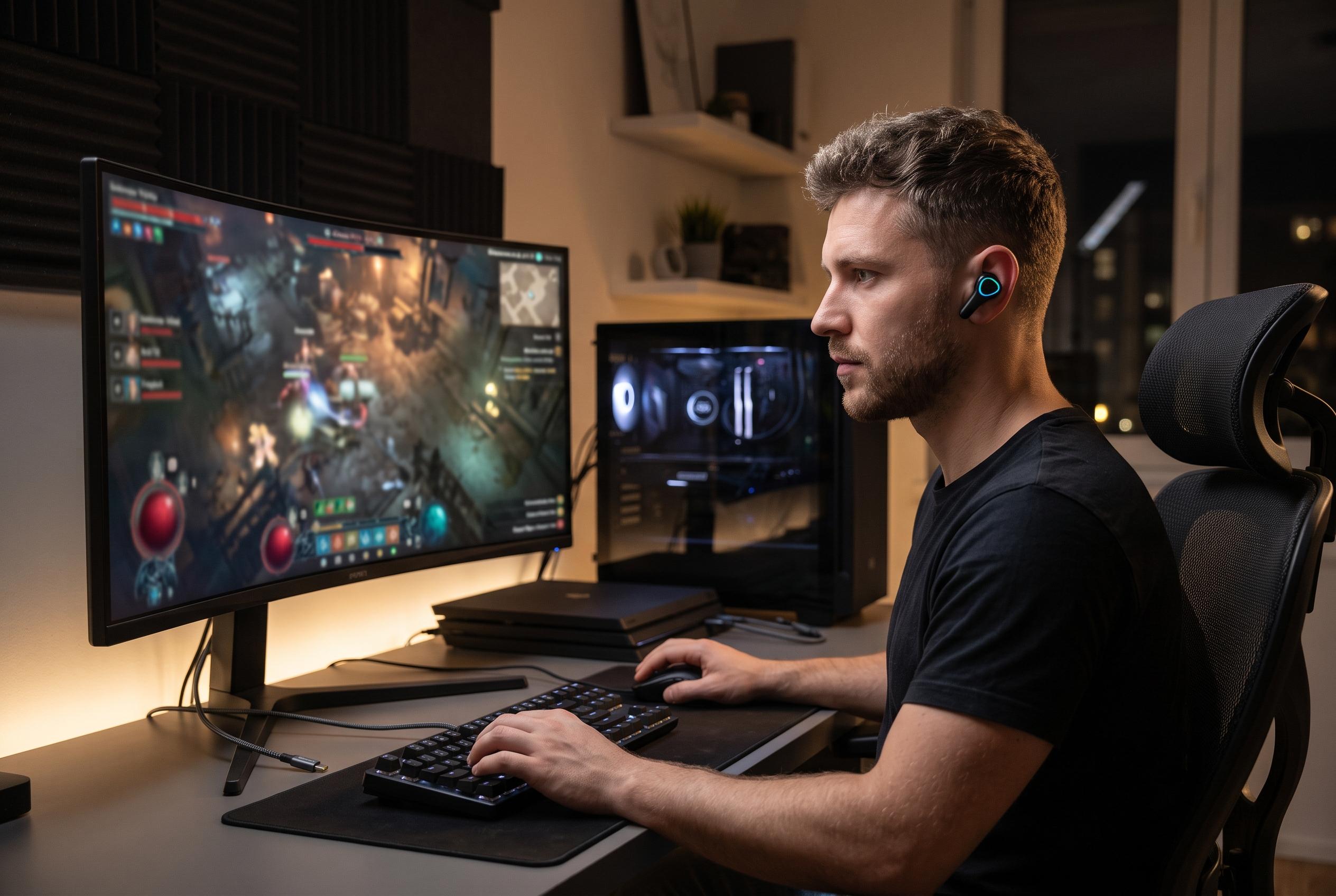

Specialist reviewers confirm gaming earbuds’ shift from gimmick to essential, prioritising low-latency wireless links, comfort, and cross-platform compatibility, with SteelSeries leading the charge and Sony maintaining a strong PS5 focus.
By 5 September 2026, the argument over whether gaming earbuds are a gimmick has largely been settled by specialist reviewers: they are now a serious category, especially for PC and handheld players, provided they use a low-latency wireless link rather than relying on ordinary Bluetooth alone.
That change has been driven less by fashion than by connection technology. Recent guides increasingly distinguish between mainstream wireless earbuds and gaming models that add a 2.4GHz USB-C transmitter or a dedicated game mode. For PC users, and for owners of handhelds such as the Steam Deck and ROG Ally, that matters because delay can blur directional cues, while many buyers still want the same pair to double as everyday earbuds for music, calls and commuting.
SteelSeries has emerged as the clearest beneficiary. TechRadar now ranks the Arctis GameBuds as the best overall option, while PC Gamer calls them the best wireless gaming earbuds and says they can come surprisingly close to over-ear sound once the EQ is tuned properly. WIRED, which reviewed them in November 2024, highlighted the low-profile USB-C dongle stored inside the case, more than 10 hours of battery life from the buds and up to 40 hours with the case, and nearly 200 game-specific profiles. Its verdict was blunt: “My gaming headset is all but useless now.” GamesRadar was similarly emphatic, describing the same model as “everything I’ve ever wanted from a set of gaming buds” and arguing that the £159.99 price buys one of the most complete feature sets in the segment.
The attraction is not only the feature list. Reviewers describe a combination of comfort, useful software and unusually broad platform support that few rivals match. GamesRadar says the buds weigh 5.3g each and sit flush enough to fade away during longer sessions. WIRED found the transparency mode notably effective and said the 2.4GHz link removed the lag it notices on Bluetooth audio. Even so, the praise is not unconditional. Some SteelSeries profiles can sound too sharp, TechRadar says third-party foam tips may improve fit, and RTINGS argues that Sony’s rival earbuds have stronger active noise cancelling, better microphone noise handling and longer continuous battery life.
For players whose priorities centre on PlayStation 5 and PC rather than maximum flexibility, Sony’s INZONE Buds remain a specialist choice. TechRadar still names them the best gaming earbuds for PS5 and says Sony’s claim of 12 hours from the buds plus 24 hours from the case held up in testing. RTINGS adds the technical context that makes them more interesting than a simple console accessory: these were Sony’s first wireless earbuds designed specifically for gaming, they use the same drivers as the WF-1000XM5, and their sound favours upper-bass detail in a way that can make footsteps stand out even if explosions carry less physical weight.
The complication with Sony is compatibility. TechRadar presents the INZONE Buds as suitable for PS5, PC and mobile use, but RTINGS says that mobile pairing is straightforward only on devices that support Bluetooth LE Audio and the LC3 codec. On many phones, tablets and laptops, the included USB-C transmitter is effectively mandatory. That is a manageable trade-off for desk gaming or console play, but it makes the Sony set less universal than it first appears.
ASUS’s ROG Cetra True Wireless SpeedNova sits between those two approaches. RTINGS says it is the better option for most people who specifically want both a gaming dongle and wider Bluetooth codec support, while SoundGuys found it strong on low-latency wireless audio, ANC and customisation. SoundGuys measured 5.5 hours from the earbuds and 21.5 hours with the case, recorded IPX4 splash resistance, and noted support for both USB-C and wireless charging. It also described the tuning as deliberately bass-forward, which suits games and modern music. The same review, however, warned that the microphone is only average, the controls cannot be remapped, smaller ears may struggle with comfort, and Xbox support is absent.
Below those premium models, the market is still widening. PC Gamer’s March 2026 refresh added EarFun’s Air Pro 4+ as a mid-range pick and continues to recommend the cheaper Tronsmart Onyx Ace Pro for budget wireless play, praising its responsive game mode while criticising weak isolation and lighter bass. TechRadar, meanwhile, still reserves space for wired in-ear options, naming the 1More Triple Driver as its best wired gaming earbud at about £100 and the Turtle Beach Battle Buds as a cheaper alternative at roughly £28 with a detachable microphone. The practical conclusion for PC buyers is now fairly clear. If low-latency wireless and cross-platform ease matter most, SteelSeries has the momentum. If PS5 integration, stamina and stronger noise cancelling matter more, Sony remains credible. If price and simplicity come first, wired in-ear models are still hard to dismiss.
Disclaimer: This content is intended for informational purposes only. Readers are advised to exercise their own judgement, conduct due diligence, or consult a qualified expert before acting on any information provided.