
As portable power needs surge, the latest high-capacity power banks blend large batteries, fast charging, and embedded cables, offering greater convenience for busy families and travellers alike, but with trade-offs in size and portability.
High-capacity power banks are no longer a niche accessory. For parents who move between school runs, appointments, travel and family downtime, they have become a practical way to keep phones, tablets and other small devices running when a wall socket is not close by. The strongest models in this group combine large batteries with fast charging, multiple outputs and features that reduce daily hassle, such as built-in cables and clear battery displays.
The standout pattern in this year’s field is a trade-off between endurance and portability. Larger packs in the 40,000mAh to 80,000mAh range can deliver several full charges and support more than one device at a time, which makes them useful for long journeys, power cuts and shared family use. But they are heavier and less suited to pocket carry, so the right choice depends on whether convenience or maximum runtime matters more. Android Central and MilSpec Mom both note that high-capacity chargers are especially valuable for users who need dependable backup power on the move, even if the extra battery size adds weight.
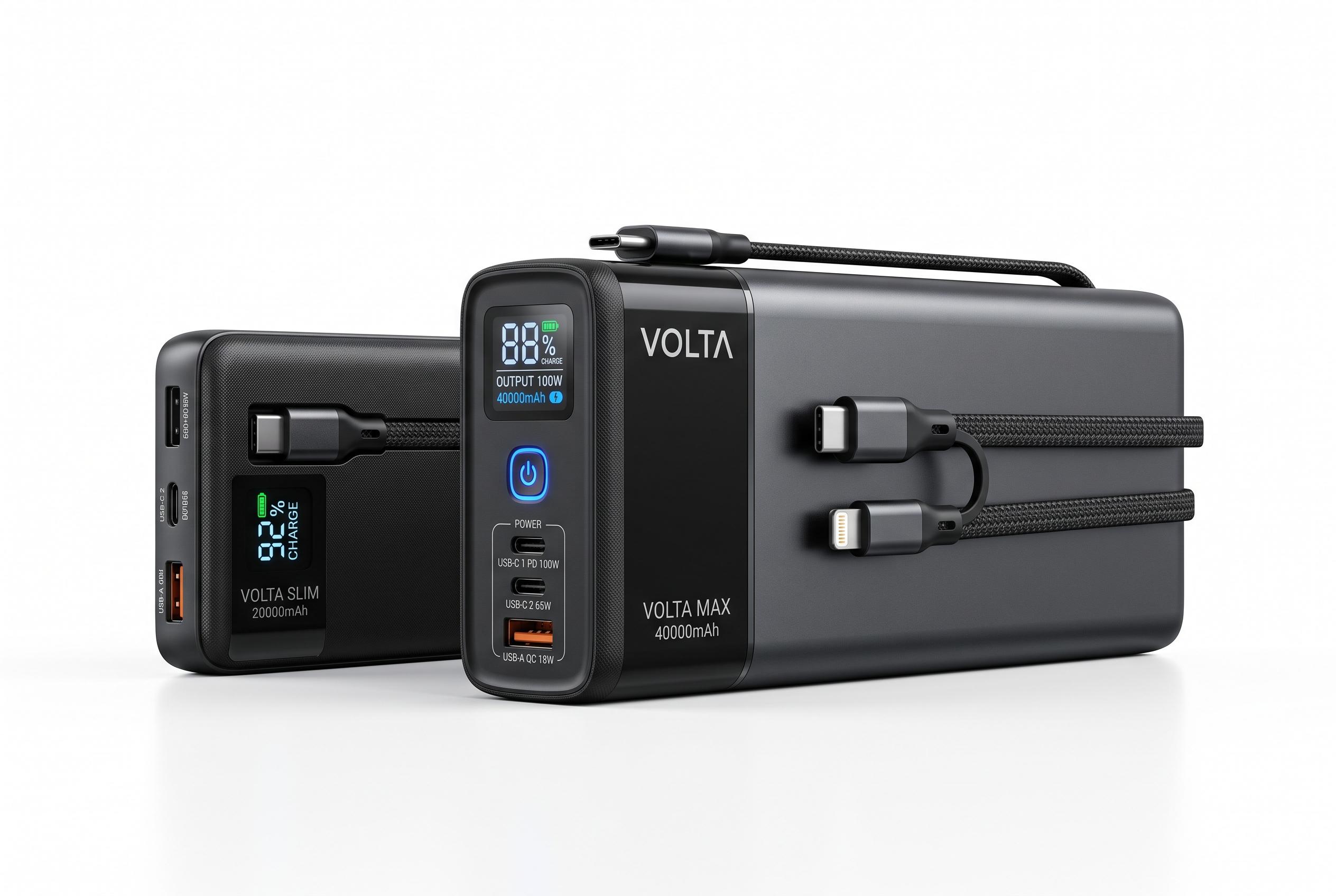
Among the most practical options is the 50,000mAh portable charger with built-in cables. It aims to reduce clutter by combining USB-C and iOS leads with 22.5W fast charging and an LED battery readout. That makes it a strong fit for bags and carry-ons, especially when multiple devices need topping up without packing extra cords. For similar reasons, the 40,000mAh pink cable-integrated model is positioned as an all-in-one choice, with built-in iOS, USB-C and USB-A cables designed for straightforward everyday use.
For households that routinely need to charge several devices, the larger 60,000mAh and 80,000mAh units are the most capacity-heavy picks. The ZZI 60,000mAh charger and the family trip workhorse with similar capacity can charge up to five devices at once, which makes them more suited to road trips, home backup and emergency use than light daily carry. At the top end, the Liahomco 80,000mAh power bank pushes further on endurance, with five outputs and 30W fast charging, but at 1kg it is clearly built for utility rather than portability.
The mid-range models offer a more balanced compromise. The 56,800mAh travel essential charger gives strong backup power without moving all the way to the largest sizes, while the seaistar 50,000mAh charger adds 30W support and multiple output ports in a more restrained package. These are the sorts of products that bestpower-bank.com and Guidespot describe as increasingly important in 2026: chargers that are judged not only by raw capacity but also by charging speed, build quality and real-world usability.
Cable management is another clear theme. The Orfeika 20,000mAh model includes four built-in cables and six outputs, while the SABANI 35,000mAh charger goes further on convenience by bundling four cables and seven total ports. These designs are aimed at families that use mixed device types and do not want to rely on loose accessories. Anker’s own guidance on power banks also reflects this broader shift towards built-in cables and simpler daily handling, particularly for users who want to grab a charger and go.
There are also important limits to consider. Several of the larger-capacity models are not suitable for aircraft use according to the product notes, so frequent flyers need to check capacity limits before buying. That makes the 20,000mAh class especially attractive for travel, with the Anker Zolo 20K standing out as a compact option that still supports fast two-way charging. For many users, that size represents the practical middle ground: enough power for a full day or more, without the bulk of a maximum-capacity unit.
In the end, the best choice depends on use case rather than headline battery size alone. For everyday carry, a 20,000mAh charger is often enough. For family travel or emergency kits, 35,000mAh to 60,000mAh models make more sense. And for maximum backup at home or on long trips, the largest units deliver the most flexibility, provided the extra weight is acceptable. That balance between capacity, speed and portability is the central measure used by the roundup, and it is the one that matters most in practice.
Disclaimer: This content is intended for informational purposes only. Readers are advised to exercise their own judgement, conduct due diligence, or consult a qualified expert before acting on any information provided.