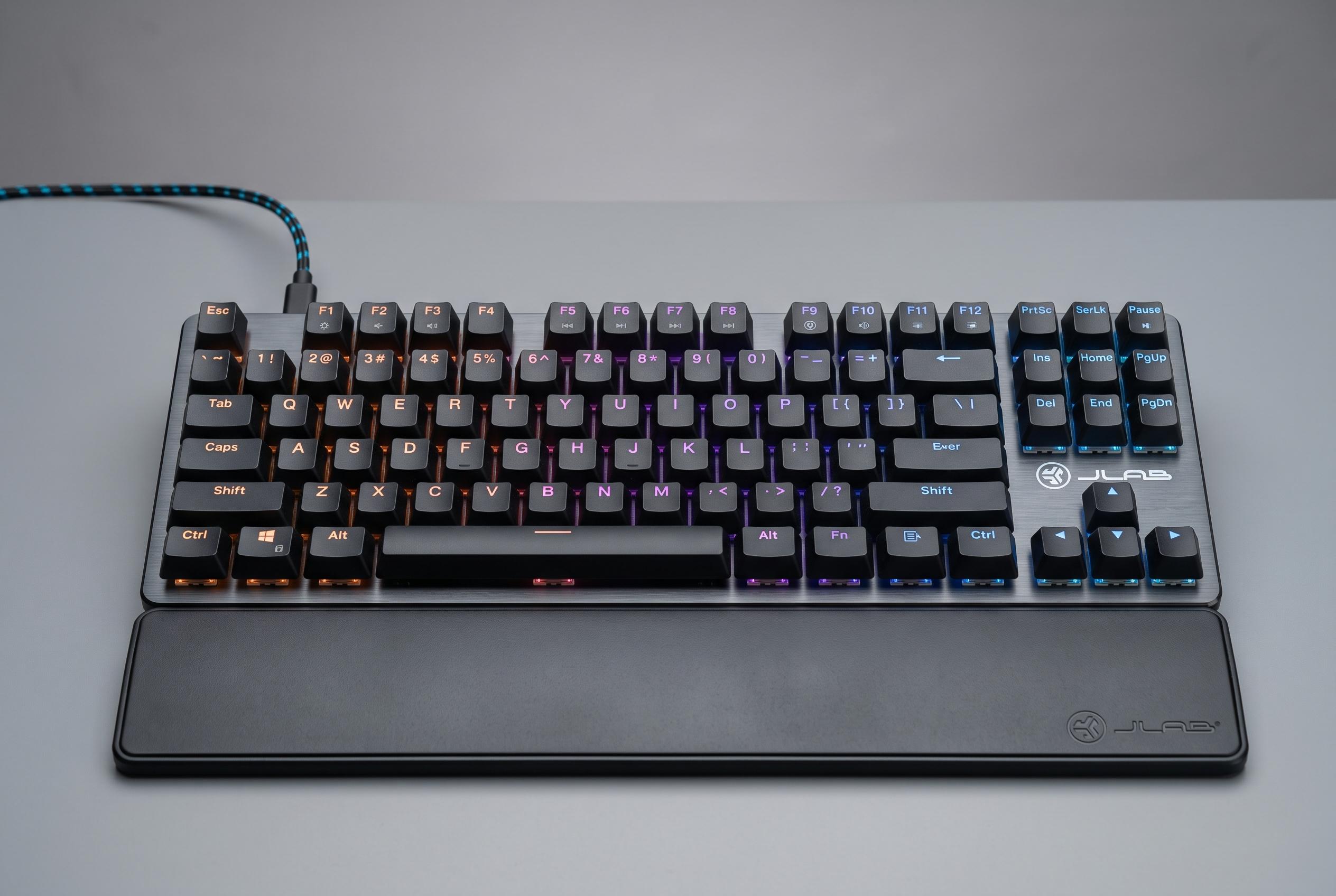

JLab enters the competitive gaming keyboard arena with the Daybreak TKL, featuring magnetic switches and customisation options aimed at enthusiasts and professionals alike, marking a significant move beyond its audio roots.
JLab is trying to move beyond its audio roots and make a serious case in gaming hardware with the Daybreak TKL Wired Magnetic Gaming Keyboard. The company’s pitch is clear: this is its premium tier, sitting above the membrane-based Nightfall range and the mechanical Midnight line. In a market where magnetic switches, adjustable actuation and ultra-high polling rates have become markers of ambition, the Daybreak is designed to show JLab can compete with established peripheral brands.
The keyboard uses a tenkeyless layout, so it drops the number pad to save desk space, and it connects by USB-C. JLab says it also includes a USB-C passthrough, five macro keys and a fabric-cushioned wrist rest. Best Buy lists the keyboard at $169.99, placing it in the same broad price band as other enthusiast-focused gaming boards. JLab also says the switch travel can be adjusted from 0.2mm to 3.9mm, while the polling rate reaches 8,000Hz and input latency is rated at 1ms.
That hardware combination matters because magnetic switches have changed expectations for gaming keyboards. Unlike conventional mechanical switches, they allow users to tune how far a key must move before it registers. Yahoo’s review said that flexibility makes the Daybreak especially appealing for gamers who want precision but still value a compact board for a smaller desk. JLab similarly positions the Daybreak series as a product line for competitive play, with adjustable actuation and features aimed at speed and control.
The most compelling part of the Daybreak is the feature set enabled by its switch design. JLab’s software, The Lab, lets users alter actuation points and tune rapid-fire behaviours such as Quick Trigger. It also supports Dynamic Keystroke, which can assign multiple actions to one key, and offers advanced input modes such as Snap Tap and Rap Tap. Those are increasingly common in high-end magnetic boards, but they are not universally welcomed: Valve has banned Snap Tap-style functionality in Counter-Strike because it can reduce the skill element in movement-heavy play.
There are, however, trade-offs. GamingTrend noted that the shell is plastic rather than machined aluminium, which may matter to buyers expecting a more premium chassis at this price. The same review also said The Lab is still in beta and lacks some of the polish found in competing software, including a clear visual indicator for key travel and better window scaling. That is the main concern with the Daybreak: the core hardware is strong, but the supporting software and enclosure leave room for refinement.
Even so, the Daybreak appears to be a credible first serious entry into magnetic gaming keyboards for JLab. Between the compact layout, high polling rate, adjustable actuation and bundled wrist rest, it offers a useful mix of performance and practicality. For buyers who want the responsiveness of a premium magnetic board without moving into the highest price tiers, JLab’s latest effort looks like a meaningful step forward.
Disclaimer: This content is intended for informational purposes only. Readers are advised to exercise their own judgement, conduct due diligence, or consult a qualified expert before acting on any information provided.