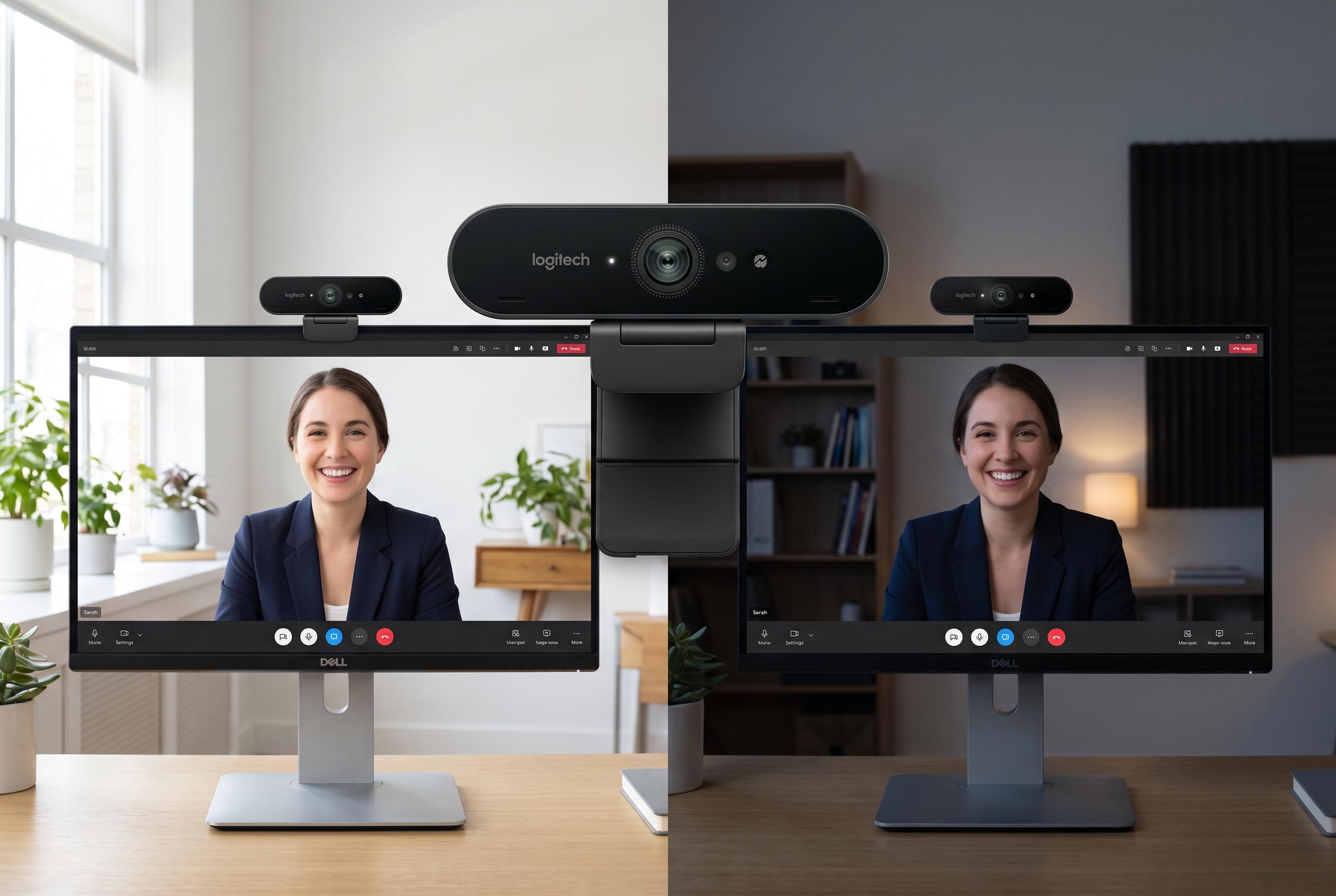

The Logitech MX Brio emerges as the top performer in Stern’s 2025 webcam comparison, excelling in low-light and backlit conditions, though its premium price remains a sticking point for casual users.
Logitech’s MX Brio has emerged as the strongest performer in stern’s 2025 webcam comparison, chiefly because it combines high-end image quality with a broad set of adjustments and unusually strong performance in difficult lighting. The test team found that it delivered the most convincing overall package in the group, especially when subjects were backlit or working in dim rooms. Stern also concluded that buyers who only need a webcam for basic video calls do not need to spend heavily if their lighting is already good.
That verdict is broadly in line with other recent reviews. Tom’s Hardware, PCWorld, TechRadar, Windows Central and PC Gamer all describe the MX Brio as a premium webcam with very strong 4K video, solid build quality and a substantial feature set, but they also agree that it is expensive for what it offers. Several reviews note that the camera leans heavily on Logitech’s software to unlock its full potential, while PCWorld and Windows Central point out that it omits Windows Hello facial recognition, which was available on the older Brio 4K.
Stern’s own testing suggests the MX Brio is strongest where many cheaper cameras struggle: colour accuracy, contrast and low-light handling. The camera also has software-based framing and zoom controls, plus multiple viewing angles. Its weakest point, according to stern and other reviewers, is that the price is difficult to justify for casual users, especially when the camera’s most advanced functions are less relevant in ordinary office calls.
The comparison also puts the older Logitech Brio 4K in a favourable light. Stern found it remained a capable high-end option, with sharp 4K output, quick autofocus and good resistance to backlight. Its compromises are more practical than visual: the connector felt less robust than ideal, the privacy cover did not hold especially securely, and the built-in audio was acceptable rather than outstanding. Still, the camera’s three-year warranty and Tune app controls make it a strong option for users who want a premium model without paying for Logitech’s latest flagship.
Among the mid-range alternatives, the Anker PowerConf C200 stood out for its design, sensible hardware and strong autofocus, though stern found it less flexible in day-to-day use. The Hama C-900 Pro delivered its best results in good light, with clear images and effective noise suppression, but its performance fell away in dimmer conditions and its Mac support was less convincing. The review also questioned the practical value of its detachable privacy plate and limited zoom behaviour.
For buyers focused on value, stern named the Ugreen FineCam Lite as its price-performance pick. It is basic, but it is ready to use immediately, offers acceptable image quality for simple calls and performs better than expected on audio suppression. Stern’s broader conclusion is straightforward: for ordinary video conferencing, Full HD, a reliable autofocus system, a microphone that does not distort speech and a stable mount matter more than headline specifications such as 4K or 60 fps. High-end features are worthwhile only when lighting, presentation quality or streaming demands justify them.
Disclaimer: This content is intended for informational purposes only. Readers are advised to exercise their own judgement, conduct due diligence, or consult a qualified expert before acting on any information provided.