
As portable storage needs evolve, high-speed rugged SSDs are replacing traditional hard drives for their durability, speed, and convenience, though cost and protection ratings remain key considerations for buyers.
Buying a rugged external drive comes down to the same basic choices as any other portable storage, but the trade-offs matter more. The first is interface. Most current drives use either USB or Thunderbolt, usually over the same USB-C connector, and the right option depends on the ports on your laptop or desktop. In practice, a modern USB-C drive will usually work across a wide range of machines, while Thunderbolt only pays off if your computer supports it and you genuinely need the extra headroom.
Speed claims can be misleading, especially with conventional hard drives. Even when a USB 3.2 or Thunderbolt connection offers much higher theoretical bandwidth, a spinning drive rarely comes close to maxing it out. By contrast, portable SSDs can make real use of faster interfaces, which is why recent buying guides from TechRadar, Tom’s Hardware and others place increasing emphasis on solid-state models for users who want both toughness and speed.
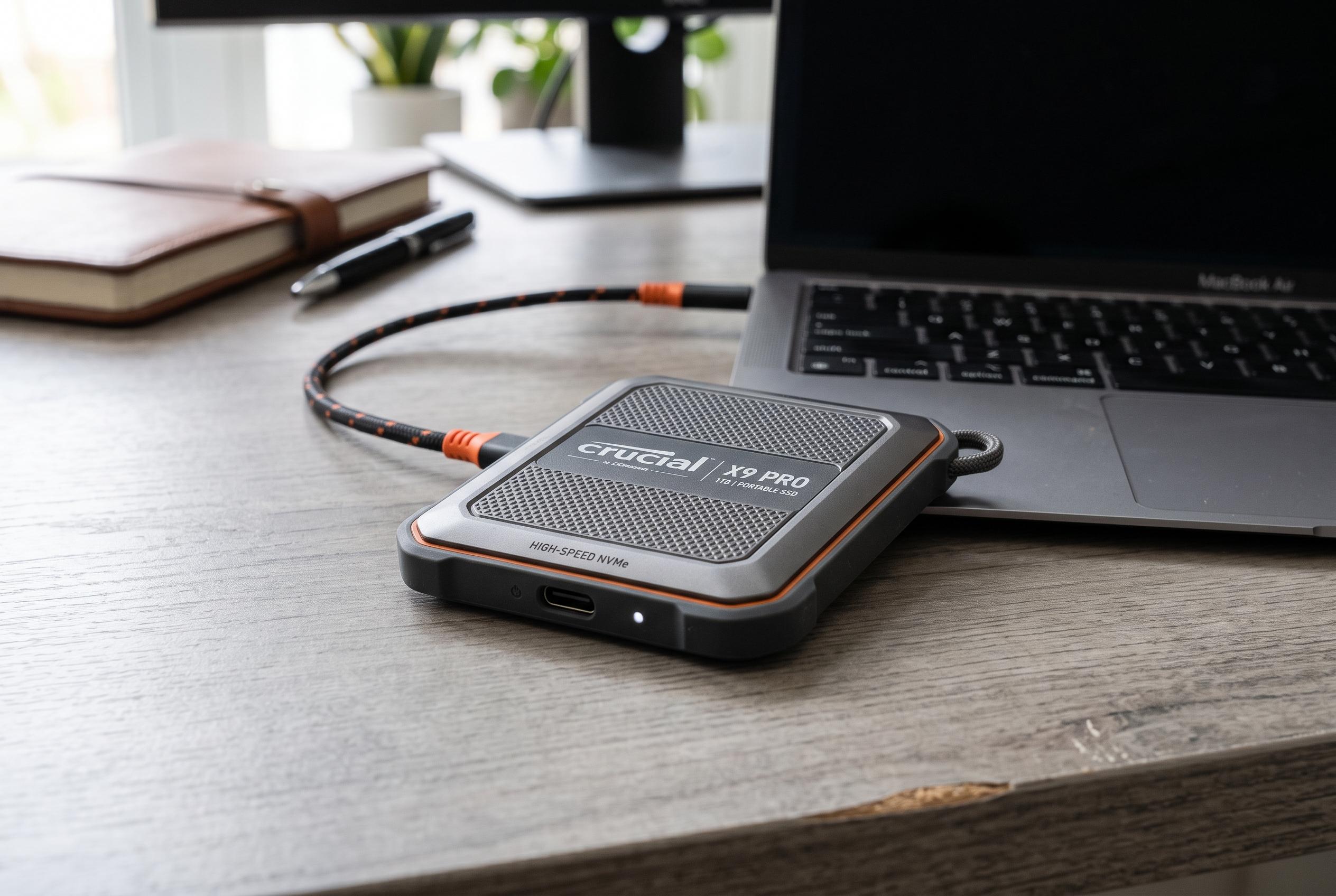
That shift reflects a broader change in the market. Portable SSDs are now the default recommendation for many users because they have no moving parts, making them less vulnerable to shock, quieter in operation and easier to carry. The trade-off is cost. Larger-capacity hard drives still offer far more storage for the money, which is why rugged platter-based models remain relevant for backups, media libraries and other jobs where capacity matters more than transfer speed. TechRadar’s latest portable SSD guide, for example, highlights the Samsung T9 for performance, while also pointing to cheaper options such as the Lexar SL500 and security-focused models like the Samsung T7 Touch.
Protection ratings are the other key issue. For outdoor use, IP67 and IP68 are the most useful benchmarks because they indicate resistance to dust and water ingress under standards defined by the International Electrotechnical Commission. But drop resistance is harder to compare. Some rugged drives are built with sealed shells, rubberised exteriors or crush-resistant casings, while others add an outer bumper or removable shell. Recent round-ups from TechRadar, Yahoo Tech and HardDrive.net highlight products such as the Adata SD810, SanDisk Professional G-DRIVE ArmorATD and LaCie Rugged Pro5, showing that ruggedness now spans everything from affordable IP54-class hard drives to high-end Thunderbolt 5 SSDs.
For most buyers, the practical question is not whether a drive is advertised as rugged, but whether its protection matches the way it will actually be used. A portable SSD is usually the safer choice if the drive will travel in a bag, be swapped between devices or face frequent knocks. A rugged hard drive still makes sense when capacity per pound spent is the priority. The best pick, as PCMag notes, is the one whose interface, speed, durability and price line up with your own devices and workflow.
Disclaimer: This content is intended for informational purposes only. Readers are advised to exercise their own judgement, conduct due diligence, or consult a qualified expert before acting on any information provided.