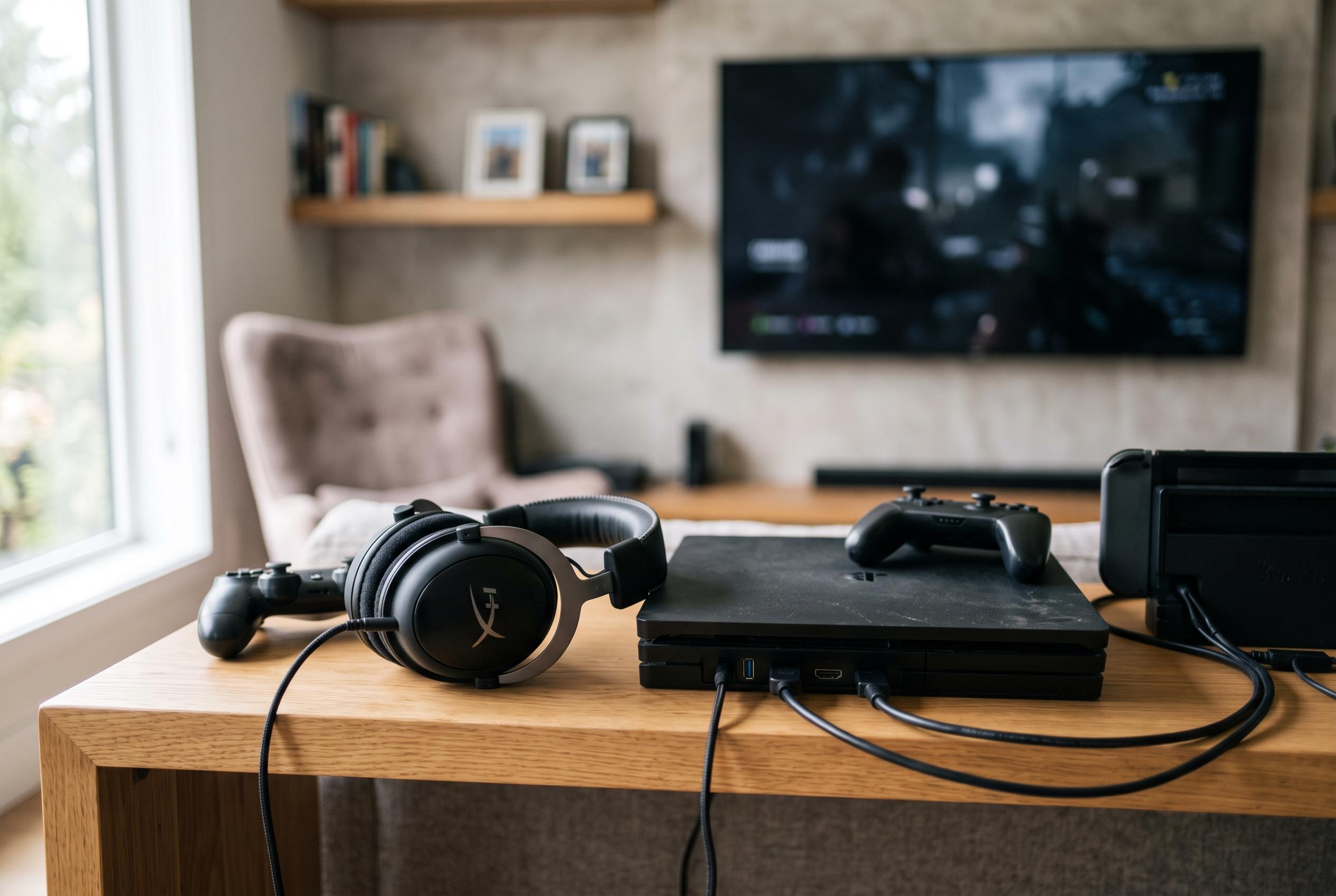

In 2026, PS4 headset buying advice pivots from seeking a universal winner to understanding multi-platform options and connection limitations, with premium models emphasizing compatibility and ease of use.
The strongest advice for PS4 headset buyers in 2026 is no longer about finding a single universal winner. The current shortlists from TechRadar, GamesRadar, Stuff and SoundGuys point instead towards a market dominated by newer multi-platform headsets, many of them designed with PS5, PC or cross-platform use in mind, and then narrowed by one practical question: how they actually connect to Sony’s older console. That is a more useful starting point than the feature-first approach taken by many generic buying guides. (techradar.com)
Sony’s own long-standing compatibility rules still explain why. In the company’s official PS4 FAQ, PlayStation said commercially available third-party Bluetooth headsets were not supported on the console, while USB headsets became broadly compatible after system software version 1.50. That limitation continues to shape modern buying advice. GamesRadar says the OXS Storm G2 is not properly PS4-compatible unless buyers find an adaptor for its 2.4GHz link, and notes that the Asus ROG Delta II and Razer Kaira’s USB-C wireless setups also need extra hardware to make sense on PS4. (blog.playstation.com)
Where the 2026 guides do converge most clearly is at the premium end. TechRadar’s list, last updated on 16 April 2026, puts the SteelSeries Arctis Nova Pro Wireless top overall, listing 2.4GHz wireless and Bluetooth, a 337g weight, and 20-22 hours of battery life. Stuff also ranks it first, but describes endurance differently, saying the two-battery system delivers “44 hours or more” of use and stressing the value of the included base station. SoundGuys, although its PS4-specific roundup was last refreshed in October 2022, still highlights the same model as the feature-heavy benchmark because the base station retains console-side controls for volume and game-chat balance and supports hot-swappable batteries. (techradar.com)
For players who want fewer variables, the wired end of the market remains easier to understand. TechRadar names the RIG R5 Spear Pro HS as its best wired PS4 headset, pointing to 40mm graphene drivers, a 340g chassis and strong comfort, while warning that there is no companion software, no on-board customisation and a mic that does not detach. Its reviewer sums the set up as “very much a plug-and-play headset”. Stuff’s budget recommendation, the Razer Kaira X for PlayStation, leans on simpler virtues as well: a 3.5mm connection, a braided cable and a right-angled plug, offset by warm ear cushions and a fixed microphone that cannot be moved aside. (techradar.com)
Wireless options make a better case when the buyer wants more than a PS4-only accessory. GamesRadar calls the standard Razer Kaira for PlayStation the best choice for most people, pricing it at $99.99/£99.99 and praising the combination of Bluetooth and 2.4GHz dual pairing, even if PS4 owners still need a USB-C-to-USB-A adaptor. Turtle Beach’s range also appears repeatedly. Stuff likes the Stealth 700 Gen 2 Max for its 40-hour battery life, gel-infused ear cushions, flip-down mic and “Superhuman Hearing button”, while GamesRadar says the newer Stealth 700 Gen 3 can work with PS4 through Bluetooth or a 2.4GHz dongle at $199.99/£179.99. (gamesradar.com)
The more technical buying criteria are also clearer in the specialist sources than in broad lifestyle advice. Logitech’s guide says balanced sound and surround processing matter because they help players place footsteps and gunfire, while microphone clarity becomes critical for online call-outs and streaming. That helps explain why comfort, weight and mic behaviour recur throughout the editorial lists. TechRadar’s budget pick, the Turtle Beach Recon 70, is criticised for cheap construction and the lack of surround sound, yet still earns credit for a clear enough microphone and solid value for families. SoundGuys makes a similar point more bluntly, saying some compatible models amount to “just a headset and mic” with few extras layered on top. (logitech.com)
That in turn affects whether expensive newer hardware is worth buying for an ageing console. GamesRadar says the Alienware Pro Wireless, at $229.99/£221.99, offers Bluetooth, 2.4GHz and wired connections, but is held back by distortion at higher volume, a non-retractable mic and limited ear swivel. It says the Asus ROG Delta II, at $229/£219, also struggles to justify itself on PS4 once the adaptor requirement and comfort trade-off are considered. TechRadar and Stuff reach a similar conclusion from the top end of the market: premium headsets can be sensible purchases, but mainly when the buyer also wants a PS5, PC or multi-device headset rather than a simple PS4 companion. (gamesradar.com)
The practical conclusion is narrower, and more useful, than calling any one model “the best”. If a player wants the lowest friction, the safest buy is still a wired 3.5mm headset that plugs into the controller and avoids charging, dongles and compatibility surprises. Wireless remains attractive for sofa play, party chat across devices and future-proofing, but only when the battery system, charging method and adaptor needs are understood in advance. In other words, the real PS4 headset test in 2026 is not who has the longest specification sheet. It is who has matched the console’s limits to the way they actually play. (blog.playstation.com)
Disclaimer: This content is intended for informational purposes only. Readers are advised to exercise their own judgement, conduct due diligence, or consult a qualified expert before acting on any information provided.