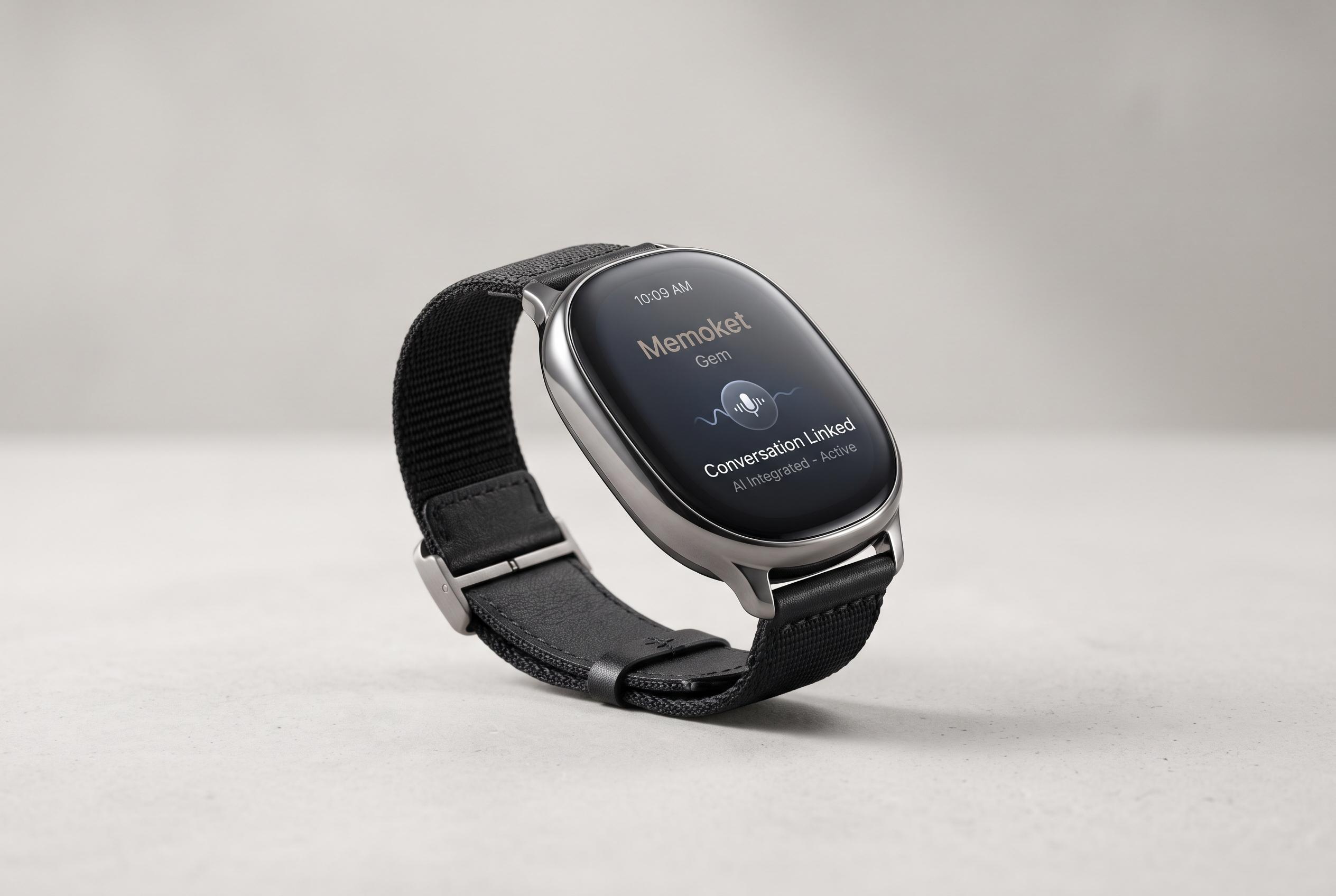

Memoket launches the Gem, a discreet wrist-worn device that captures, structures, and links spoken notes with advanced software integrations, aiming to redefine meeting productivity despite a crowded market.
Memoket’s Gem enters a fast-growing category with a simple promise: capture spoken notes, turn them into structured output, and make the result easier to use than a raw transcript. The device sits in a crowded market, but it tries to distinguish itself with a wearable design, stronger software integrations and a stronger emphasis on linking one conversation to the next. For people who live in meetings, support calls or project discussions, that combination matters more than novelty.
Physically, the Gem is easy to overlook, which is a virtue for a wearable recorder. Memoket describes it as an ultra-light device with a low-profile body, dual microphones and multiple wearing options, including a wristband, pendant, clip or standalone use. The Apple Watch co-wear band is the cleverest of those options, because it lets the Gem sit beneath an existing watch rather than adding another object to the wrist. Memoket also says the unit is water-resistant to IPX7, weighs about 0.4 oz and can record for up to 20 hours on a charge.
That hardware is paired with an app that aims to remove friction from capture and follow-up. Memoket says recordings are stored locally, then synced to the phone, with Bluetooth and Wi-Fi support for faster transfers. Once a file reaches the app, it is turned into a transcript, a summary, a brief and a more visual one-pager. The company also says the device records only when the button is pressed, which is an important privacy point for a product that is designed to sit on a wrist all day.
The software is where the Gem looks more ambitious than many rivals. According to Memoket, it offers calendar integrations with Google, Outlook and Apple services, as well as connections to Slack, Notion and Jira. It also supports automation tools such as Zapier, Make and n8n, and exposes an MCP connector for use with systems such as ChatGPT and Claude. The company says this is meant to do more than log meetings: it can push action items into the tools teams already use, and even link a recording to the date and time it was made.
Memoket also places unusual emphasis on context. Rather than treating each recording as an isolated note, the app cross-references previous conversations and surfaces related material where relevant. In practice, that means a support issue or project thread can be followed across multiple recordings instead of being buried in a separate archive. The app’s MemoChat feature extends that idea further, allowing users to ask questions across their recording history. Memoket says the data used for those queries is processed by third-party AI providers, encrypted in transit and at rest, and not used to train models.
Pricing is more complicated. Memoket’s early-bird bundle is priced at $179 and includes the device, a band, a charging dock and a year of subscription access, with shipping due to begin in August 2026. After that, the company lists a free Starter tier with 300 transcription minutes a month, a Pro tier with 1,500 minutes, and an Unlimited tier for heavier users. The broader value case depends on whether buyers will use the integrations and context tools regularly, but the feature set is more extensive than many of the cheaper Plaud-style alternatives now appearing online.
Disclaimer: This content is intended for informational purposes only. Readers are advised to exercise their own judgement, conduct due diligence, or consult a qualified expert before acting on any information provided.