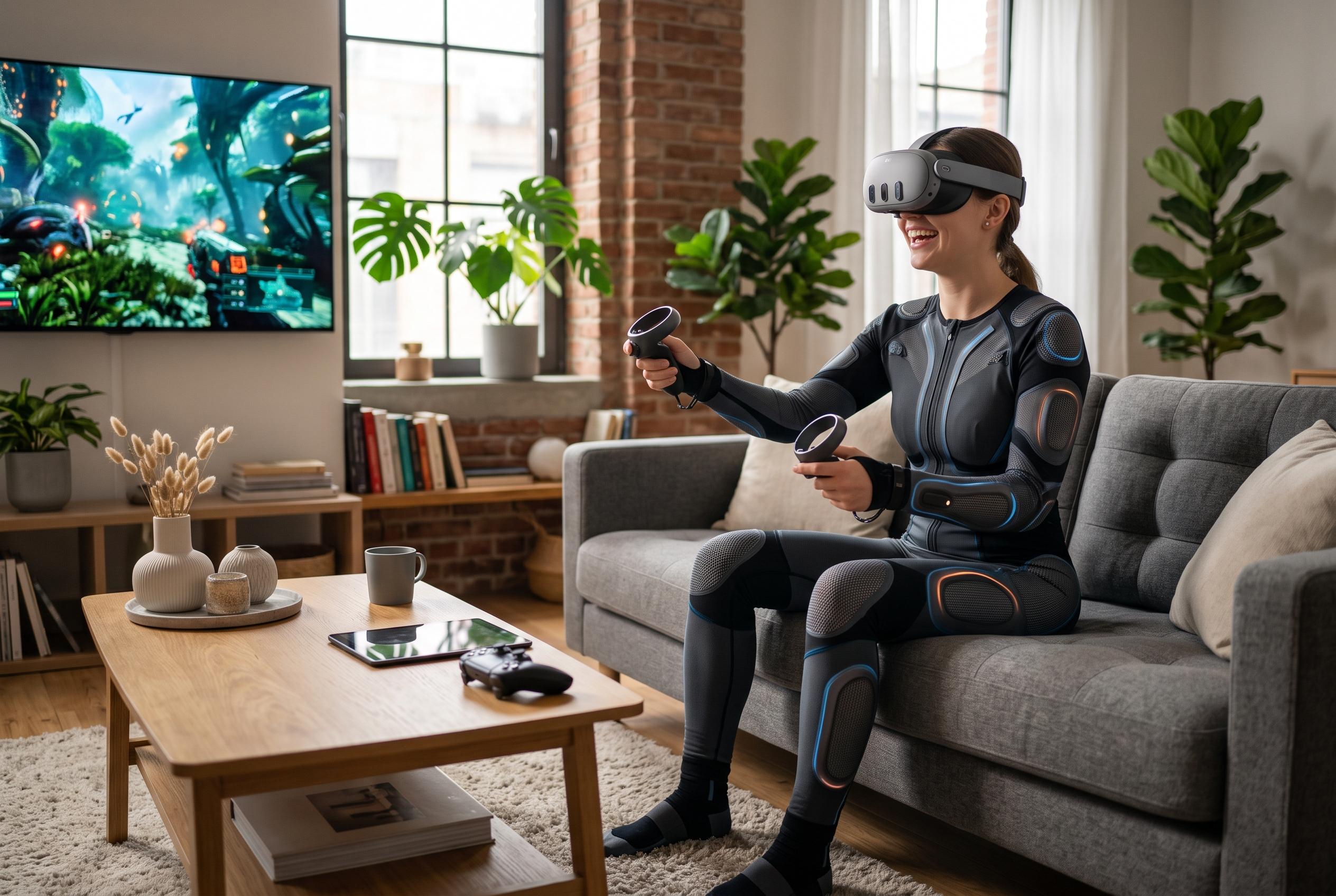

Emerging technologies are transforming how audiences experience digital worlds, integrating touch, temperature, and pressure to bridge the gap between sight, sound, and physical sensation, heralding a new era of immersive entertainment.
Digital entertainment has spent decades trying to pull people further into the experience, but the body has largely remained outside the interface. Screens, speakers and controllers still define most of the interaction, even as players lean into corners in racing games, film audiences brace during suspense scenes and livestream viewers react in near real time with bursts of text and emojis. That gap between sensory expectation and technical delivery is now driving a new wave of products aimed at making digital worlds feel more immediate and physically present. According to the branded content report by TIME, Red & Deep Ocean is positioning itself around that shift, with chief executive Jeff Lee saying, “We want to help people experience the worlds they care about with greater depth, emotion, and connection.”
The broader industry trend is moving beyond simple vibration motors and headset-based feedback. Companies working in haptics are increasingly combining touch with temperature, pressure and light to create a more convincing sensory layer. DataFeel, for example, describes multi-modal systems that blend vibration, heat and cold into wearable products. AxonVR has also focused on realistic touch in virtual reality through textile-based actuators and a lightweight exoskeleton that can simulate texture, motion and temperature. Motion XR, meanwhile, offers a wireless vest and controller setup aimed at VR, AR and extended reality users, while Woojer and bHaptics sell haptic wearables designed to translate sound and in-game events into physical sensations.
That expansion matters because immersion is no longer being defined only by what users see. Developers are now testing systems that respond through heat changes, vibration intensity, pressure mapping and bioelectrical stimulation, with the aim of synchronising sensory feedback with gameplay or live events in real time. Red & Deep Ocean says its industrial prototype brings together smart clothing, gloves and footwear, alongside thermal variation, vibration and adaptive response systems. The company also says its hardware collects physiological signals and environmental inputs, then uses software designed to reduce latency, which remains one of the most important technical obstacles in any body-based interface.
The commercial interest is obvious. Gaming has already trained consumers to accept increasingly physical forms of control through motion input, adaptive triggers, spatial audio and virtual reality. Film and livestreaming are moving in the same direction, with developers exploring ways to let viewers feel a scene change, a sudden impact or even a shift in temperature as narrative events unfold. The result is a market that is less about replacing screens than extending them, turning entertainment into something that can be felt as well as seen and heard. For now, the technology remains uneven and still constrained by comfort, cost and compatibility. But the direction of travel is clear: the next phase of digital entertainment may depend on how well it reaches the body.
Disclaimer: This content is intended for informational purposes only. Readers are advised to exercise their own judgement, conduct due diligence, or consult a qualified expert before acting on any information provided.