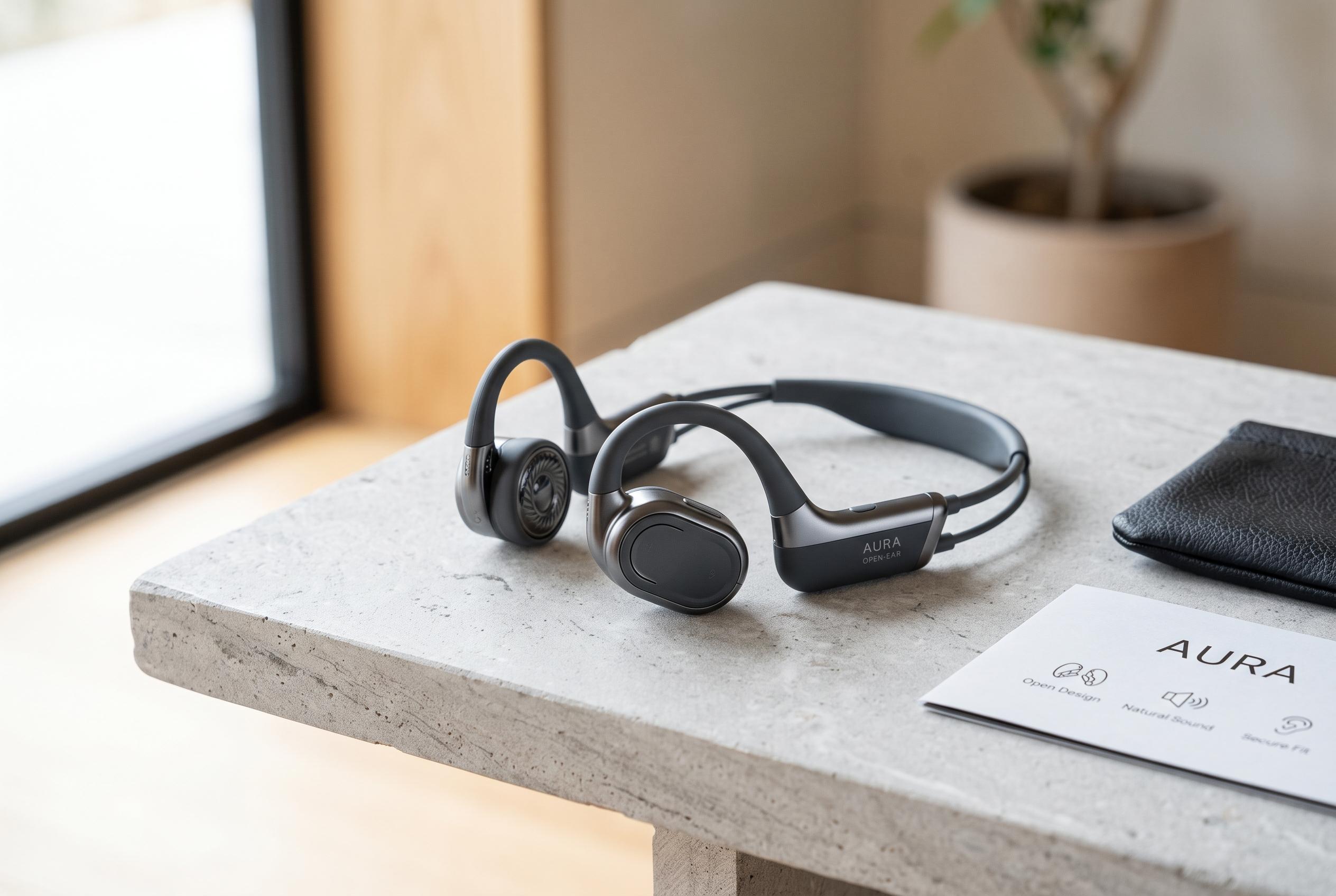

Open-ear clip headphones have evolved from niche novelty to a primary choice for consumers seeking awareness, comfort, and advanced features, with top models now rivaling traditional in-ear designs in versatility and performance.
Open-ear clip headphones have moved from niche novelty to a serious category for listeners who want awareness without sacrificing convenience. La Razón says the appeal is straightforward: they let users hear music, podcasts and calls while still picking up traffic, co-workers or other background sounds, and they avoid the pressure that in-ear silicone tips can create during long sessions. That makes them especially suited to commuting, office work and exercise, where comfort and situational awareness matter as much as sound quality.
The harder question is which designs actually work in daily use. According to the La Razón guide, the most important differences are clamping force, sound leakage, water resistance, bass response and call quality. Those trade-offs remain central because open-ear headphones do not seal the ear canal, so manufacturers rely on directional sound, larger drivers, software tuning and more advanced microphone systems to compensate for the format’s natural limits.
Among the strongest options, the OPPO Enco Clip 2 stands out for combining a nitinol frame with Dynaudio tuning and LHDC 5.0 support. SmartWorld and GadReview both describe it as a premium open-ear model with unusually strong comfort and sound for the category, while La Razón highlights its AI-assisted call performance, bone-conduction sensors for voice pickup and a dipole sound field designed to reduce audio spill. Its IP55 rating and claimed 40-hour total battery life make it a practical all-rounder, although the touch controls reportedly take time to learn.
The Soundcore AeroFit 2 Pro takes a different route, aiming at users who prioritise stability and workout use. TechRadar reports that the model launched at CES 2026 with a 2-in-1 design, Bluetooth 6.1, IP55 protection, 11.8 mm drivers and up to 34 hours of total battery life with the case. SoundGuys adds that its adjustable ear-hook system can shift the drivers to create a more sealed fit, enabling a form of adaptive noise cancellation unusual in this class, although both reviews note that the ANC is limited compared with conventional in-ear headphones. La Razón makes the same point, describing it as versatile but not class-leading in every area.
Sony’s LinkBuds Clip and Huawei’s FreeClip range show how far the format has matured. La Razón says the Sony model focuses on call clarity, with bone-conduction capture and AI-based voice processing, while keeping a lightweight 6.4-gram design and strong battery life. The Huawei FreeClip 2 pushes comfort further, weighing 5.1 grams per earbud and using a refined C-Bridge 2.0 layout, with swipe controls, head gestures, IP57 resistance and 36 hours of total battery life. Its predecessor, the original FreeClip, remains relevant as a cheaper option with similar core ideas, especially when discounted.
For users who want more than audio, the Edifier LolliClip adds health tracking by measuring heart rate and blood oxygen from the ear, according to La Razón. Motorola’s Moto Buds Loop, developed with Bose, leans towards clearer mids and treble, plus strong call noise reduction through CrystalTalk AI. Taken together, the field shows that clip-style headphones are no longer just about comfort. The best models now compete on battery life, call performance, water resistance and software features, with Huawei’s FreeClip 2 emerging as the most complete choice in La Razón’s ranking because it pairs lightweight design with broad feature coverage.
Disclaimer: This content is intended for informational purposes only. Readers are advised to exercise their own judgement, conduct due diligence, or consult a qualified expert before acting on any information provided.