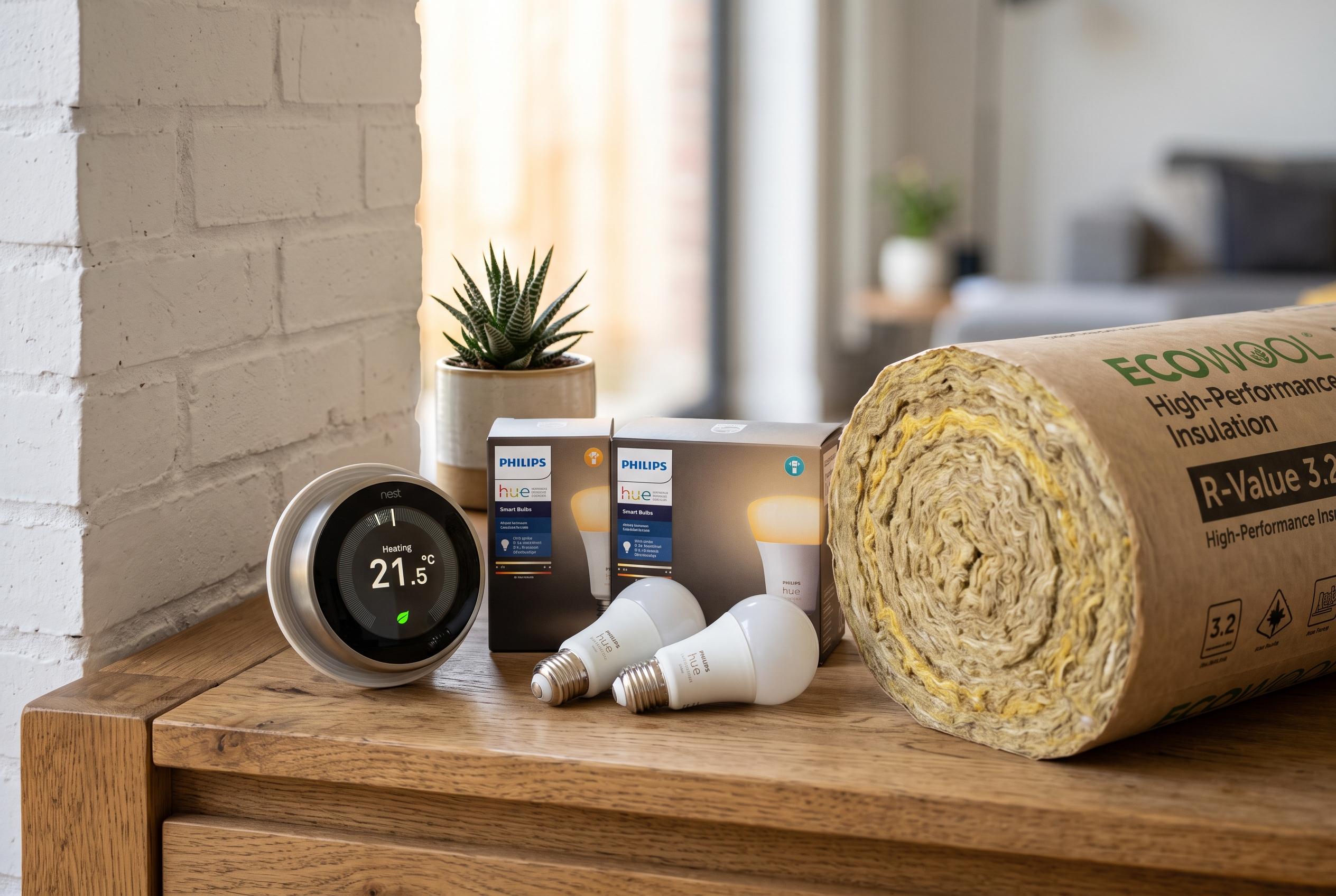

Frugal families can significantly cut energy costs with simple smart upgrades like thermostats, insulation, and smart lighting, proving that practicality trumps luxury in home improvements.
Smart home improvements are often framed as expensive luxuries, but the most practical ones can pay for themselves through lower utility bills and better day-to-day control. For families watching spending, the strongest case is not novelty but efficiency: devices that automate heating, cooling, lighting and basic security can cut waste without demanding a major renovation.
A smart thermostat is usually the most effective first step. The US Environmental Protection Agency says ENERGY STAR certified models can learn household routines and adjust temperatures automatically, while Consumer Reports notes that typical savings average about 8% on utility bills. RunWatts says certified devices can reduce heating run-time by at least 8% and cooling run-time by at least 10%, with annual savings ranging from about $40 to $260 depending on the home and climate. Energy Star also estimates that for the average American household, heating and cooling account for nearly half of annual energy costs, making thermostat control a high-value target.
Not every saving depends on a connected device. Poorly sealed exterior doors can let conditioned air escape and outdoor air drift in, increasing heating and cooling costs. A well-insulated replacement door, fitted with proper weatherstripping and a sound threshold, can improve efficiency in a way that smaller gadgets cannot. Fibreglass and steel doors generally insulate better than older timber models, although the financial return comes through gradual energy savings rather than an immediate drop in purchase price.
Security can also be improved in stages, which helps families spread out costs. A smart video doorbell provides remote visibility at the front door, while indoor or outdoor cameras and entry sensors can be added one by one. These devices are attractive because they do not require the monthly monitoring contracts common with traditional alarm systems. For many households, that makes DIY security the more flexible option, especially when the goal is basic alerts rather than a fully monitored service.
Lighting is another straightforward area where modest spending can produce recurring savings. Smart LED bulbs use less electricity than older lighting and can be scheduled from a phone or voice assistant. Smart switches can be a better fit in rooms with multiple fittings, because they control the existing lights rather than replacing each bulb individually. Automated shut-off routines, away-from-home settings and bedtime schedules all reduce wasted power while adding a small measure of convenience and security. The wider lesson is simple: the best budget smart-home upgrades are the ones that reduce waste first and add comfort second.
Disclaimer: This content is intended for informational purposes only. Readers are advised to exercise their own judgement, conduct due diligence, or consult a qualified expert before acting on any information provided.