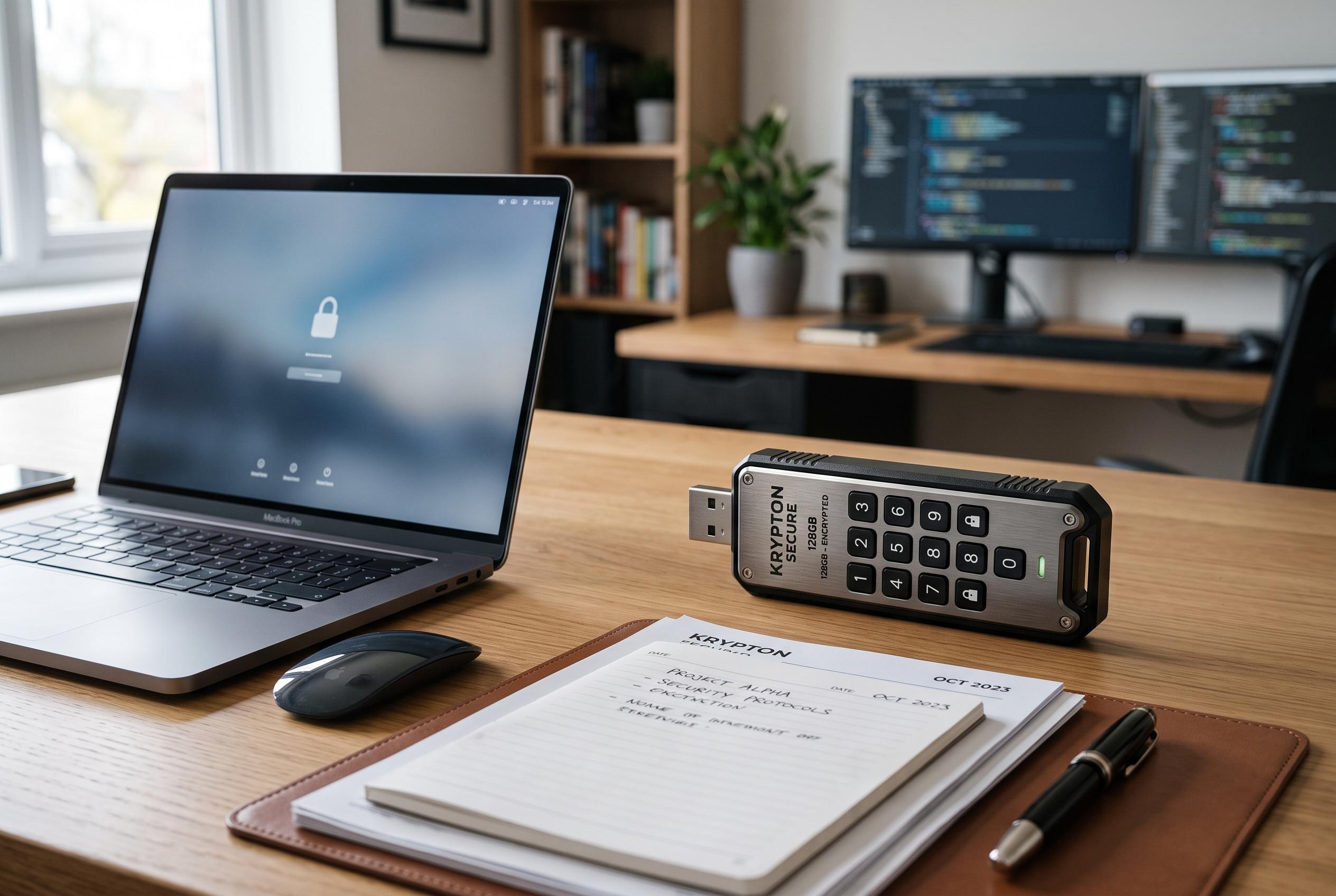

As portable data transfer remains essential for professionals, choosing USB flash drives with enhanced durability and encryption features is crucial to safeguard files against damage and unauthorised access.
A USB flash drive is still one of the simplest ways to move files between workstations, laptops and travel kit, but the cheapest option is rarely the safest. The point is not just storage capacity. It is whether the device can survive daily handling and keep files secure if it is lost, dropped or carried through variable conditions. That is why durability and encryption matter as much as speed.
Physical robustness is the first line of defence. Drives that use stronger casings are less likely to fail after being knocked about in a bag or pressed under other items. PCWorld notes that flash memory can preserve data for years under ideal conditions, but its long-term reliability depends on quality, temperature and humidity, which means a basic drive is not a substitute for proper archiving. USB sticks are best treated as portable transfer media, not permanent vaults.
Security is the second issue. Kingston Technology says hardware encryption builds protection into the device itself, rather than relying on software on the computer, which can improve both ease of use and performance. In practice, that matters if the drive contains client files, contracts or personal records. If the device is misplaced, encryption makes the contents unreadable without the correct password or authentication method.
Not all encrypted drives are equal, however. Kaspersky has warned that secure controllers, strong algorithms and lockout features after repeated failed attempts are important to reduce the risk of brute-force attacks. That is a reminder that encryption is only effective when it is properly implemented. A poorly designed secure drive can create a false sense of protection.
Longevity also depends on how the drive is used. Patriot Memory says consumer flash drives can handle many thousands of write and erase cycles, but frequent rewriting still wears memory down over time. Its guidance also includes simple habits such as safely ejecting the drive and avoiding direct editing of files on it. For important data, regular backups on another medium remain essential, because even a well-made flash drive is not immune to failure.
For professionals, the case for a sturdier, encrypted USB drive is straightforward. It reduces the risk of physical damage, limits exposure if the device goes missing and helps preserve a reliable workflow when files need to move quickly. In that sense, a better drive is not just a convenience item. It is a practical safeguard for information that cannot easily be replaced.
Disclaimer: This content is intended for informational purposes only. Readers are advised to exercise their own judgement, conduct due diligence, or consult a qualified expert before acting on any information provided.