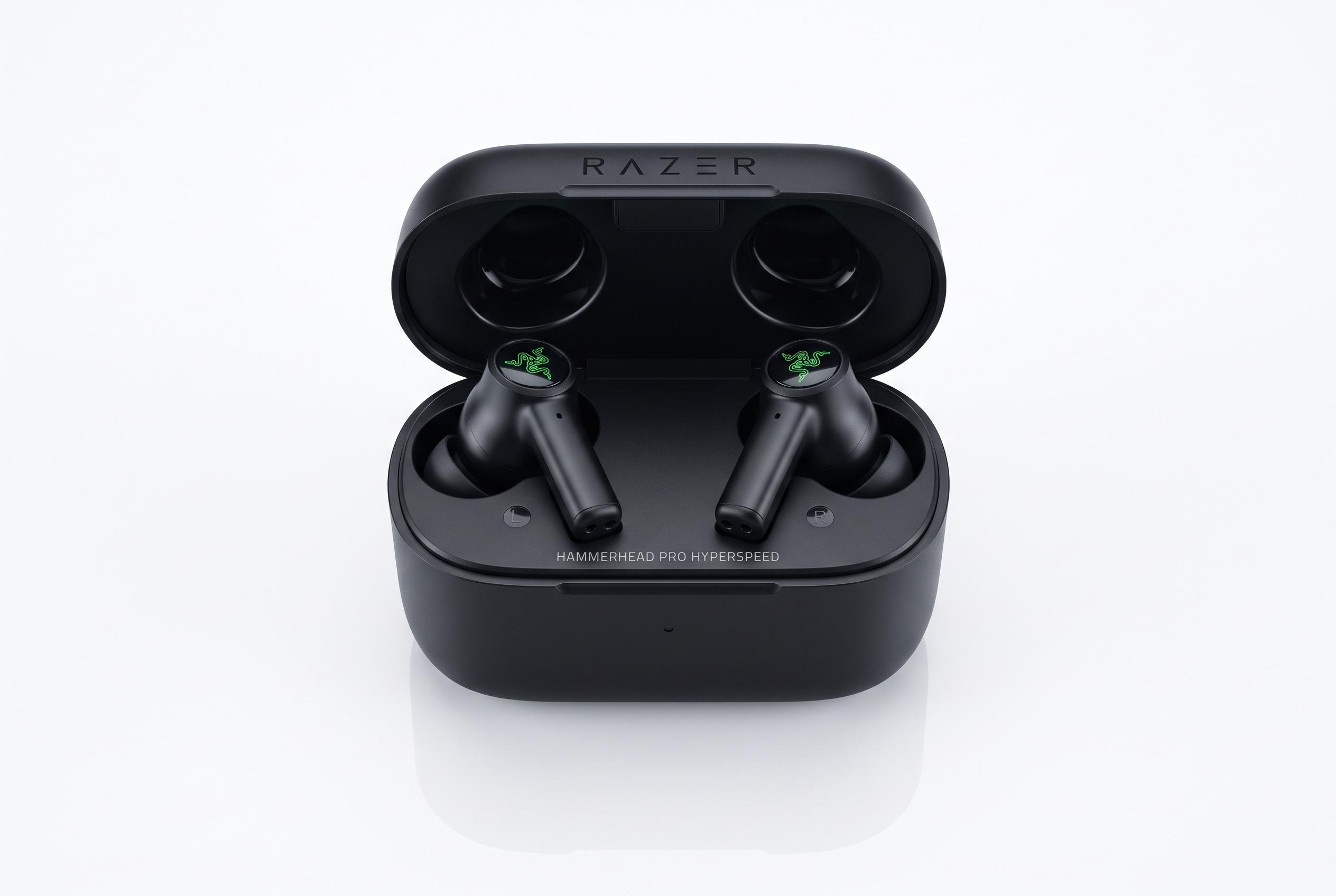

Razer’s latest Hammerhead V3 HyperSpeed earbuds combine a built-in receiver with dual-mode connectivity, enhancing portability and device compatibility for gamers seeking low latency and versatile audio performance.
Razer’s Hammerhead V3 HyperSpeed arrive as a more ambitious gaming earbud than the model they replace, but also one that feels better judged for everyday use. The biggest change is structural: the HyperSpeed receiver is no longer a loose accessory, because it is housed inside the charging case itself. That makes the set easier to carry, while also allowing the case to work as a USB-C dock for play and charging at the same time, or as a compact storage point for the receiver when used away from a desk. Reviews from SoundGuys and Digital Trends also note that this dual-mode approach is one of the product’s clearest advantages, particularly for players who move between devices and want to avoid Bluetooth latency.
In use, the earbuds are not especially small, and that affects comfort more than weight does. The earpieces are fairly chunky, with a secure fit that should suit many listeners but may feel large for those with smaller ears. The case is also noticeably bigger than before, a trade-off for the built-in receiver slot. TechRadar made the same point, arguing that the design is less elegant than some rivals, even if the overall idea is practical. Razer has also toned down the lighting: the earbuds no longer carry illuminated logos, which reduces the usual gaming RGB look and makes the product feel more restrained than earlier Hammerhead models.
The software side is stronger. Razer Audio on mobile gives quick access to battery status, ANC, EQ presets and a custom equaliser, while Synapse on PC adds further tuning and power-management options. The earbuds can store EQ settings directly, which is useful for console players who may not want to rely on a PC to shape the sound. Razer’s SmartSwitch system also allows a quick change between Bluetooth and HyperSpeed mode with a triple tap. That flexibility is central to the product’s appeal, and it is backed by support for call handling, auto-pause and configurable touch sensitivity. The downside is that Synapse remains heavy-handed and can feel overly modular, even if it does expose most of the controls a buyer would need.
Audio quality is a clear step up from the first Hammerhead HyperSpeed generation. Across music, films, series and games, the tuning is broadly balanced with a modest bass lift that stays under control. G Style Magazine and COMPUTER BILD both praised the sound for gaming and general media, while also noting that the spatial presentation is among the stronger elements. On PC, THX Spatial Audio is included and can add useful positional separation in games, although it remains less convincing for music and is limited to desktop use. Active noise cancellation is competent rather than class-leading: it cuts down background noise effectively enough to help concentration, but SoundGuys and TechRadar both describe it as a weaker area compared with the earbuds’ gaming performance.
That balance defines the Hammerhead V3 HyperSpeed overall. They are not the smallest, prettiest or most refined true wireless earbuds on the market, and music-first buyers will still find better all-round options elsewhere. But for gamers who value low latency, cross-platform convenience and a tidy receiver solution, Razer has put together a package that is more coherent than its predecessor and more convincing than the brand’s earlier gaming earphones. At the reported price point of $129.99, the value case depends on whether the buyer will use the 2.4GHz mode often; for that audience, the trade-offs look reasonable.
Disclaimer: This content is intended for informational purposes only. Readers are advised to exercise their own judgement, conduct due diligence, or consult a qualified expert before acting on any information provided.