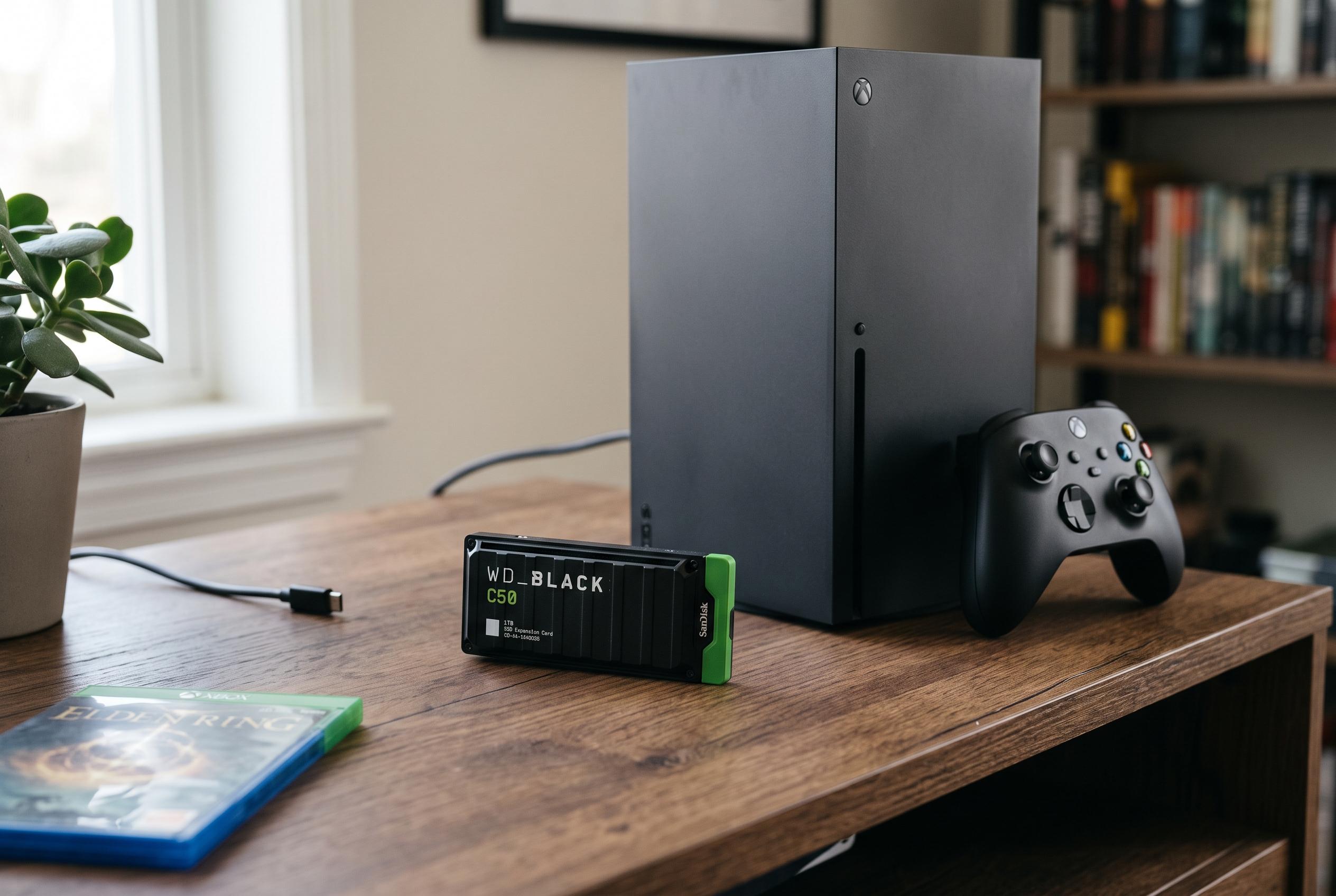

SanDisk launches a new range of Xbox Series X and S SSD expansion cards amidst rising memory prices and a recent global console price increase, making storage upgrades more expensive than the consoles themselves.
SanDisk has brought a new line of Xbox storage expansion cards to market just as console and memory prices continue to climb. The Optimus GX C50 series is designed for Xbox Series X and Series S systems and comes in 512GB, 1TB and 2TB versions. According to GamesRadar, the cards are tuned for Microsoft’s Velocity Architecture and support Quick Resume, the console feature that lets players return to suspended games quickly.
The pricing, however, is striking. SanDisk lists the 512GB card at $109.99, the 1TB model at $199.99 and the 2TB version at $339.99. That makes the largest card more expensive than the Xbox Series S was at launch, when Microsoft sold the entry-level console for $250. GamesRadar also said the 1TB card is priced well below some rival licensed options, including WD’s 1TB C50 at $374.99.
The release lands during a broader Xbox price reset. Microsoft confirmed a global increase from August 1, 2026, with the 512GB Xbox Series S rising to $499.99 and 1TB models increasing by $150. The two-terabyte Xbox Series X has also been discontinued, according to reports from Gematsu, TechSpot and Tom’s Hardware. Microsoft has blamed rising costs for storage and memory components.
The situation reflects a wider squeeze across the games hardware market. MuyComputer said DRAM prices have surged sharply over the past year and that NAND flash, which underpins SSD storage, has also been hit. The result is a market in which expansion storage for one console can now cost more than the machine itself, leaving players with fewer affordable options and less flexibility than PC users, who can still choose standard M.2 drives that may be reused elsewhere.
Disclaimer: This content is intended for informational purposes only. Readers are advised to exercise their own judgement, conduct due diligence, or consult a qualified expert before acting on any information provided.