
Advanced USB4 technology and increased power delivery have transformed short USB-C cables from simple accessories into essential high-performance links, ideal for mobile users and professionals alike.
USB cables have moved far beyond simple charging leads. In the latest generation of Type-C hardware, power delivery has climbed from 100W to 240W, data rates have doubled from 40Gbps to 80Gbps, and the same connector can now carry video as well as power and data. Against that backdrop, a 15cm cable may seem modest, but it can be surprisingly useful for phones, portable batteries, laptops and external SSDs when desk clutter and bag space matter. According to ASCII.jp, that is the niche the author set out to fill.
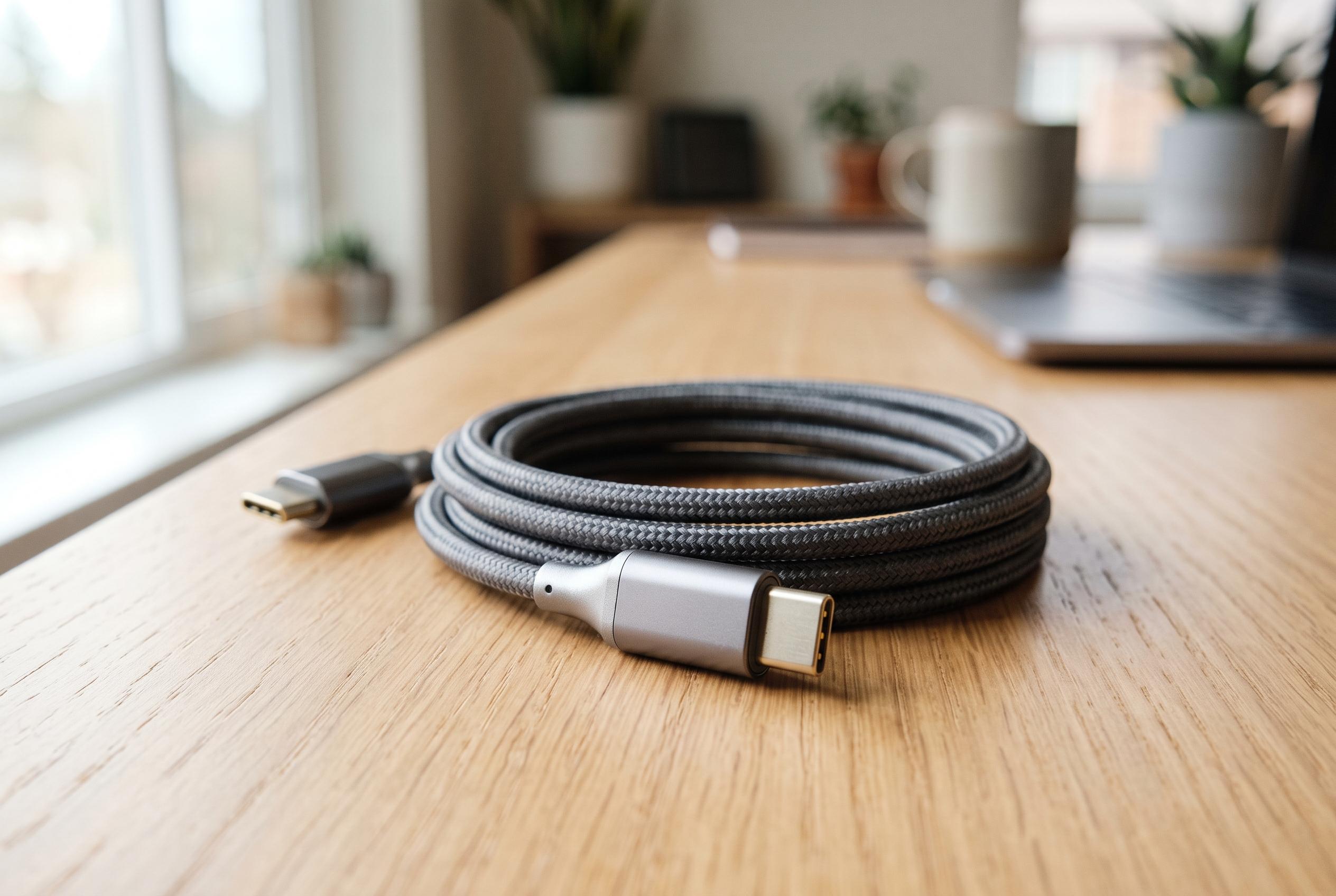
The cable in question was bought from Hagibis Official Store on AliExpress for 1,024 yen in early August 2026, a price that sits below premium branded rivals but is not trivial for such a short accessory. Its construction is clearly aimed at portability and protection: a dense braided outer layer, zinc alloy housings, a looped ring for carrying, and screw-on caps covering the USB-C ends. That design reduces the risk of dirt entering the plugs and helps stop the metal tips from knocking against other items in a bag.
The point of the cable is not just convenience, but capability. USB4 models such as Pearstone’s 80Gbps 240W cable are now sold as USB-IF certified accessories, and Dell lists a Bull Creek Tech USB-C cable with 80Gbps data transfer, 240W charging and support for DisplayPort Alternate Mode for high-resolution displays. Those products show how short USB-C leads increasingly serve as serious high-performance links rather than mere charging cords.
In practical use, the 15cm Hagibis cable was paired with a ThinkPad X1 Nano and a Hagibis NVMe SSD enclosure rated at 10Gbps. That means the cable’s 80Gbps ceiling was not the limiting factor, but the test still showed it could handle the enclosure cleanly without becoming the bottleneck. The same setup also worked with a Nothing CMF Phone, allowing photos on the external SSD to be reached from a handset. For short-distance phone-and-SSD use, the author found the compact length easier to manage than a one-metre lead, especially when travelling.
Disclaimer: This content is intended for informational purposes only. Readers are advised to exercise their own judgement, conduct due diligence, or consult a qualified expert before acting on any information provided.