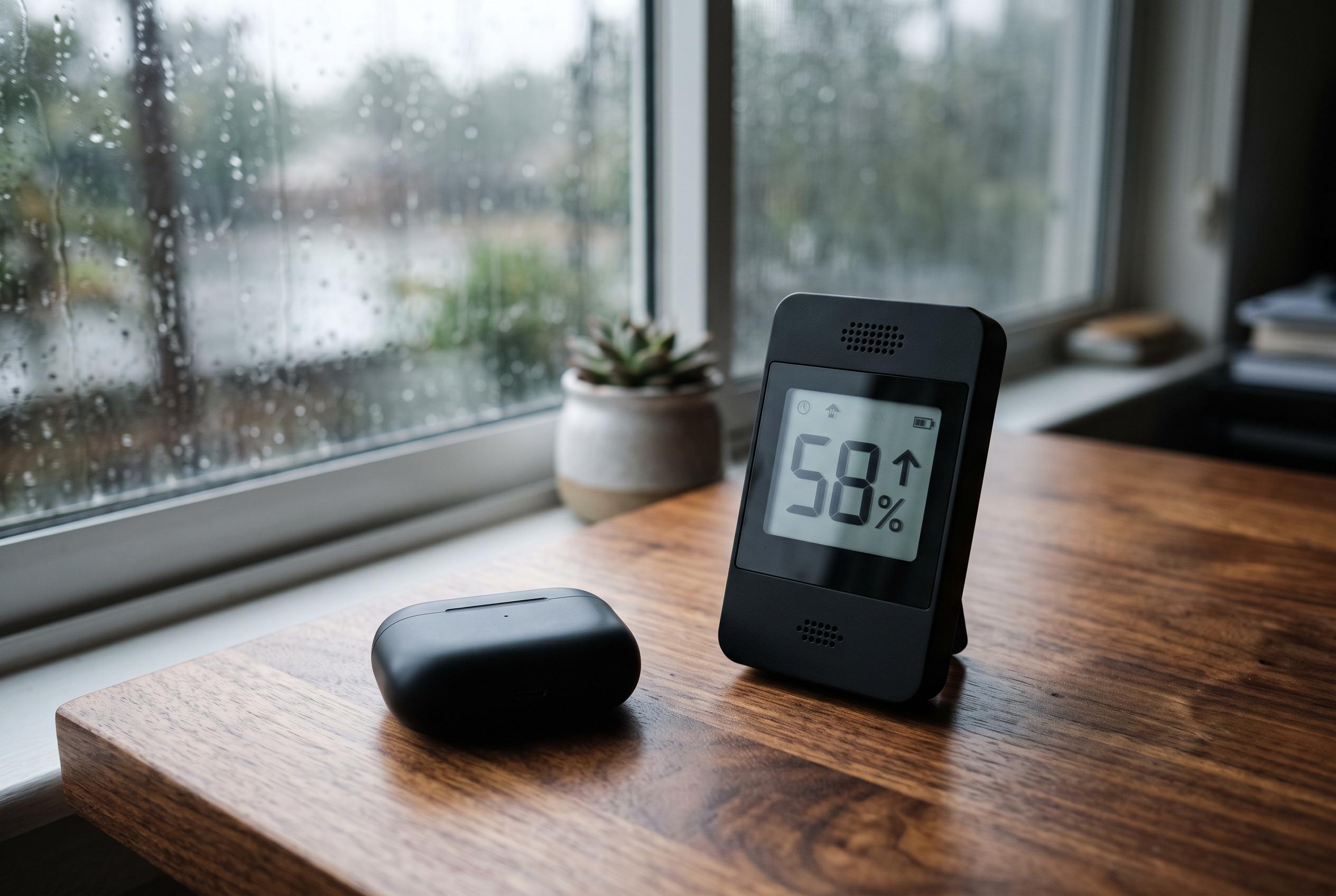

With post-monsoon humidity on the rise, home users are turning to smart hygrometers like Govee H5075 and SensorPush HT.w to safeguard small electronics from moisture damage, according to experts.
Post-monsoon humidity can do more than make a room feel damp. For small electronics, persistent moisture raises the risk of corrosion, condensation and gradual component damage. The practical first step is not buying storage gear, but measuring the actual indoor humidity level. Without that baseline, protection choices are largely guesswork.
According to Analytics Insight, a smart hygrometer is the most useful starting point for home users. The Govee H5075 uses a Swiss-made sensor, Bluetooth connectivity and app alerts that can warn when humidity moves beyond a set range. It also records historical readings for export, which makes it more useful than a basic handheld gauge for anyone trying to track changing conditions over time.
For larger or separate storage spaces, the SensorPush HT.w offers a stronger monitoring setup. SensorPush says the device adds Wi‑Fi connectivity, cloud logging and a water-resistant build, which makes it better suited to keeping watch over equipment in another room or in a less controlled environment. SensorPush also positions the model as part of a broader range that includes features such as long battery life and compatibility with a gateway for wider remote access.
Humidity monitoring is only one part of the wider protection strategy. Analytics Insight also points to electronic dry cabinets and rechargeable silica gel packs as useful additions where valuable devices need longer-term storage. That advice aligns with broader industrial guidance from Dristeem, which notes that even small shifts in humidity can unsettle sensitive electronics and compromise process stability. In steady, air-conditioned spaces, however, dedicated humidity gadgets may be unnecessary if conditions already remain tightly controlled.
Disclaimer: This content is intended for informational purposes only. Readers are advised to exercise their own judgement, conduct due diligence, or consult a qualified expert before acting on any information provided.