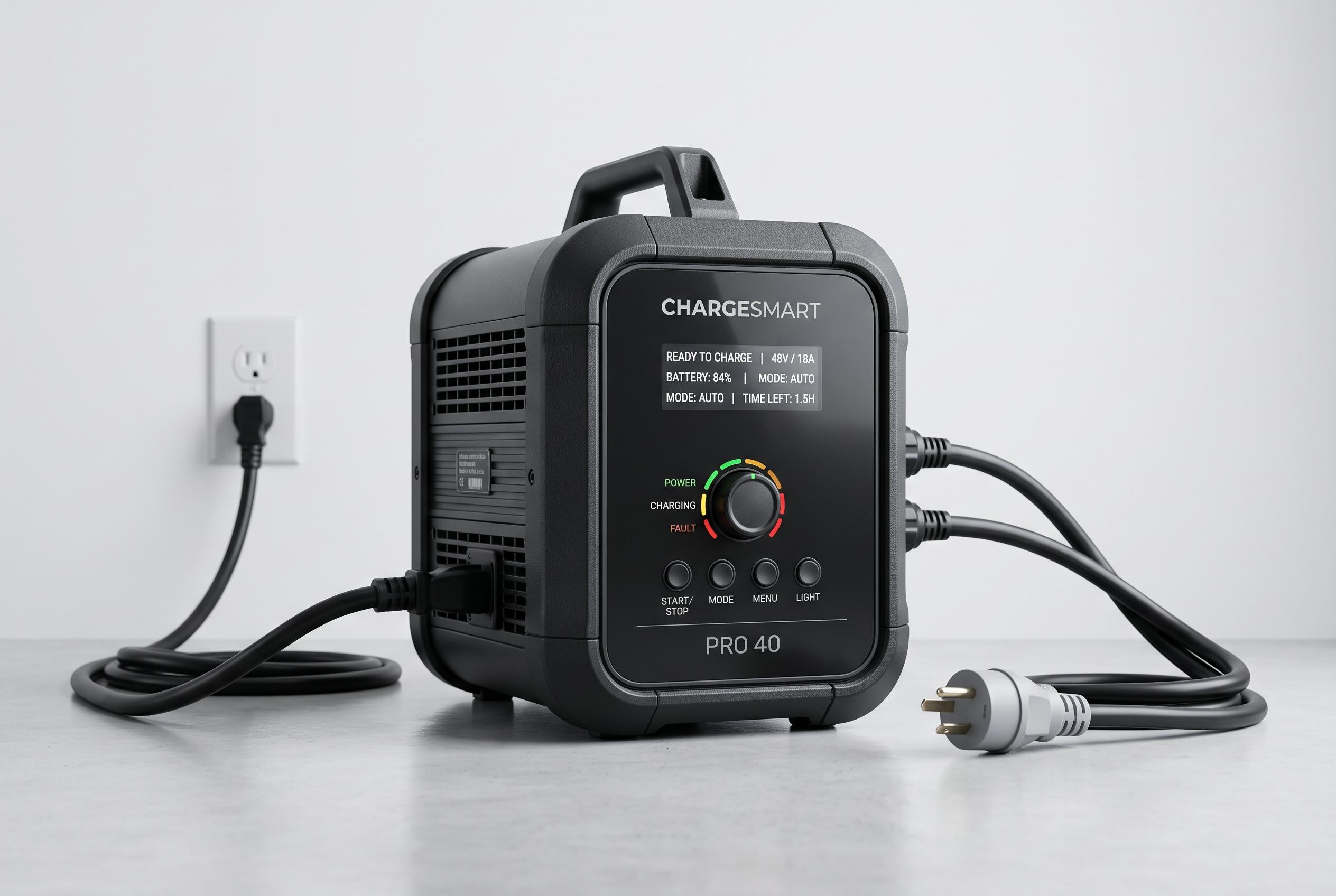

Modern automatic golf cart chargers now incorporate smart controls, weather resistance, and maintenance modes, aligning with specific voltages, connector types, and battery chemistries for enhanced performance outdoors and frequent use.
Choosing an automatic golf cart charger is largely a matter of matching voltage, plug type and battery chemistry. The best options for 36V and 48V carts now tend to add smart charging controls, maintenance modes and weather resistance, which matters for owners who store vehicles outdoors or charge them frequently. Guidance from Basen Golf Battery and Battery Stuff both points to the same essentials: the charger must suit the cart’s voltage and connector, and its output should be appropriate for the battery pack rather than chosen on raw power alone.
For EZGO TXT owners who want quicker charging and a tougher outdoor build, the EPOWREY 18A 36V charger is positioned as the speed-focused choice. It uses a D-style plug and an IP67-rated enclosure, which should help in wet or dusty conditions. Battery Stuff says the basic rule remains simple: a 36V pack needs a 36V charger. That makes connector compatibility the deciding factor here as much as charging speed. The FORM 36V EZGO TXT charger follows a similar route but adds a longer 16-foot cable and maintenance mode, which may suit users who need more flexibility at the charging point.
Club Car and mixed-fleet owners have more options, especially where smarter charging is the priority. According to the product information, the Autory 48V 15A charger automatically adjusts voltage and current, then drops to trickle mode as the batteries approach full charge. That is the sort of control Battery Tender describes in its own 36V and 48V chargers, where intelligent state-of-charge management is used to shift into float maintenance after charging. For carts with a round 3-pin connector, the EPOWREY 15A 48V model offers a similar maintenance-oriented finish, while the TRAMROOT 18A 36V charger is built for crowfoot-equipped carts from Club Car, EZGO and Yamaha.
Durability is a major theme across the stronger picks. Basen Golf Battery notes that outdoor use puts a premium on weather resistance, and several of the chargers here respond to that need with IP67 sealing, aluminium housings or weatherproof coatings. The TRAMROOT model combines a solid aluminium body with automatic trickle charging, while the FORM charger uses a WeatherShield coating to protect internal parts. Golf Cart Garage’s listing for a crowfoot-plug charger also underlines the value of automatic voltage detection and multi-stage charging for battery life, which is useful context for buyers comparing premium models.
The main buying lesson is that automatic does not mean universal. Voltage, connector type and battery chemistry still determine whether a charger is suitable, and that is especially important where lithium or LiFePO4 packs are involved. Some models in this group support multiple chemistries, while others are clearly built for lead-acid systems. For most buyers, the safest shortlist will be the one that matches the cart’s plug, the battery pack’s voltage and the charging pattern the vehicle actually sees: rapid top-ups, overnight maintenance or regular outdoor use.
Disclaimer: This content is intended for informational purposes only. Readers are advised to exercise their own judgement, conduct due diligence, or consult a qualified expert before acting on any information provided.