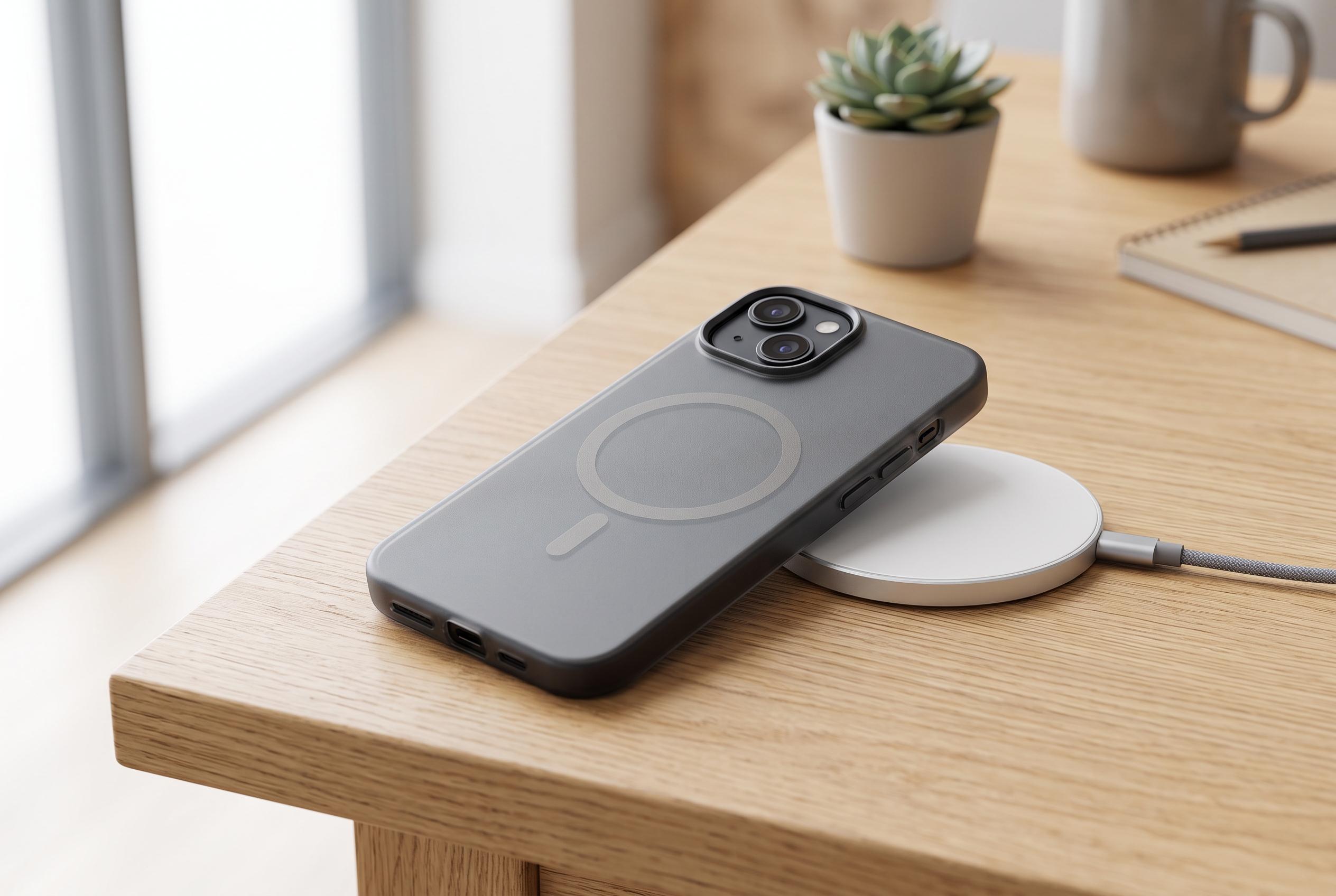

As wireless charging becomes standard, case design plays a decisive role in ensuring efficient power transfer, with thinner, non-metallic materials best suited to support seamless charging due to their unimpeded magnetic fields.
Wireless charging has moved from a novelty to a standard feature on many smartphones, but case design still determines how well it works. The basic technology depends on electromagnetic induction, which means the charger and handset must sit close together and stay properly aligned. If the gap is too large or the materials are wrong, charging can become slower, inconsistent or fail altogether, according to accessory makers and charging guides.
The modern market for wireless charging began to take shape with the Palm Pre in 2009, which used a magnetic stand to help align its coils. Wider adoption came later, first through devices such as the Nokia Lumia 920, which introduced Qi support, then through phones including the Samsung Galaxy S3 with an add-on accessory and the Google Nexus 4 with built-in Qi charging. Apple gave the category another boost when the iPhone 8 added wireless charging and the iPhone 12 later popularised MagSafe-style magnetic alignment.
Most problems do not come from the charger itself. They come from cases that are too thick, contain metal or include magnets in places that interfere with the charging field. EcoFlow says cases thicker than 5mm can obstruct the process, while Anker notes that many chargers can tolerate only a limited gap, with bulkier rugged cases most likely to cause trouble. Several manufacturers also warn that metal plates, wallet-style covers and built-in batteries can reduce efficiency or block charging entirely.
The safest choices are usually thin cases made from non-metallic materials such as silicone, plastic, leather, TPU or polycarbonate. Anker and other case makers say these materials generally work well because they do not interrupt the coil’s magnetic field. By contrast, cases that advertise magnetic compatibility need a built-in ring designed for that purpose, rather than relying on a decorative or unsupported accessory.
For users trying to diagnose a charging fault, the simplest test is to remove the case and place the phone on the pad again. If charging resumes immediately, the case is almost certainly the problem. In practice, that means wireless charging does not require leaving a phone unprotected, but it does reward buyers who check case thickness, material and any magnetic features before they choose one.
Disclaimer: This content is intended for informational purposes only. Readers are advised to exercise their own judgement, conduct due diligence, or consult a qualified expert before acting on any information provided.