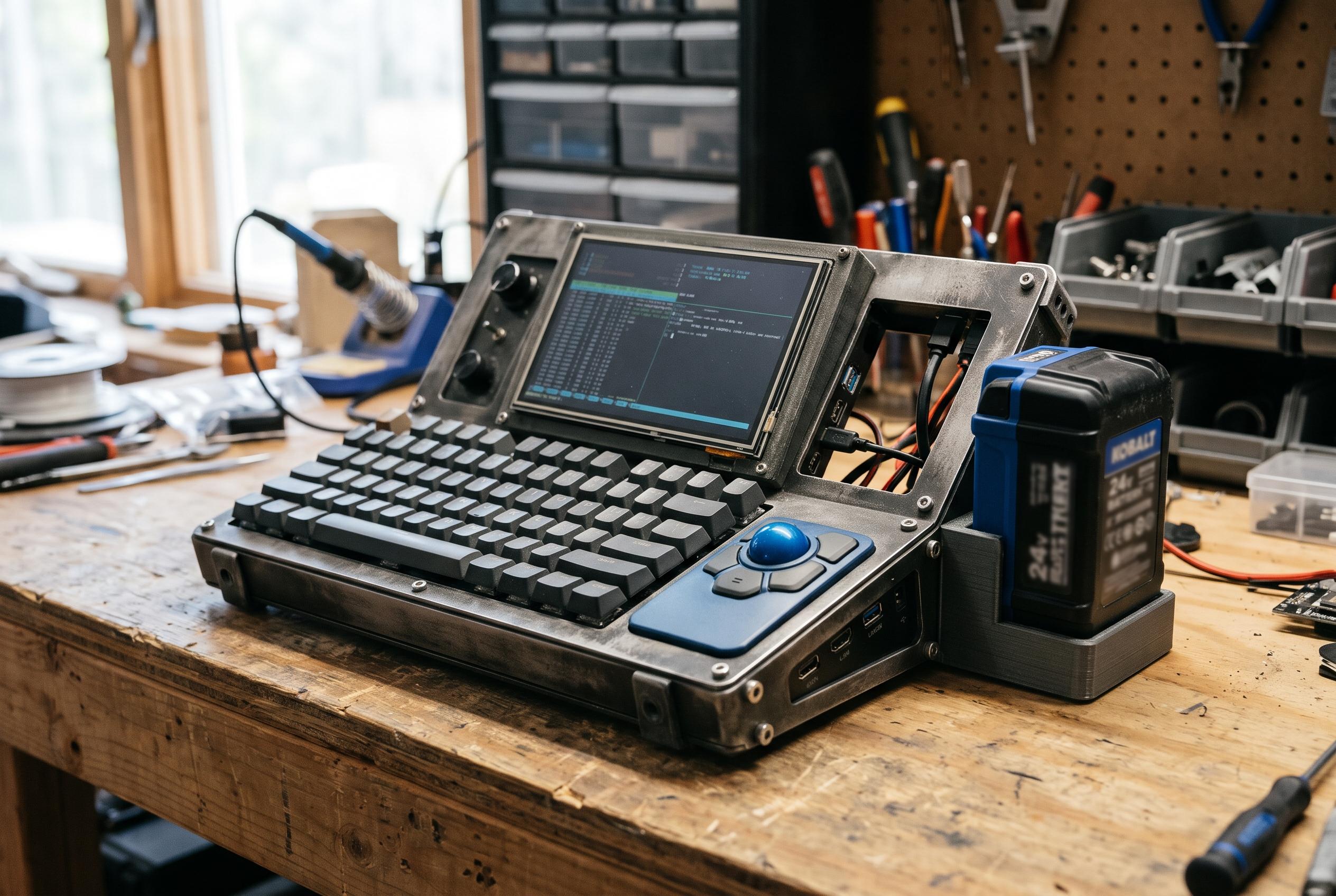

The Slurptop combines a Ryzen 7 mini PC, full-height mechanical keyboard and trackball with a workshop-friendly 24V battery system.
The Slurptop is a cyberdeck with a clear purpose: it is built to be used, not merely admired. Even so, it manages to be unusual enough to fit comfortably within the genre’s more theatrical traditions. The machine, created by modder Slurp Burgers, trades novelty for practicality while still leaning hard into the visual language of improvised computing hardware. Its most striking choice is also one of its most sensible: power comes from a swappable 24V Kobalt tool battery, giving the device a distinctly workshop-ready character.
Under the custom 3D-printed shell sits a GMKtec M5 Ultra mini PC motherboard with an AMD Ryzen 7 7730U processor, according to several reports on the build. That gives the Slurptop far more conventional computing muscle than many hand-built cyberdecks, which often prioritise appearance over sustained performance. The design is intended for everyday portable work, and the battery arrangement appears to reflect that. Light productivity use reportedly yields around four to five hours of runtime, depending on the account, with the battery mounted in a way that makes replacement straightforward, though not hot-swappable.
The input hardware is where the machine becomes especially distinctive. Rather than a laptop-style chiclet layout, the Slurptop uses a full-height ergonomic keyboard with MX-style switches, a central numeric keypad and a trackball. Hackaday described the typing experience as unusually satisfying, while other coverage says the trackball was built around the parts of an old gaming mouse, with a PixArt PMW3360 sensor. The result is a device that looks closer to a purpose-built field terminal than a consumer notebook, and that is precisely the point.
Power management is handled with equal pragmatism. The build includes a high-speed UPS-style switch that can move between wall power and the battery supply, allowing the machine to run from mains when needed. Charging, however, still happens through the battery’s own charger rather than through the device itself. That limitation does little to blunt the appeal of the concept. If anything, it reinforces the Slurptop’s central idea: a portable computer should be repairable, modular and ready for work, even if its parts come from the hardware aisle rather than a conventional laptop catalogue.
Disclaimer: This content is intended for informational purposes only. Readers are advised to exercise their own judgement, conduct due diligence, or consult a qualified expert before acting on any information provided.