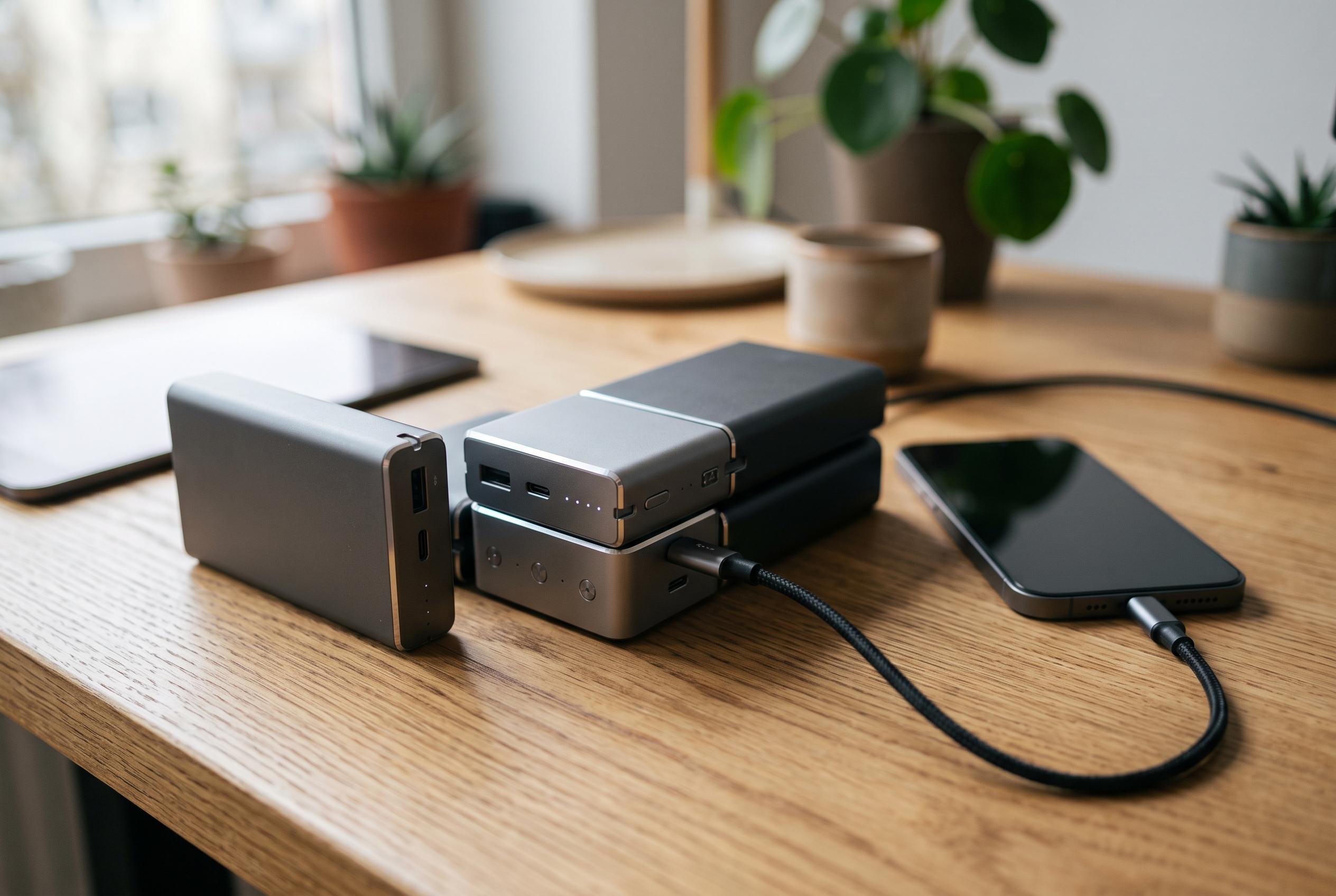

TROZK has launched the T3 module power bank, a flexible, three-part system allowing users to scale capacity from 5,000mAh to 15,000mAh, offering personalised charging solutions tailored to daily needs and device types.
TROZK’s T3 Module Power Bank takes a simple problem and answers it with a modular one. According to the company, the device is built as three separable sections that can be combined or used on their own, allowing the user to scale capacity and bulk to the task at hand. In its full configuration, the system offers up to 15,000mAh, but it can also be pared back for lighter everyday carry or split for simultaneous use with more than one device.
The design is centred on three components. Module A acts as the control unit and includes the ports as well as a built-in USB-C cable. Module B adds a 10,000mAh battery reserve, while Module C provides a more compact 5,000mAh option. TROZK says the idea is to let users decide whether they want a single larger pack, a smaller standalone charger, or a mixed arrangement depending on whether they are topping up a phone, tablet or laptop.
That flexibility is paired with a few practical touches. The company says Module A’s cable is stored in a looped form for easier retrieval, while Module B includes a display that shows remaining charge. TROZK also says the power bank uses 21700 lithium-ion cells, the larger cylindrical cells found in some electric vehicles and higher-capacity portable devices, and that the casing is designed with fire resistance in mind to help mitigate risks from overheating, overcharging or short circuits.
The product sits within a wider trend towards more adaptable charging gear. Yanko Design described the T3 as a response to the familiar trade-off between portability and capacity, while other coverage from FreeYork and CHIP.pl drew the same contrast between smaller everyday chargers and heavier high-capacity alternatives. TROZK lists the T3 at $75.99, with free delivery on orders above $55, and says it is available in orange or grey. For readers who value fewer devices and more configurable hardware, it is a neat example of a concept that is usually confined to larger electronics.
Disclaimer: This content is intended for informational purposes only. Readers are advised to exercise their own judgement, conduct due diligence, or consult a qualified expert before acting on any information provided.