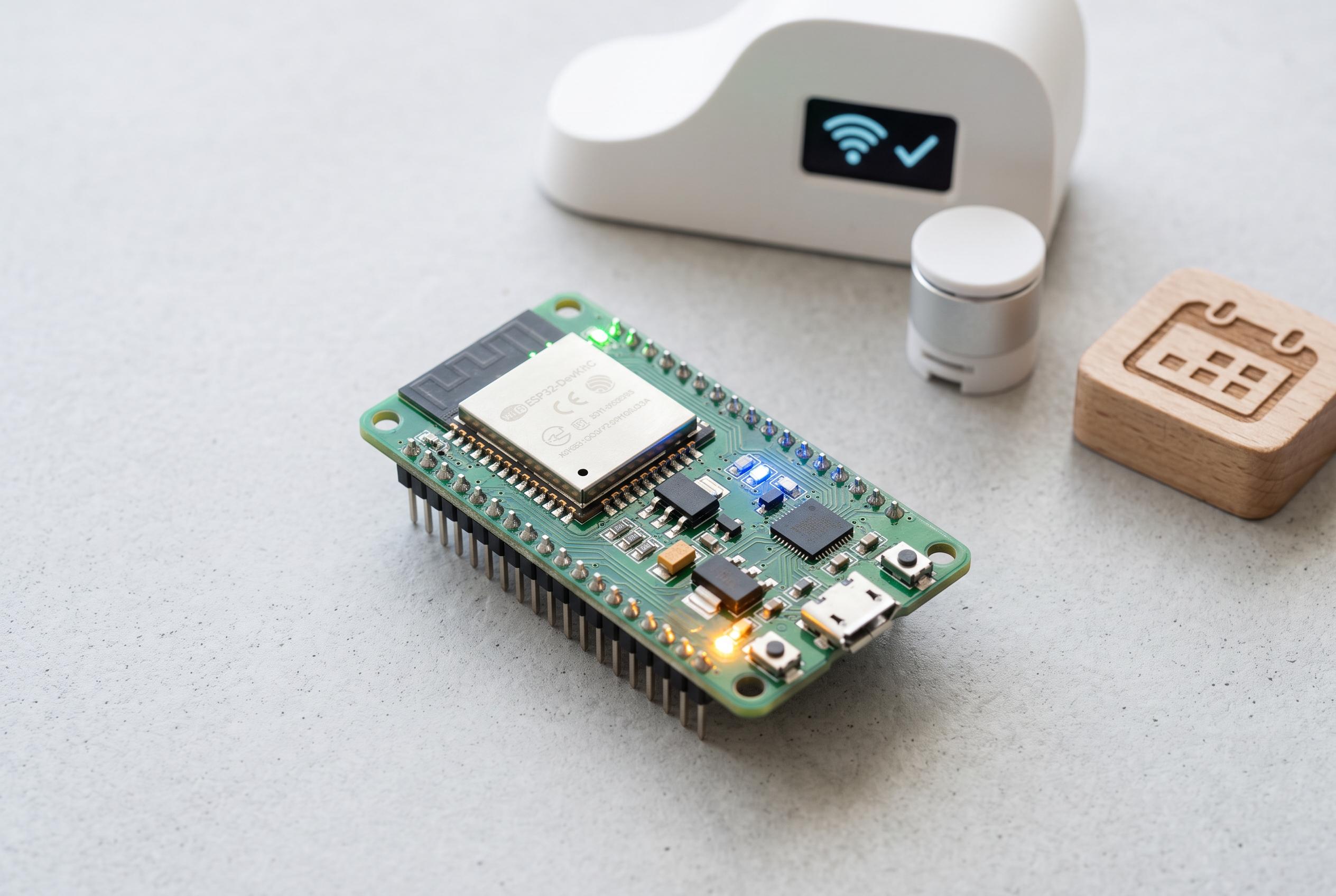

Microcontrollers like ESP32 are expanding beyond single tasks, enabling innovative visual alert systems in smart homes, from internet status indicators to reminders for chores, enhancing reliability and user awareness.
ESP32 boards are often treated as single-purpose gadgets, but they can do more than one job at once. In a smart home built around Home Assistant, that makes even a basic board with an on-board LED surprisingly useful. According to How-To Geek, a spare ESP32 can be turned into a simple visual alert system that surfaces problems without requiring a phone notification or a dashboard check.
One practical use is as an internet status light. The article describes an ESP32 that checks both the router and the wider internet every 10 seconds. If the board cannot reach the router, the LED blinks rapidly. If the router is reachable but the internet connection is down, it blinks more slowly. When everything is working, the light stays on steadily. That kind of local indicator is especially useful in a home setup designed to keep working even when cloud services fail. ESPHome’s status LED component is built for this sort of behaviour, with support for clear visual states such as warning and error conditions.
The same idea can solve a more ordinary but persistent problem: forgetting to put the bins out. How-To Geek suggests using an ESP32 bedroom light as a last-resort reminder. If a Home Assistant helper has not been toggled to confirm the rubbish is ready, the LED begins flashing after 9pm. Because the light is visible in a dark room, it is harder to ignore than a notification on a phone. A similar approach has also been used in other bin-reminder projects. Hands on Katie’s bin fairy setup uses an ESP32-C3 and an LED ring to signal which collection is due, with colour-coded reminders for different waste streams.
Laundry is another task where a small light can be more effective than an alert on a handset. The How-To Geek piece notes that a smart plug, vibration sensor or appliance integration can detect when a wash has finished, but the resulting notification can still be missed. An ESP32 LED can flash in a chosen pattern until the laundry is removed. Yahoo’s coverage of Home Assistant laundry alerts points to the same principle from a slightly different angle, using power-draw monitoring to detect when a machine has finished its cycle. The broader point is the same: a visible cue is harder to dismiss than a message that can be swiped away.
Low-battery warnings are another good fit. Many Zigbee sensors run on batteries so they can be placed anywhere, but that also means they can fail quietly when cells run low. How-To Geek describes using an ESP32 in a home office to flash whenever a battery falls below 20%, prompting a check of the dashboard before a critical sensor goes offline. That is particularly valuable for leak detectors and other devices that should not disappear unnoticed.
The article also makes the case for using smart home hardware to monitor the smart home itself. An ESP32 LED can be assigned different flash rates or states to show whether devices are unavailable, whether a repair is needed or whether an automation has failed. That approach fits the way ESPHome is designed, with its LED status signals intended to provide quick feedback on device health. It also reflects a wider trend in home automation projects, from mailbox sensors to AI-enabled hubs, where small microcontrollers handle multiple jobs and report problems locally rather than relying only on apps or cloud services.
Disclaimer: This content is intended for informational purposes only. Readers are advised to exercise their own judgement, conduct due diligence, or consult a qualified expert before acting on any information provided.