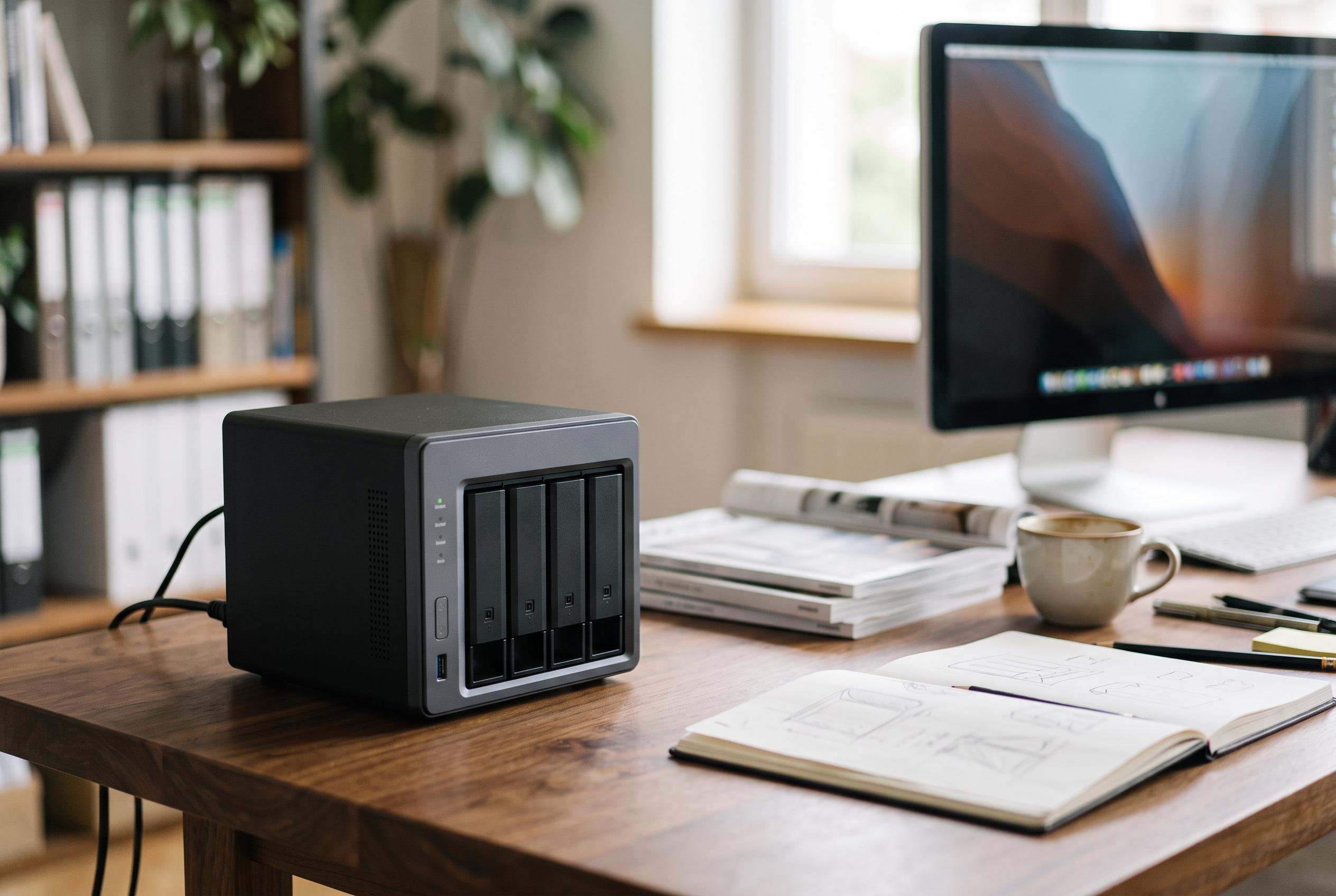

Ugreen’s NASync DXP4800 Pro emerges as a versatile and powerful four-bay NAS, blending advanced hardware with flexible storage options and robust connectivity, challenging pricier rivals for creators and small teams.
Ugreen’s NASync DXP4800 Pro is pitched as a practical middle ground for creators and small teams who want fast local storage without moving to the brand’s larger, pricier systems. At $679.99, or $799.99 at list price, it sits in the same conversation as far more expensive rivals while offering 10GbE networking, dual M.2 slots and a six-core Intel Core i3-1315U. Reviews from AppleInsider, TechRadar and Tech Times all point to the same conclusion: this is a capable four-bay NAS with unusually strong hardware for the money.
The chassis follows Ugreen’s familiar formula: a compact, dark metal enclosure with front-loading, tool-free trays and easy access to the drive bays. Android Central notes the sturdy construction and toolless installation, while AppleInsider highlights the useful front-facing SD card reader and 10Gbps USB ports for quick ingest from cameras and external devices. It is not a desktop showpiece, but it is neatly finished and clearly built for a utility role.
Storage flexibility is a major part of the appeal. The unit accepts four SATA drives up to 32TB each, and two NVMe SSDs up to 8TB apiece, giving a stated maximum of 144TB when fully populated. Ugreen also supports the usual RAID choices, from JBOD and Basic through RAID 0, 1, 5, 6 and 10. That mix makes the device suitable both for redundancy-focused home archives and for performance-oriented workloads that benefit from SSD caching.
Networking is another strong point. The DXP4800 Pro combines a 10GbE port with a 2.5GbE port, which AppleInsider says is a better value proposition than many competing NAS systems that charge more for similar connectivity. Tech Times similarly frames the device as a serious option for creators handling 4K video editing and Docker deployments. The main limitation is obvious: to benefit properly, users need compatible switches, cabling and client hardware.
Inside, the Core i3-1315U and the 8GB of included DDR5 memory give the NAS room for heavier use than a basic file server. AppleInsider says the platform handles Docker containers, virtual machines and media transcoding with ease, and the memory can be expanded to 96GB across two slots. That is far beyond what many competing four-bay systems allow, although it also pushes the cost of a full build higher once users begin adding drives and RAM.
Software remains the part most likely to divide opinion. Ugreen’s UGOS Pro includes common NAS functions, Time Machine support for Apple users, media tools and Docker support, but IT Pro says the app ecosystem still lags some rivals. AppleInsider is more positive on the platform’s maturity, while also noting that users can replace it with TrueNAS or Unraid if they prefer. That flexibility matters for buyers who want control over both the hardware and the operating system.
The trade-offs are power draw and acoustics. AppleInsider measured roughly 140 watts under heavy load and found the fan clearly audible in a quiet room, which makes placement important. For a cupboard, rack or utility space, that is manageable; on a desk or beside a television, it may be less appealing. Even so, the overall verdict across the reviews is consistent: the DXP4800 Pro is one of Ugreen’s most balanced NAS systems, combining strong hardware, useful connectivity and genuine expandability at a price that still looks competitive.
Disclaimer: This content is intended for informational purposes only. Readers are advised to exercise their own judgement, conduct due diligence, or consult a qualified expert before acting on any information provided.