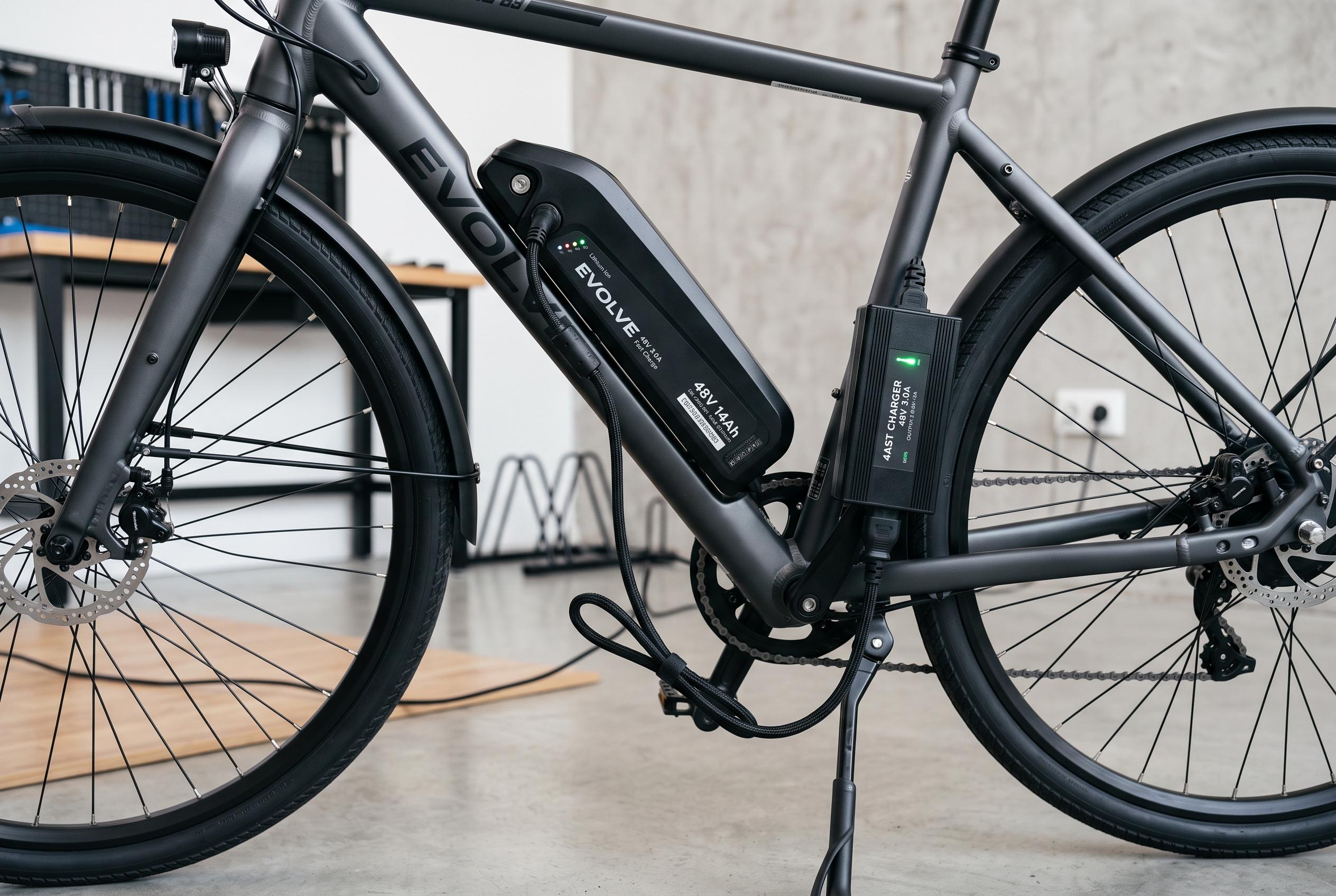

A closer look at the significance of a 48V, 3.0A fast charger for e-bike users, highlighting compatibility, charging times, and safety considerations.
A charger labelled “48V, 3.0A Fast Charger” tells riders two important things: it is built for a 48V nominal battery system and it delivers 3 amps of charging current. For Himiway’s D5 2.0 20, that matters because the bike uses a 48V, 15Ah battery with about 720Wh of nominal energy storage, so the charger is part of a matched electrical system rather than a generic accessory.
The 48V marking does not mean the charger sits at exactly 48V during charging. As several charger guides note, a typical 48V lithium-ion e-bike battery is usually arranged as 13 cells in series and reaches about 54.6V when fully charged. That is why the termination voltage, plug type and polarity all matter. A charger can be described as “48V” because it is designed for that battery class, even though its actual charging profile rises above 48V to complete the charge safely.
The 3.0A rating describes charging current, which helps determine how quickly the battery can be replenished. In simple terms, a 15Ah battery divided by a 3A charger gives a theoretical five-hour charge from empty. Cyberpika says a similar 3A charger can fill a 13Ah pack in roughly 4 to 5 hours, but real-world charging is slower near full because lithium-ion systems reduce current as the battery tops off. Temperature, battery age, charge level and battery-management behaviour all affect the final time.
That is also why the phrase “fast charger” should be understood in relative terms. Compared with a 2A charger, a 3A unit can shorten charging time, but it is not fast in the way a phone charger is fast. An e-bike battery stores far more energy than a handset battery. The 48V, 15Ah pack on the D5 2.0 20 stores roughly 720Wh, so even with a higher-current charger, replenishing it still takes hours, not minutes.
Compatibility remains the main safety issue. Guides from Alibaba Electronics, Engwe and others stress that a charger must match more than nominal voltage. The battery chemistry, final charging voltage, connector, polarity, BMS requirements and manufacturer approval all matter. A plug that fits does not guarantee electrical compatibility, and using an unsuitable charger can lead to overheating, battery wear, loss of capacity or, in the worst case, a fire risk. In Himiway’s system, the charger, 48V battery and 750W motor are designed to work together as a single package, with the charger restoring stored energy after the battery powers the bike.
Disclaimer: This content is intended for informational purposes only. Readers are advised to exercise their own judgement, conduct due diligence, or consult a qualified expert before acting on any information provided.