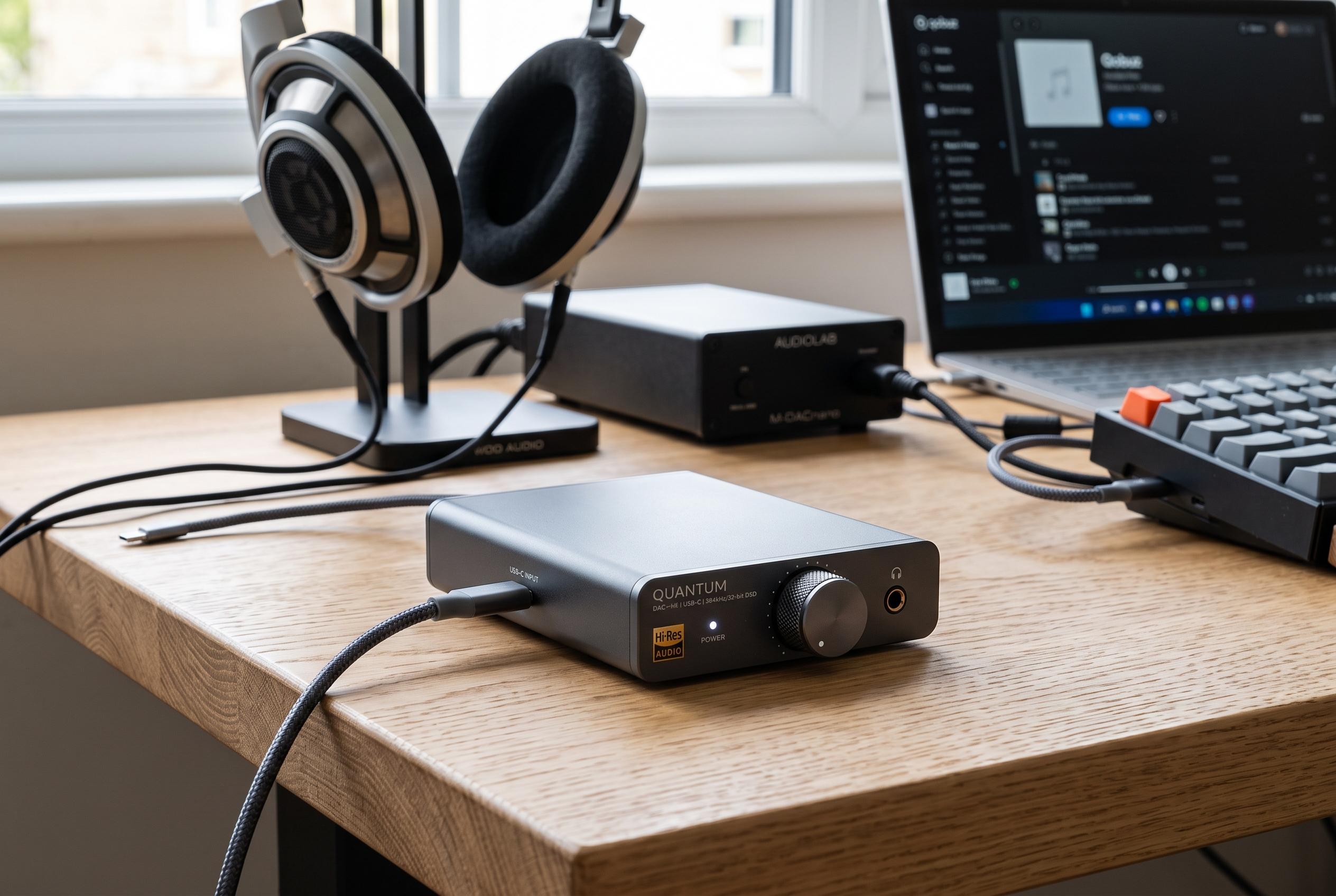

Small, affordable USB-C digital-to-analogue converters are emerging as a game-changer, delivering better sound fidelity and higher power output for demanding headphones on Windows PCs and beyond.
For most Windows 11 users, the 3.5mm headphone jack built into a laptop or desktop is adequate. But audio hardware is not uniform, and the quality of a built-in digital-to-analogue converter, or DAC, can vary widely from one machine to another. A low-cost USB-C DAC offers a simple way to bypass that uncertainty and get more consistent sound from a PC without spending heavily on a desktop amplifier.
The appeal is not just theoretical. Windows typically defaults to 16-bit, 44.1kHz or 16-bit, 48kHz output, which is effectively CD quality. Some systems can be raised manually to 24-bit, 192kHz in Sound settings, which may be enough for high-resolution lossless playback. Even then, according to Tech Advisor and Android Central, the real-world result still depends on the quality of the DAC and amplifier, not the connector type alone.
That is why small dongles such as the Fiio KA11 have gained traction. MakeUseOf says the device can handle 32-bit, 384kHz audio on paper, but its more meaningful strengths are cleaner output, low distortion and a strong signal-to-noise ratio. Those figures matter because they reduce hiss and interference and make playback more faithful, especially on critical listening setups.
Power output is another reason to consider one. A laptop or desktop headphone jack may struggle with high-impedance or low-sensitivity headphones, which can leave them quiet or underpowered. MakeUseOf notes that the KA11 can deliver enough output to drive demanding headphones better than many integrated jacks, while other guides from Turtle Beach and Headphone Experts make the same general point: USB audio devices often include their own amplification, which can outperform weaker built-in hardware.
The other advantage is flexibility. A compact USB-C DAC can move from a desktop to a laptop, tablet or phone with very little effort, and it can add a proper headphone jack to devices that no longer include one. For listeners who want better audio without buying a full desktop stack, that makes an inexpensive USB-C dongle a practical upgrade rather than an enthusiast luxury.
Disclaimer: This content is intended for informational purposes only. Readers are advised to exercise their own judgement, conduct due diligence, or consult a qualified expert before acting on any information provided.