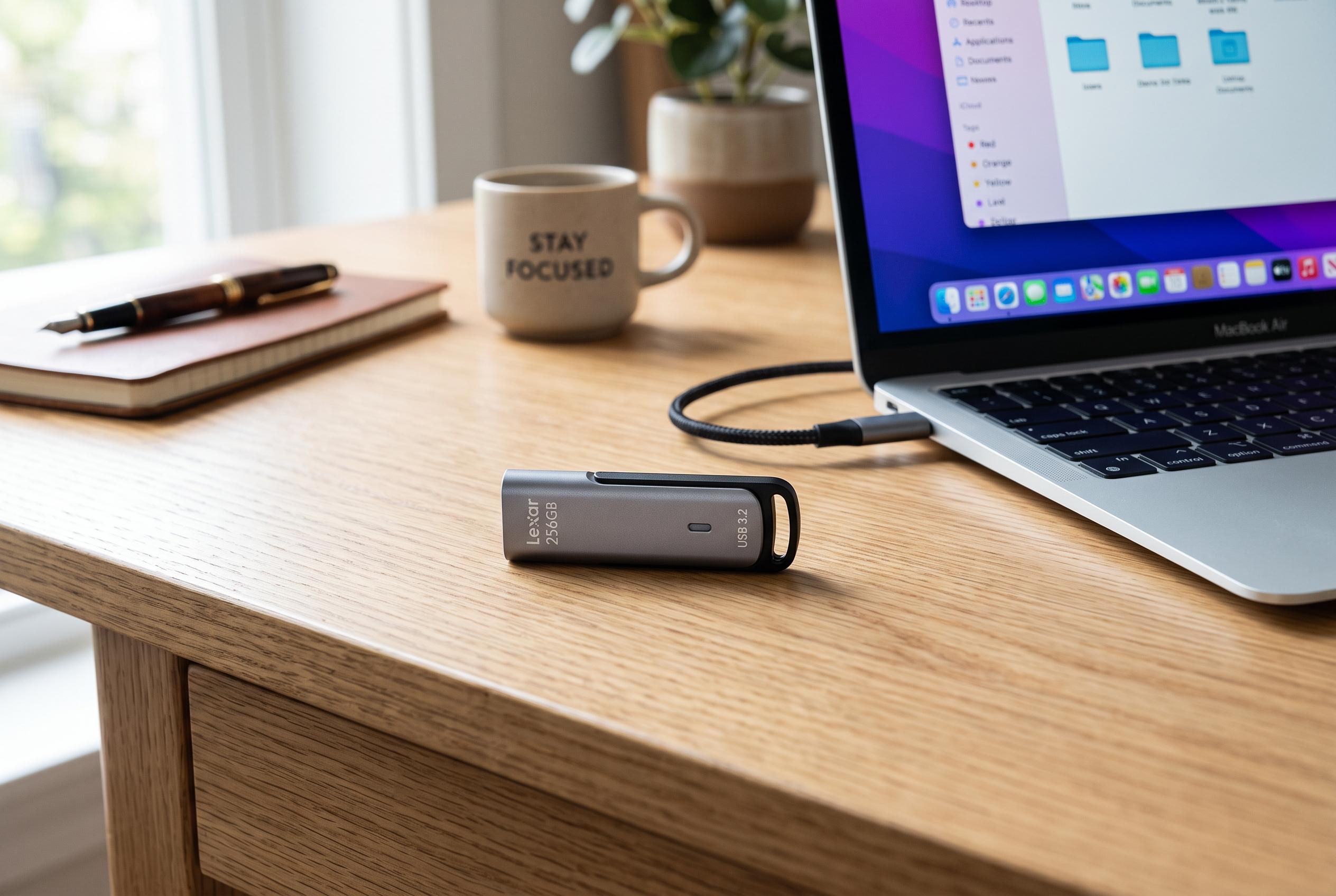

Despite the rise of solid-state drives and cloud storage, USB flash drives are experiencing a resurgence due to price advantages and continued practicality for specific uses, according to recent reports.
USB flash drives, once eclipsed by cloud storage and larger solid-state drives, are showing signs of renewed relevance. According to Thanh Nien, the removable drives that replaced floppy disks in the early 2000s have not disappeared so much as slipped into the background, helped by the simple fact that any device with a USB port can still use them. Their continued usefulness has kept them from becoming obsolete at the same pace as many other consumer gadgets. The Museum of Obsolete Media rates the format at just 1, indicating a low risk of extinction.
The device’s original appeal was portability. History accounts from Wikipedia, Back Then History and Techwalla show that USB flash drives emerged after flash memory and USB standards matured in the 1990s and early 2000s, giving users a small, reusable alternative to floppy disks and Zip drives. USB 2.0 then made them practical for everyday file transfers, while later versions improved speed and capacity. That combination turned the drives into a standard tool for students, office workers and technicians.
Their decline has been tied to changing habits rather than a lack of function. As Thanh Nien notes, people now handle larger files and often need faster transfer rates than basic flash drives can provide. Solid-state drives are generally quicker, more durable and available in much larger capacities, often starting at 1TB and above. Even so, they are not always the cheapest option. Tom’s Hardware recently reported sharp price increases across flash storage products, including USB drives, after supply pressures in late 2025 pushed costs higher across a range of formats.
That pricing shift helps explain why USB flash drives may be regaining some appeal. Thanh Nien says a five-pack of 64GB PNY USB 3.0 drives now costs about $43, which remains far below many SSD options. For people who need boot media, simple document storage or a quick offline transfer tool, the humble flash drive still makes sense. It is unlikely to replace SSDs for serious workloads, but it does remain a compact, familiar and comparatively inexpensive piece of kit.
Disclaimer: This content is intended for informational purposes only. Readers are advised to exercise their own judgement, conduct due diligence, or consult a qualified expert before acting on any information provided.