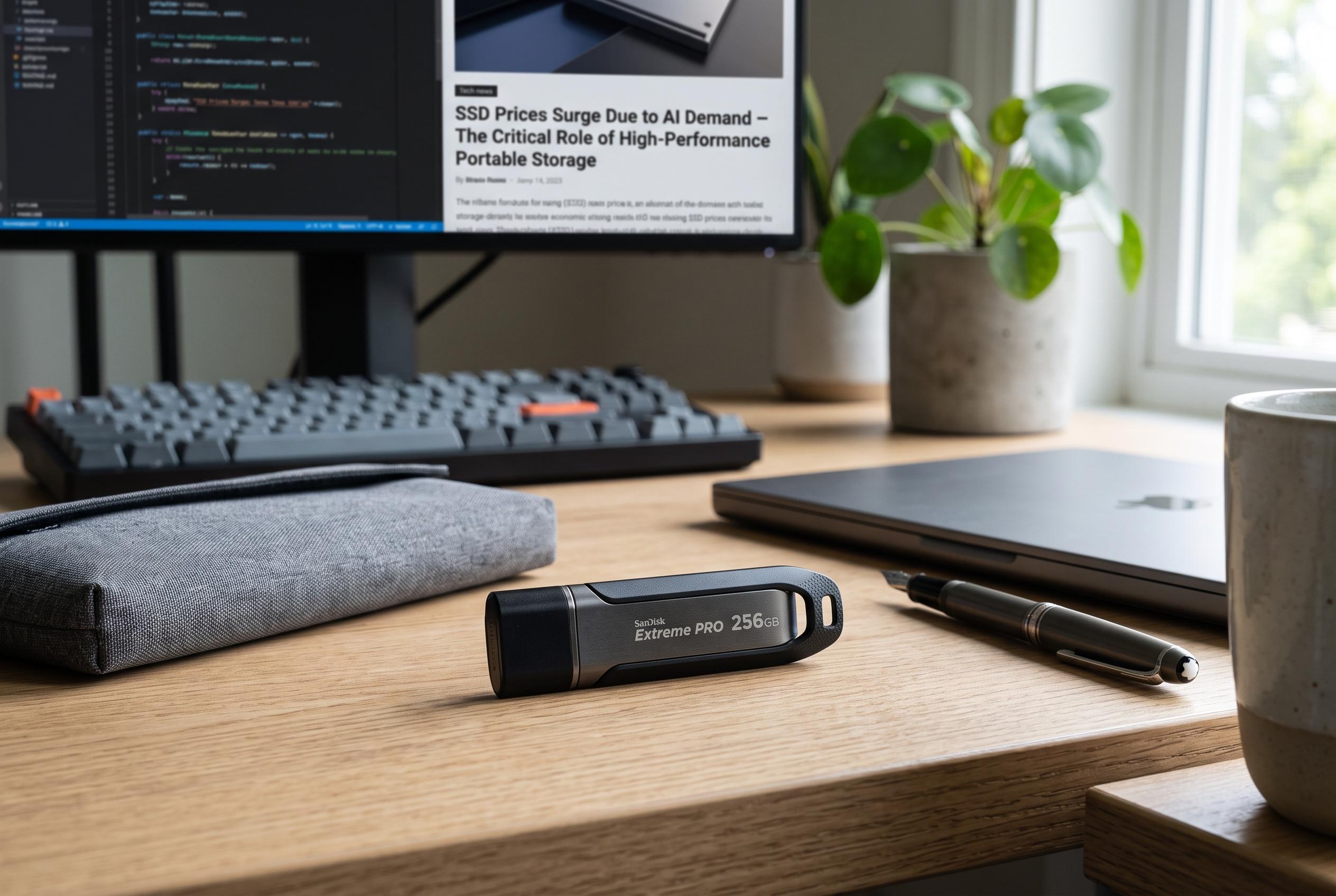

Despite the surge in portable SSD popularity, USB flash drives maintain a niche, bolstered by rising SSD costs linked to AI-driven data centre expansion, proving their continued relevance for specific tasks.
USB flash drives were meant to have faded away by now, squeezed out by faster and larger portable SSDs. Yet they remain common for a simple reason: they still do jobs that bigger, pricier devices do not. According to UNIAN, the surge in demand for memory and storage tied to the artificial intelligence boom has also had an unexpected side effect, making some USB drives relatively more attractive again as SSD prices climb.
The basic case against flash drives is straightforward. They are usually slower, less durable and far smaller than portable SSDs. PCWorld has noted that SSDs are better suited to large files and performance-heavy work, while flash drives are mainly useful for lightweight transfers. The practical gap matters most in professional settings, where IT staff, editors and other creators increasingly handle large video files, backups and archives that quickly outgrow the capacity of a typical USB stick.
Capacity is the clearest limitation. UNIAN says many popular flash drives top out at about 128GB, which is often too little for modern workloads. By contrast, portable SSDs commonly start at 1TB and offer much faster transfer rates. They also tend to use sturdier enclosures and better controllers, making them a better fit for people who move data frequently. As Integral Memory and TechRadar have both observed, portable SSDs combine flash-based storage with far higher performance and a broader range of everyday uses.
The market, however, has shifted in a way that gives flash drives some breathing space. UNIAN reports that demand for storage components has risen sharply since late 2025 as data centres have bought more memory for artificial intelligence systems, pushing SSD prices higher even as PC sales have weakened. The article gives the example of a Samsung 990 Pro 4TB drive rising from $318 in November 2025 to about $1,100 at the time of writing, while smaller flash drives have seen much more modest increases. That has made inexpensive USB sticks more appealing for routine tasks such as moving documents or storing tax records.
There are still clear use cases where a flash drive is the more sensible tool. UNIAN points to bootable installers for Linux or Windows 11, portable systems such as Tails, and compact diagnostic kits as tasks where a small USB stick is easier and cheaper than a full external SSD. PCWorld has similarly said flash drives remain useful for simple file transfers when speed is not the main concern. The result is not that flash drives are winning back the market, but that they are proving harder to kill than many expected.
Disclaimer: This content is intended for informational purposes only. Readers are advised to exercise their own judgement, conduct due diligence, or consult a qualified expert before acting on any information provided.