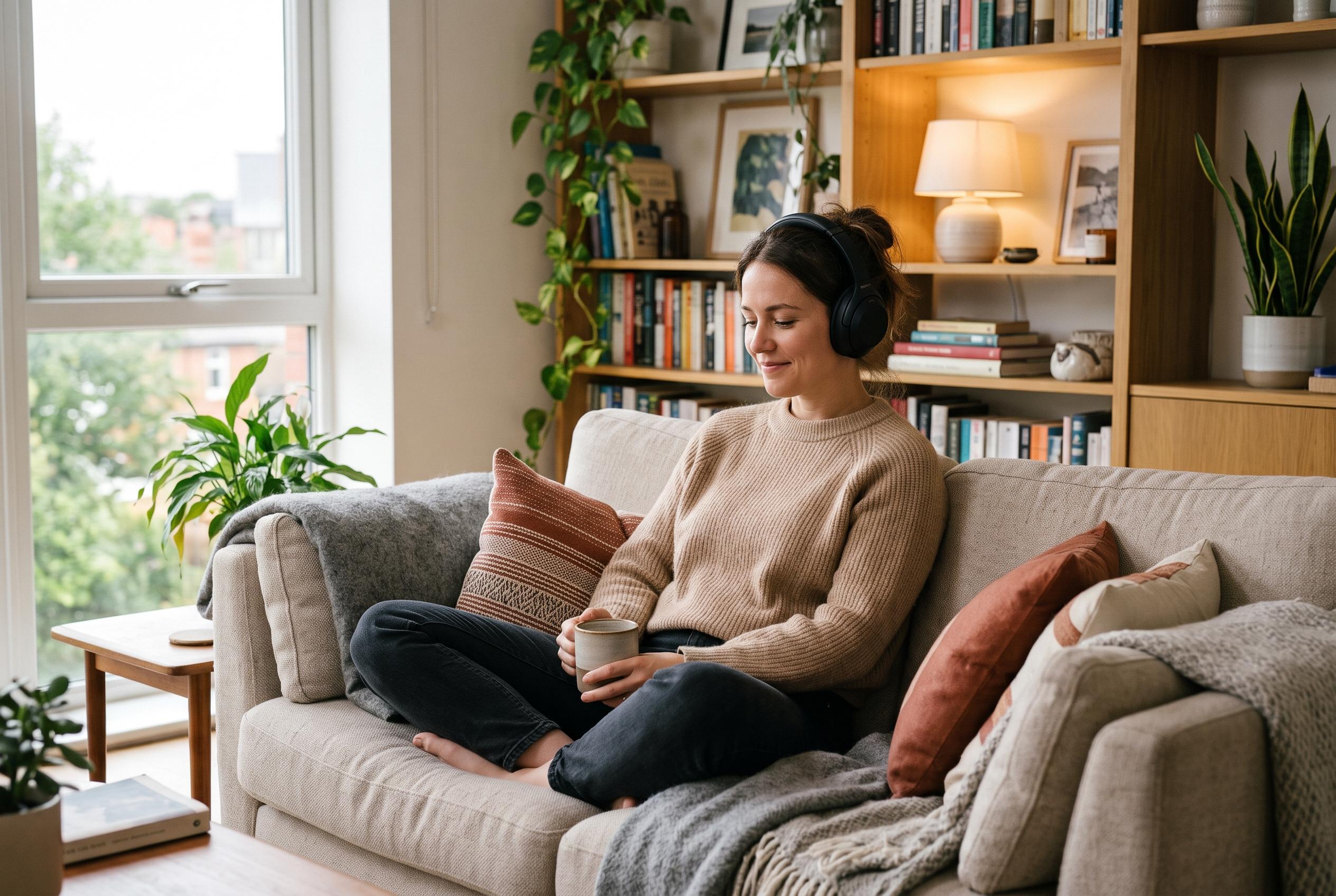

From noise cancellation and battery life to comfort and hearing safety, the best headphones are the ones that match how and where they will be used.
Choosing the right headphones is less about chasing the longest feature list and more about matching the product to the way it will actually be used. Consumer Reports and Best Buy both frame the decision around the same fundamentals: sound quality, comfort, noise cancellation, battery life and connectivity. The most sensible starting point is the main listening context, whether that is commuting, office calls, exercise, gaming, travel or quiet home use.
The physical design matters as much as the specification sheet. Over-ear headphones usually offer the strongest passive isolation and the broadest sense of comfort for longer sessions, while on-ear models are lighter but can become tiring if the clamp pressure is too firm. In-ear headphones and true wireless earbuds are the most portable, but fit varies much more from one user to another. For readers in shared offices or on public transport, closed-back designs or well-sealing earbuds are often more practical than open-back headphones, which leak sound and let in more outside noise. Consumer Reports and Best Buy both note that the best choice depends on the user’s habits, not the category alone.
Fit should come before almost everything else. A model that sounds excellent in a store can still be the wrong purchase if the ear pads press too hard, the headband creates a pressure point, or the earbuds do not stay secure when moving. Glasses wearers should also check whether the seal is preserved, because thick frames can weaken bass and reduce noise cancellation. That is why return policies matter so much: fit and comfort are difficult to judge from photographs, and they often determine whether the headphones will be used daily or abandoned after a week.
The connection type is another decision that should be made early. Bluetooth offers convenience and broad compatibility with modern phones, tablets and laptops, but not every feature works equally well across devices. Codecs, multipoint pairing and low-latency support can all vary depending on the handset, computer or console. Wired headphones remain useful for long listening sessions, gaming, home audio and studio work because they avoid charging and usually reduce delay. True wireless earbuds add portability, but their smaller batteries, charging cases and single-earbud behaviour introduce extra trade-offs. The best choice depends on whether freedom of movement or simplicity of connection matters more.
Noise cancellation is valuable, but it is easy to overestimate. TechRadar’s 2026 buying guide, which highlights the Bose QuietComfort Ultra Headphones for leading active noise cancellation, reflects a wider point repeated across headphone guides: active noise cancellation works best against steady low-frequency noise such as engines, fans and air conditioning, and it is far less effective against sudden voices, wind or irregular street sounds. It also works better when the physical seal is good. Transparency mode can help with short conversations or announcements, but it is not a substitute for paying attention in traffic or other hazardous settings.
Sound quality, meanwhile, is shaped by more than frequency-range claims or driver size. Sound tuning, source quality, seal and personal preference all affect the result. Some listeners prefer bass-heavy profiles for films or electronic music, while others want a more neutral balance for podcasts, vocals or acoustic recordings. Equalisation can help, but it should be used to make small, deliberate adjustments rather than to compensate for a poor fit. Likewise, specifications such as impedance and sensitivity are useful only when they are read in context. As several buying guides emphasise, a larger driver or a longer list of features does not automatically produce better audio.
For work, calls and gaming, microphone quality deserves the same attention as playback quality. Built-in mics in small earbuds can be adequate in quiet rooms, but they often struggle in wind or busier environments. Over-ear headsets with boom microphones are usually more reliable for voice pickup. Battery life also needs to be judged realistically: manufacturers often quote figures measured with reduced volume or without active noise cancellation. Practical buyers should look at charging speed, quick-charge performance, battery indicators and, where possible, replaceable parts. Long-term value is shaped as much by ear pads, cables, cases and firmware support as by the initial purchase price.
Hearing safety should remain part of the buying decision. The safer choice is usually the pair that lets the listener keep the volume lower, hear clearly without strain and take regular breaks. Loudness and duration both increase risk, and noise cancellation should not be treated as permission to raise the volume further. In the end, the best headphones are the ones that suit the listener’s routine, connect reliably to the right devices, stay comfortable for long periods and support safe, practical use.
Disclaimer: This content is intended for informational purposes only. Readers are advised to exercise their own judgement, conduct due diligence, or consult a qualified expert before acting on any information provided.