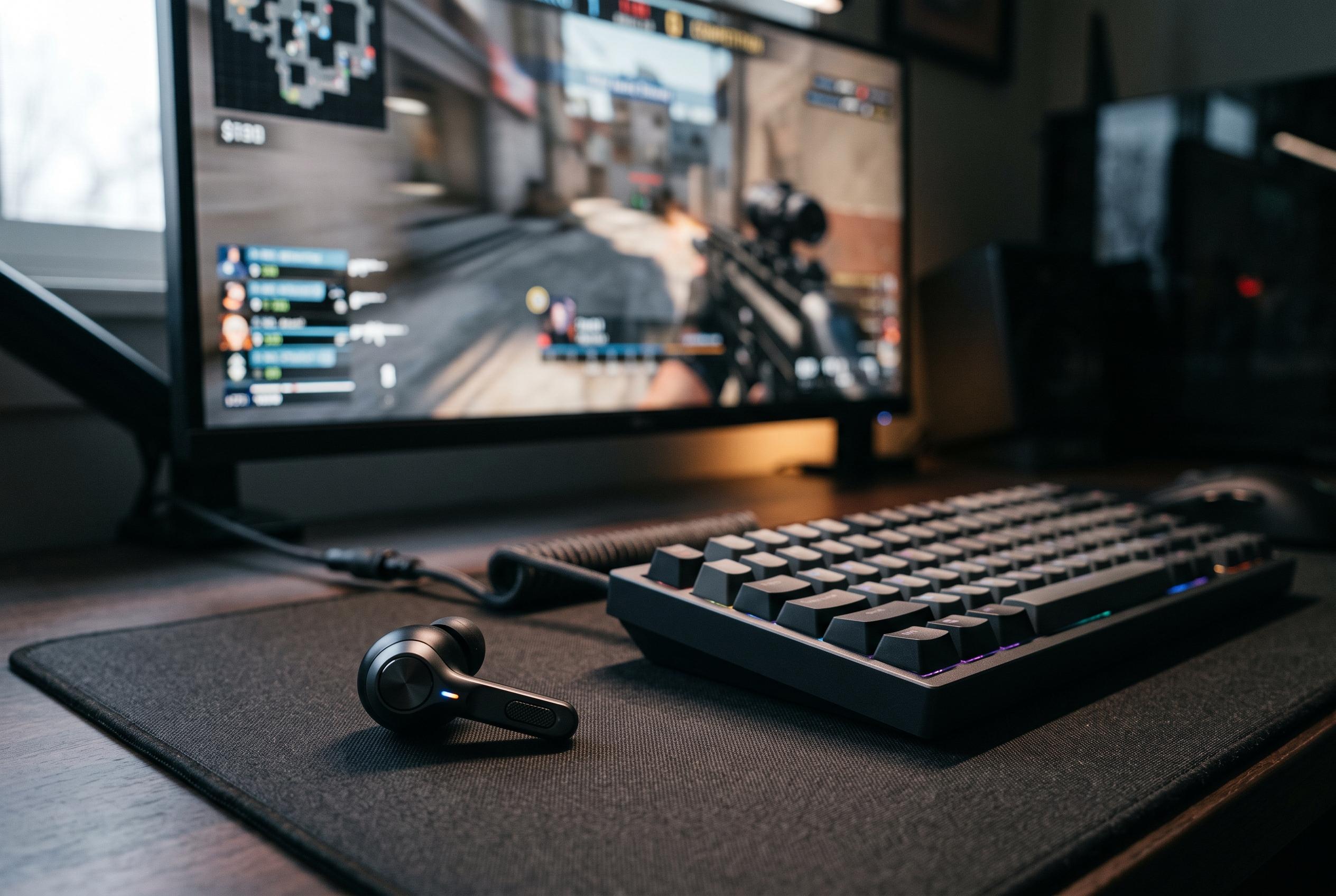

As wireless gaming earbuds evolve, their success hinges on choosing the right connection type, Bluetooth or 2.4GHz, for players’ specific gaming contexts, from casual to competitive.
Wireless gaming earbuds have moved from a niche accessory to a credible replacement for bulkier headsets, but the market still turns on a few hard limits. Connection type matters most. Bluetooth-only models remain fine for casual play, mobile gaming and slower genres, yet they still trail 2.4GHz dongle-based designs when responsiveness is critical. In practice, that means the best products are not simply the ones with the longest feature lists, but the ones that balance low latency, stable connectivity, battery life and platform support without forcing awkward compromises.
At the top of the field sits the SteelSeries Arctis GameBuds, largely because they solve the widest range of problems in one package. They pair 2.4GHz wireless with Bluetooth, work across Xbox, PlayStation 5, PC, Switch and mobile, and add active noise cancellation and an IP55 rating for extra durability. Their main weakness is endurance on a single charge, which is shorter than some rivals, but the Qi charging case helps offset that. For players who move between consoles and devices, that breadth is difficult to match.
Sony’s INZONE Buds represent the strongest PlayStation-first option. According to Sony’s positioning, they are tuned around Tempest 3D AudioTech and 360 Spatial Sound for PS5, while also offering a long combined battery life and noise cancelling. The trade-off is ecosystem lock-in: their Bluetooth LE Audio support does not work with iPhones or iPads, which narrows their appeal outside Sony’s own console and compatible devices. They make the most sense for users who want a gaming earbud that behaves like a dedicated part of the PlayStation ecosystem.
Razer appears repeatedly because it has built several distinct products for different buyers, but the line is fragmented. The Hammerhead HyperSpeed is the clear gaming-focused model, with a 2.4GHz dongle, ANC, dual mics and broad device support. The cheaper V3 X keeps the dongle and Bluetooth combination, but drops noise cancellation to cut the price. Meanwhile, the Bluetooth-only Hammerhead variants lean more towards style, commute use and mobile play than low-lag console gaming. That split matters: Razer’s name does not guarantee the same performance across every model.
Budget buyers are better served by models such as the AOC and Middle Rabbit options, which show that low latency is not exclusive to premium brands. These earbuds can reach around 20ms response times, which is fast enough for competitive play, but the savings come from elsewhere: weaker noise cancellation, less polished microphones, fewer software features and shorter single-charge endurance. Middle Rabbit’s SW4 Pro goes further by adding shooter-focused EQ modes and a companion app, though it asks more of the user in return. For players who want the cheapest workable route into low-latency gaming audio, these models are the practical starting point.
The best choice therefore depends less on headline specifications than on where you play. Xbox owners should focus on genuinely licensed support rather than generic compatibility claims. PS5 and PC users can choose more freely, but should still prioritise a dongle if they play shooters or fast-action games. Mobile-first buyers can accept Bluetooth, provided they understand the latency trade-off. In short, the most important decision is the connection standard. Once that is set, the rest of the ranking becomes much easier to judge.
Disclaimer: This content is intended for informational purposes only. Readers are advised to exercise their own judgement, conduct due diligence, or consult a qualified expert before acting on any information provided.