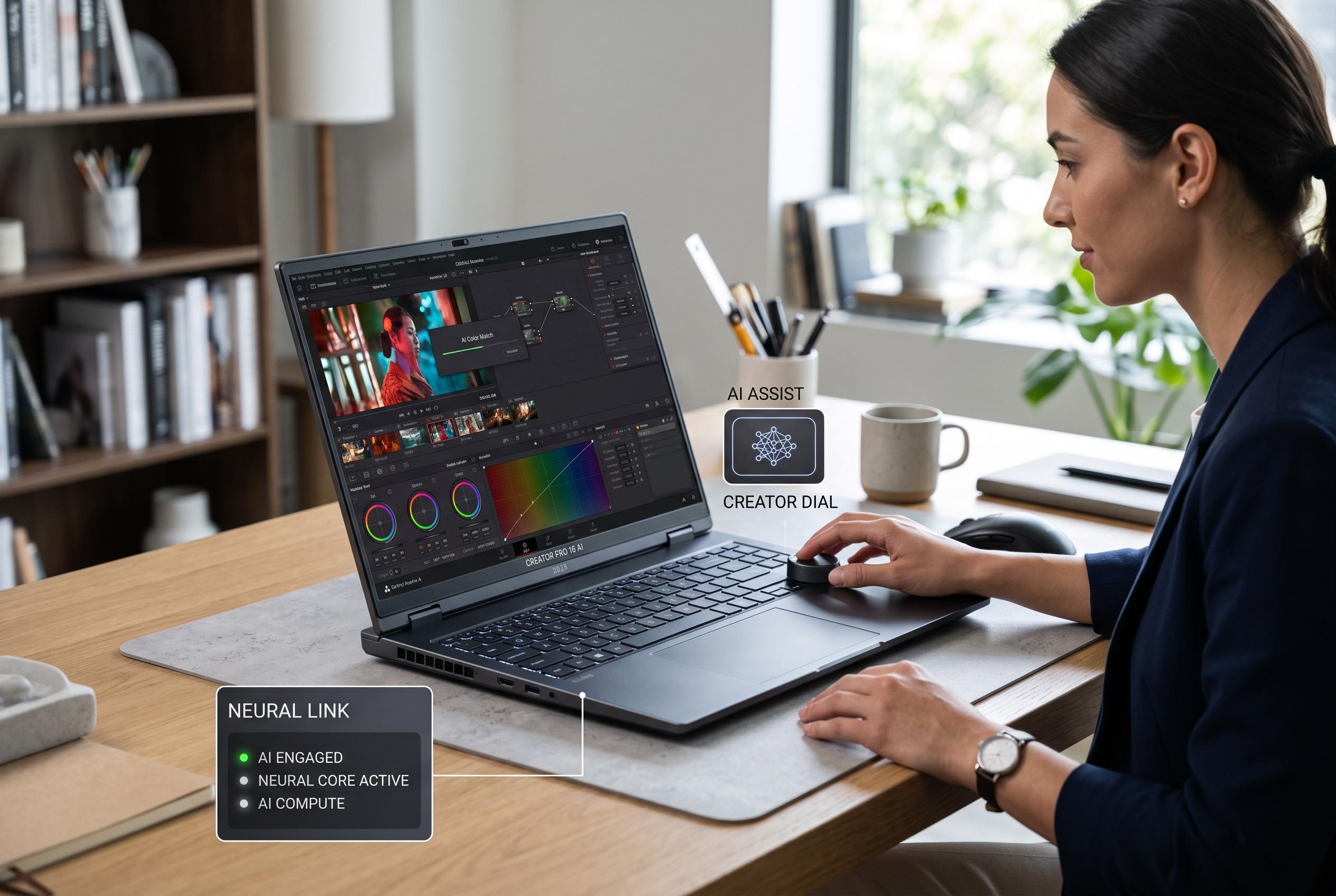

A new wave of creator-focused laptops incorporating on-device AI is transforming the market, emphasising specialised hardware and performance for professional content creation and engineering workloads in 2026.
A new wave of laptops aimed at creators is shifting the market away from raw specification alone and towards machines that use on-device AI to speed up editing, rendering and multitasking. The original roundup argues that 2026 has become the point at which AI features are no longer a novelty but part of the standard brief for serious content work, alongside strong processors, ample memory and fast solid-state storage. It puts the HP OmniBook 16-inch at the top of the list for its balance of performance and flexibility, while also naming the NIMO 15.6 AI-Creator Laptop and Acer Aspire 2026 Touchscreen among the models designed for different creator needs.
That broader trend is reflected in more recent product launches and reviews. TechRadar says HP’s EliteBook X G2i is built around Intel Core Ultra processors and an AI engine capable of helping with tasks such as drafting email, improving video calls and supporting data analysis, while still weighing just 2.2lbs. The same report notes optional 5G, long battery life and business-focused security features. For heavier creative workloads, IT Pro says the MSI Stealth 16 AI+ combines an Intel Core Ultra 9 chip with an Nvidia RTX 5080 graphics processor, 32GB of LPDDR5 memory and a 16-inch OLED touchscreen, positioning it as a machine that can handle gaming, 3D rendering and AI inference with ease.
Workstation-class models are also pushing into this space. TechRadar reports that Lenovo’s ThinkPad P16 Gen 3 pairs an Intel Core Ultra 7 255HX with Nvidia RTX PRO 3000 Blackwell graphics, 64GB of DDR5 memory and a 2TB PCIe Gen5 SSD, making it suitable for sustained creative and engineering workloads rather than casual use. Creative Bloq’s 2026 guide to 3D-modelling laptops reaches a similar conclusion on hardware requirements, stressing that demanding creative work benefits most from dedicated RTX graphics, at least 32GB of RAM and effective cooling, with real-world testing often more valuable than headline specifications alone.
ASUS has also outlined its next-generation ProArt range, saying the ProArt P16 and P14 will use NVIDIA’s RTX Spark platform to target AI-empowered creators and developers. The company claims the systems can handle very large 3D scenes, generate AI video and run large language models locally. That direction suggests the laptop market is moving towards specialised creative hardware rather than general-purpose laptops with added AI branding. Even so, the original report’s caution still matters: many of these AI tools may improve workflow, but their practical value will depend on the user’s software, file sizes and how much mobility they need.
Disclaimer: This content is intended for informational purposes only. Readers are advised to exercise their own judgement, conduct due diligence, or consult a qualified expert before acting on any information provided.