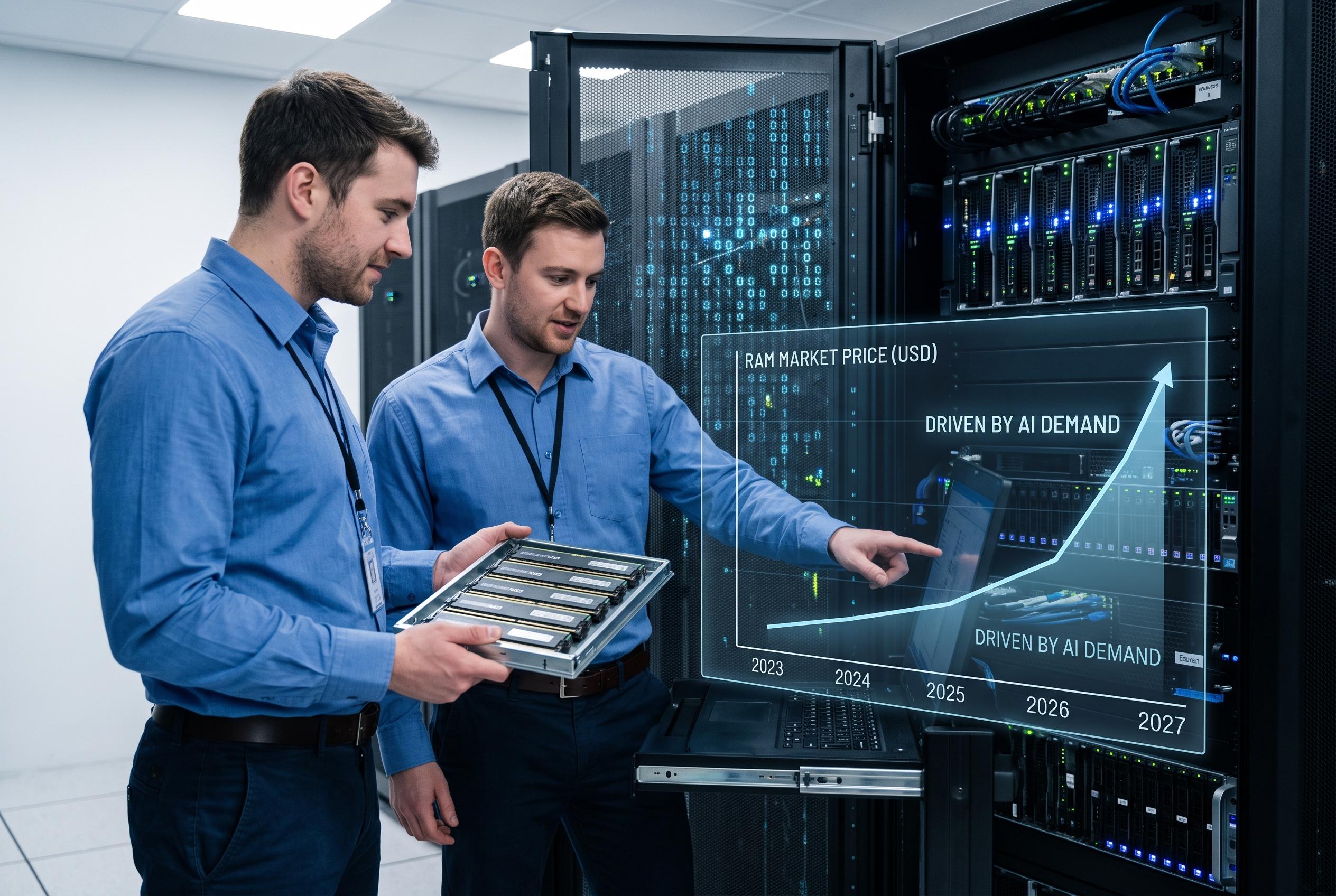

As AI companies rapidly expand their computing infrastructure, global RAM prices soar, causing shortages and reshaping the consumer electronics market with limited supply and rising costs expected to persist into 2027.
Ram prices are climbing because artificial intelligence labs are absorbing an extraordinary share of the global memory supply. Engadget says the simplest explanation is AI, and that the longer version is that well-funded model builders have been buying so much RAM and other memory capacity that consumer electronics makers are now competing for what is left.
For roughly 20 years, the memory market was comparatively steady. Demand rose in line with phone and PC shipments, and manufacturers could plan for known product cycles, operating system refreshes and data-centre expansion. That balance has broken down as AI firms, backed by large rounds of investment, have been told to expand compute aggressively and have responded by reserving huge amounts of factory output in advance.
The scale of that pull is visible in individual projects. Reporting cited by Engadget on xAI’s Colossus site in Memphis suggests the facility runs hundreds of thousands of Nvidia GPUs and may be using more than 112 million gigabytes of RAM in total. The point is not that that memory can be diverted straight into consumer devices; it is that the same manufacturing base supplies both markets, and AI infrastructure is now consuming an outsized share of it.
Bloomberg reported in February that memory chips are becoming critically short as companies such as Google and OpenAI continue to buy large numbers of accelerators with heavy memory requirements. Tom’s Hardware has warned that AI data centres are taking a significant slice of global memory and storage output, while TechSpot said DRAM contract prices have surged to record levels and that some South Korean manufacturers have stopped taking new orders because supply is so tight.
The pressure is unlikely to ease quickly. Windows Central reported that AI data centres could account for most high-end DRAM production this year, while TechSpot has said RAM prices may rise further through the rest of 2026 and into 2027. That leaves consumers, PC builders and device makers facing a market shaped less by normal upgrade demand than by a race among AI companies to secure every available chip.
Disclaimer: This content is intended for informational purposes only. Readers are advised to exercise their own judgement, conduct due diligence, or consult a qualified expert before acting on any information provided.