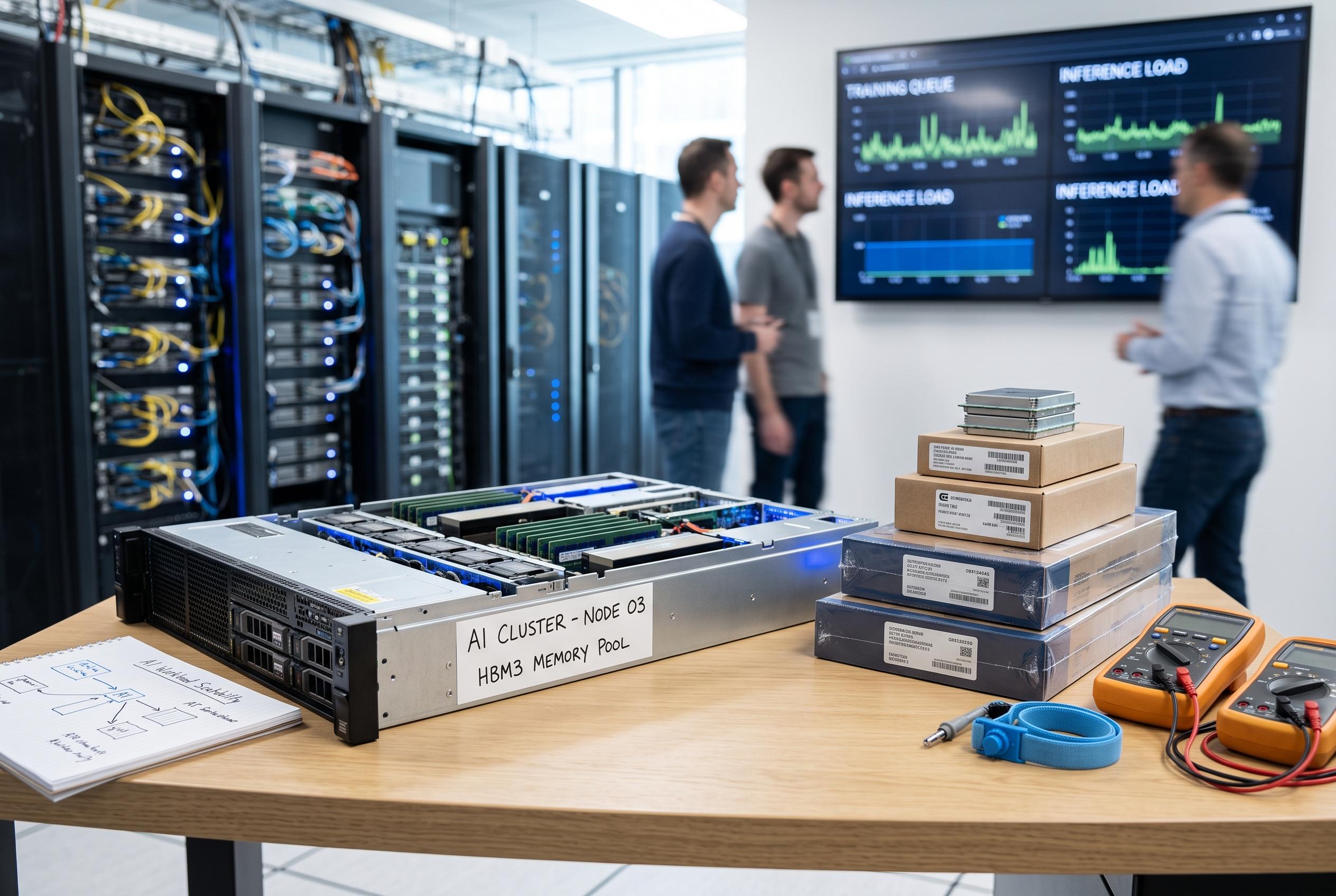

Artificial intelligence is accelerating demand for memory chips at an unprecedented pace, leading to critical shortages and record earnings for industry giants, while supply efforts struggle to keep up.
Memory chip markets have a habit of turning quickly: higher prices draw in fresh supply, and the resulting overshoot eventually drags prices down. Yet the current cycle looks different because artificial intelligence is absorbing capacity faster than manufacturers can add it. According to TrendForce, the shift is no longer limited to high-bandwidth memory, or HBM, for accelerators; it is also tightening supplies of conventional DRAM used in servers.
That matters because HBM consumes a disproportionate share of production resources. TrendForce estimates that by 2027 HBM could account for about 30% of the DRAM capacity of the three largest memory makers, while representing only 13% of the bits they ship. The consultancy expects DRAM bit supply to rise by roughly 24% in 2027 as new factories come on line and process technology improves, but it says long equipment lead times and the diversion of capacity towards HBM may still leave the market short.
The scale of the boom is visible in the earnings of the sector’s biggest players. Micron Technology reported third-quarter fiscal 2026 revenue of $41.5 billion, up about 346% year on year, with a non-GAAP gross margin of 84.9%, according to the company’s results. SK Hynix said second-quarter fiscal 2026 revenue rose 257% and operating profit climbed 557% from a year earlier. Samsung remained the largest server DRAM supplier in the first quarter of 2026, with a 38.5% share, followed by SK Hynix at 28.8% and Micron at 22.4%.
The pressure is also spreading across flash storage. Counterpoint Research says Yangtze Memory Technologies has entered the global top three NAND suppliers for the first time, taking 14% of worldwide shipments in the second quarter of 2026, even though it remains more exposed to lower-margin consumer products because of U.S. trade limits. TrendForce says AI-driven demand for enterprise solid-state drives is already consuming a much larger share of NAND bits, and it expects supply to loosen only later in 2027. For investors, the key question is not whether manufacturers will expand capacity, but whether that expansion arrives quickly enough to break the shortage before demand advances again.
Disclaimer: This content is intended for informational purposes only. Readers are advised to exercise their own judgement, conduct due diligence, or consult a qualified expert before acting on any information provided.