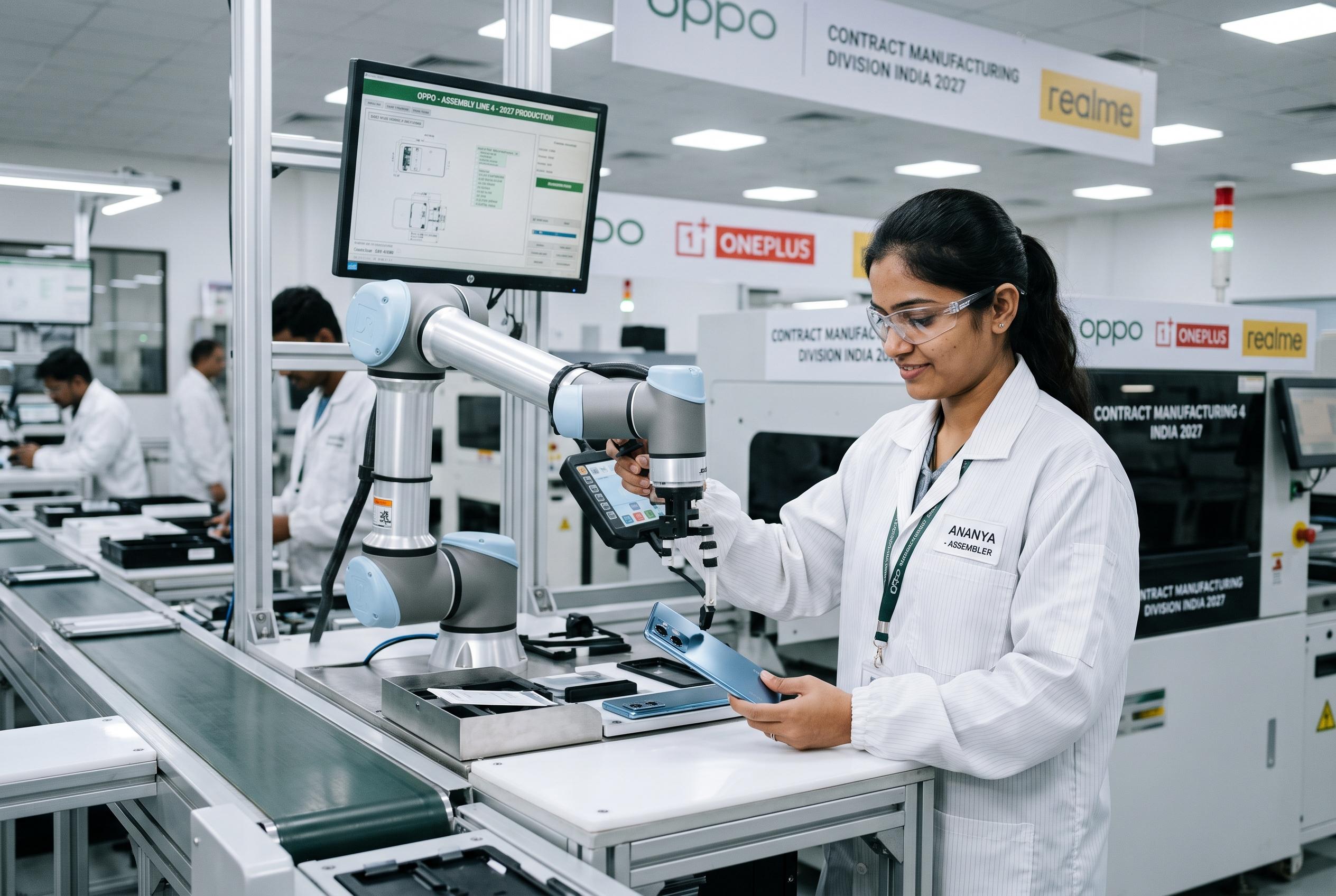

Amber Enterprises India is set to begin assembling Oppo, OnePlus, and Realme smartphones in 2027, marking a significant shift in India’s mobile supply chain towards contract manufacturing amidst fierce market competition.
Amber Enterprises India is preparing to enter smartphone assembly through a manufacturing tie-up with Oppo Mobiles India, with production for the Oppo, OnePlus and Realme brands expected to begin in the March 2027 quarter, according to the company’s earnings call. The first phase is planned at about 8 million units a year, with a second-year target of roughly 15 million to 16 million units as the business ramps up.
Jasbir Singh, Amber’s executive chairman, chief executive and whole-time director, said the group expects trial output in the fourth quarter of FY27 and commercial production in the first quarter of FY28. Amber has also appointed a chief operating officer for the mobile division, signalling that the company is building out dedicated management for the new line of business.
The move marks a further shift in India’s smartphone supply chain towards contract manufacturing. Reuters has reported in recent years that Chinese handset makers operating in India have been reorganising their manufacturing footprints, with some moving away from direct plant ownership towards asset-light arrangements with local partners. Oppo phones are already assembled at Vivo’s Noida facility for the Indian market, while Vivo is in the process of transferring that plant into a joint venture with Dixon Technologies.
The market backdrop is large and competitive. Counterpoint Research said Vivo led India’s smartphone shipments in the second quarter of 2026 with a 17.8 per cent share, narrowly ahead of Samsung at 17.6 per cent, while Oppo ranked third at 13.6 per cent. Together, Vivo, Oppo and their related brands, including iQoo, Realme and OnePlus, accounted for 45.6 per cent of the Indian market in the quarter, underscoring the scale of the opportunity Amber is targeting.
Amber’s management also discussed pressure in its printed circuit board business, where margins have been squeezed by rising copper-clad laminate costs. Singh said the company has been passing through price increases to customers, but with a delay. He added that demand for copper-clad laminate remains tight, driven by artificial intelligence and data-centre investment, and said Amber expects to set up its own CCL plant by 2029-30.
Disclaimer: This content is intended for informational purposes only. Readers are advised to exercise their own judgement, conduct due diligence, or consult a qualified expert before acting on any information provided.