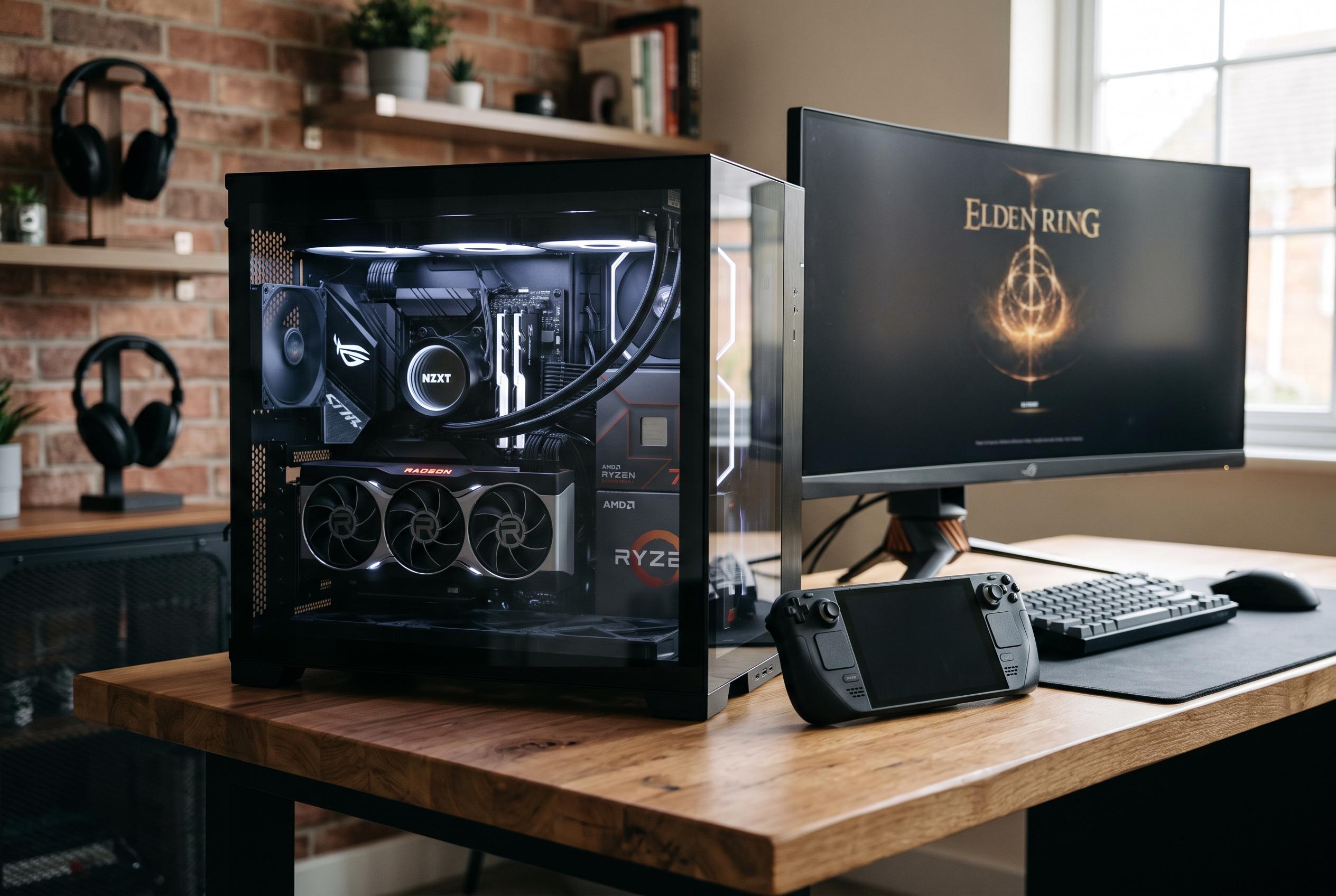

AMD’s Adrenalin 26.10.1 driver expands its machine learning-based upscaling technology to RX 6000 GPUs, newer Ryzen processors and selected handheld gaming chips.
AMD has broadened support for its latest FSR upscaling technology beyond its newest graphics cards, bringing FSR Upscaling 4.1 to a wider range of Radeon hardware and Ryzen-based processors through Adrenalin Edition 26.10.1, according to FutureFive. The driver update extends the feature to Radeon RX 6000 Series GPUs, Ryzen AI Max APUs, Ryzen AI 9 300 and 400 Series APUs, and Ryzen AI Z2 Extreme, Ryzen Z2 Extreme and Ryzen Z2 A chips. AMD says FSR 4 is now supported in more than 400 games.
The move marks a significant expansion of AMD’s machine learning-based image reconstruction system. FSR, or FidelityFX Super Resolution, first arrived on the Radeon RX 9000 Series, before being extended to the Radeon RX 7000 Series with FSR Upscaling 4.1. The latest rollout pushes support further down the product stack, including desktop cards launched in 2020, and also reaches laptops, handheld gaming devices and compact PCs.
According to AMD’s description of the update, the RX 6000 Series support relies on an optimised INT8 model adapted from the version used on RX 7000 graphics cards. The company has also added support for Ryzen AI Max systems, while introducing a more efficient FSR Upscaling 4.1 implementation for devices based on Ryzen AI 9 processors and selected Ryzen Z2 chips. That brings the feature into hardware classes aimed at both mobile productivity and portable gaming.
AMD has also said support for Xbox Series X|S will follow, although it has not given a release date. The same driver release includes frame pacing improvements for FSR Frame Generation on Radeon RX 9000 Series cards, which should help with the consistency of rendered frames during play. AMD added that Vulkan support for FSR 4 will be made available to developers in an upcoming FSR SDK 2.4 update, extending the technology to more PC games and engines. The company is also highlighting native x86 compatibility across a number of major titles, including Call of Duty, PUBG: BATTLEGROUNDS, VALORANT, League of Legends, Delta Force, Wuthering Waves, Arena Breakout: Infinite and Arknights: Endfield.
Disclaimer: This content is intended for informational purposes only. Readers are advised to exercise their own judgement, conduct due diligence, or consult a qualified expert before acting on any information provided.