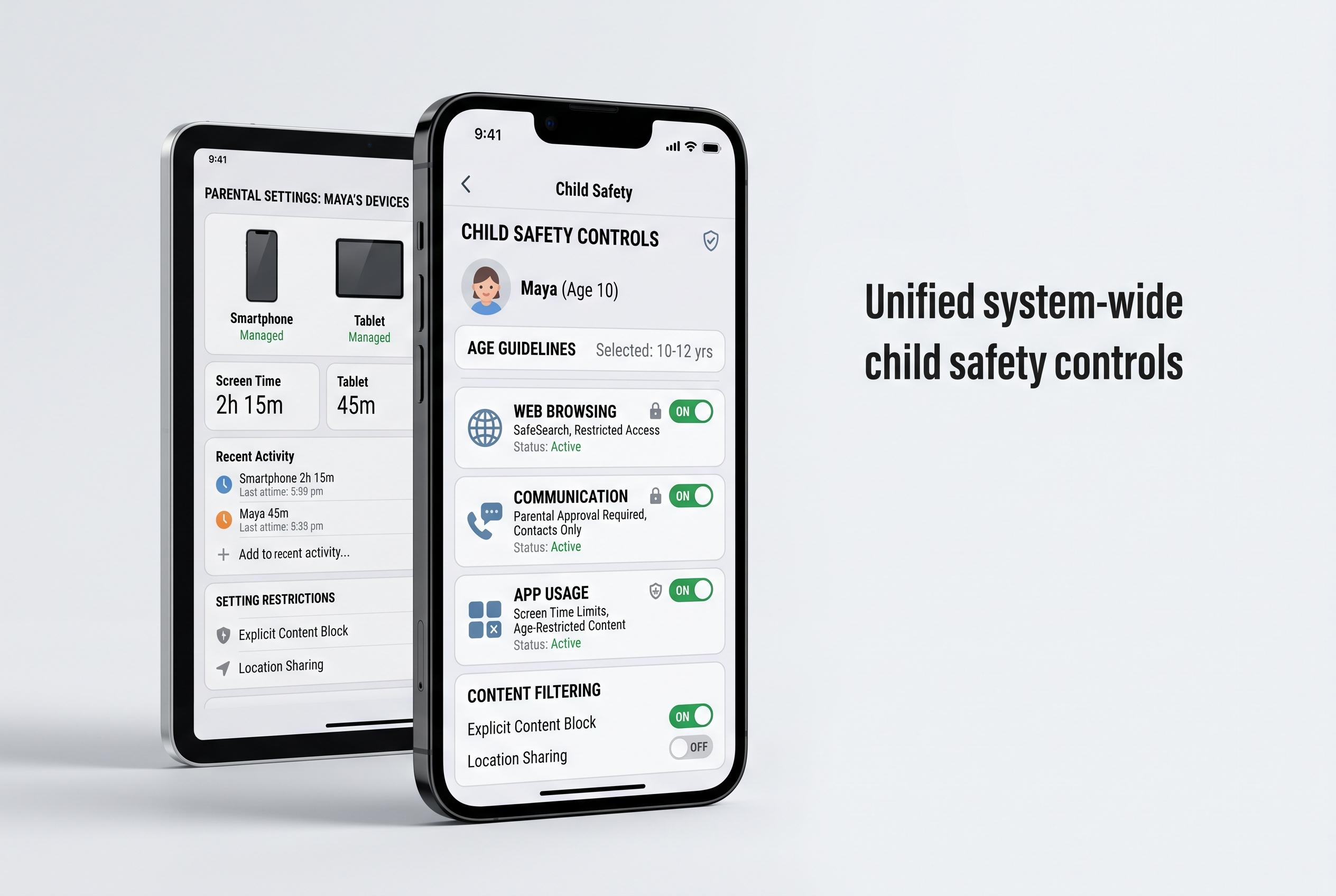

Apple has announced a suite of expanded child safety features set to launch with its upcoming software updates, offering parents more nuanced control over children’s digital experiences, including web browsing, communication, and app usage, tailored to age and maturity.
Apple has previewed a broader set of child safety controls that it says will arrive with its next software cycle, giving parents more direct ways to manage what children can access, who they can contact and how long they can spend in apps. The company said the new tools are meant to make setup simpler from the start, with a recommended bundle of essential apps and clearer controls for web access, communication and screen time.
The changes centre on a child account model that Apple says applies safeguards across the system according to a child’s age. Among the main additions is “Ask to Browse”, which would let parents approve each new website a child tries to open in Safari, alongside “Ask to Buy”, which already requires approval for App Store downloads and in-app purchases. Apple is also introducing “Time Allowances”, a more granular way to limit access by app category, and a redesigned Screen Time view that aims to make usage patterns easier to review at a glance.
Apple has also expanded its communication tools. Parents will be able to approve new contacts before children can connect with them in Messages, FaceTime and Phone. Communication Safety, which already blurs nudity in Messages and FaceTime by default for users under 18, is being extended to detect and block gore and violent imagery in shared photos and videos. Apple frames these changes as part of a wider effort to reduce exposure to harmful material while preserving a measure of independence for older children and teenagers.
The company is also leaning more heavily on age-aware software design for developers. Apple says its SensitiveContentAnalysis and PermissionKit tools can help apps filter inappropriate material and seek approval before new contacts are added, while the Declared Age Range API lets developers tailor experiences without collecting a child’s exact birthday. In a separate update last year, Apple introduced additional age-range sharing and more detailed App Store labels for adolescent users, underscoring a gradual tightening of its safety stack across devices and services.
Apple says the new features will arrive after the Screen Time update in iOS 27, iPadOS 27 and macOS 27, although the company notes that availability and functionality may still change before launch. It is also working with the American Academy of Pediatrics on a family media guide and says it continues to collaborate with researchers on children’s digital wellbeing. For parents who want a wider set of controls today, Apple points to existing tools such as Screen Time passcode notifications, user reporting in some markets and Apple Watch For Your Kids, which combines communication, location and Schooltime features for children without their own iPhone.
Disclaimer: This content is intended for informational purposes only. Readers are advised to exercise their own judgement, conduct due diligence, or consult a qualified expert before acting on any information provided.