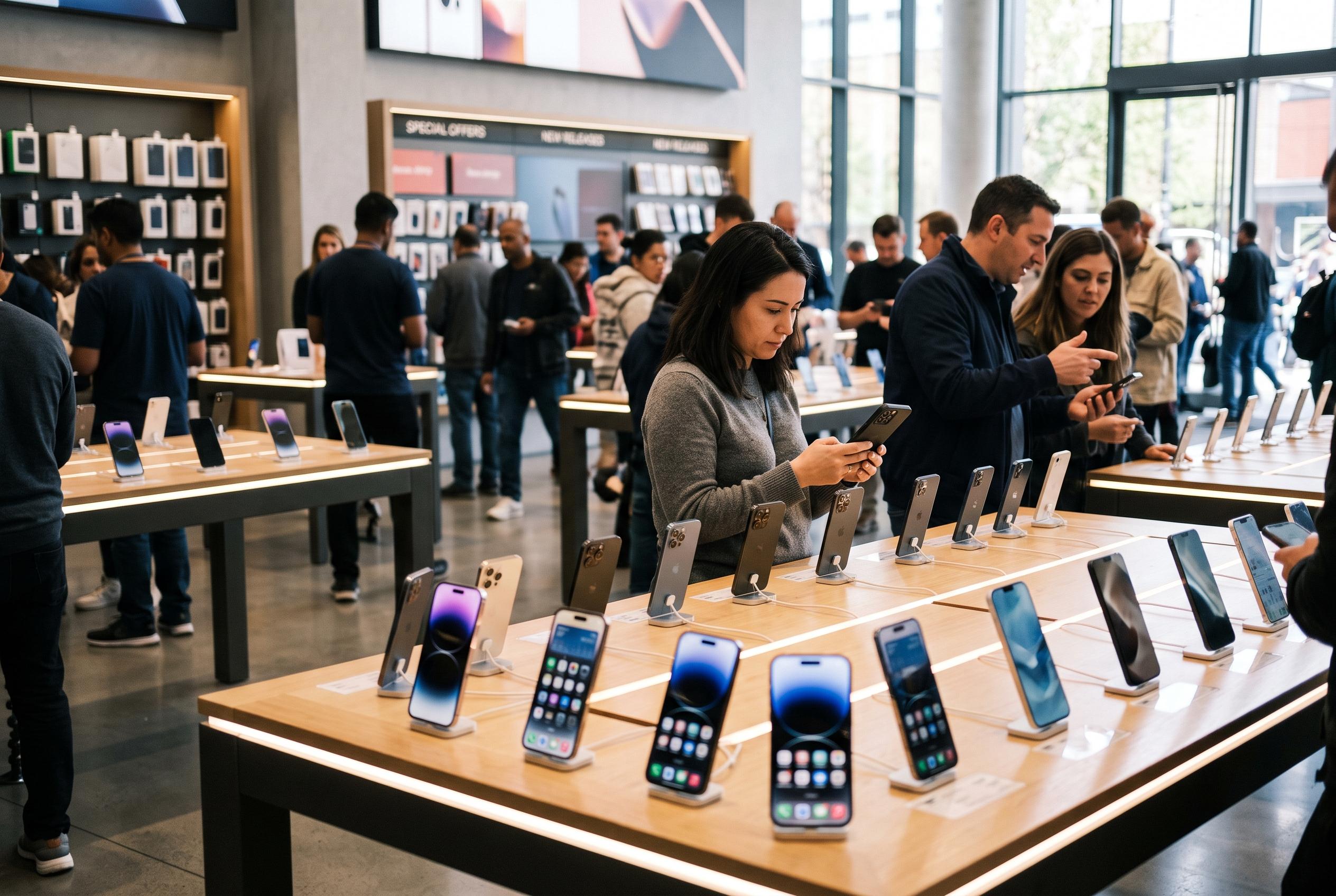

The iPhone 17 Pro Max, Pro and iPhone 17 took the top three places, while Redmi’s heavily discounted K100 Pro Max was the highest-ranked Android handset.
Apple once again dominated JD.com’s Double 11 smartphone sales charts, taking the top three individual model positions, according to multiple Chinese tech outlets reporting the final rankings. The iPhone 17 Pro Max led the list, followed by the iPhone 17 Pro and iPhone 17, while Xiaomi emerged as the strongest Chinese brand in the event’s phone segment. Within that broader picture, the Redmi K100 Pro Max placed fourth overall and stood out as the best-performing Android handset in the rankings. This combination of Apple’s premium appeal and Redmi’s scale in the mid-to-high end underscores how sharply the market has split between brand-led demand at the top and price-led buying in the Android camp.
The most notable detail is that Redmi did not rely on a single model. The brand placed three handsets inside the top ten, a result that suggests breadth rather than one-off success. The K100 Pro Max was supported by a lower effective selling price after official reductions and platform subsidies, which appears to have been central to its performance. In a market where launch prices increasingly face resistance, the model’s sales show that buyers are still willing to pay for premium specifications if the discount is large enough.
That is especially clear with the K100 Pro Max itself. One report on the device said its 12GB/256GB version had fallen to 3,249 yuan, sharply below its launch price, helping it become the highest-ranking Chinese phone in the event. Another summary described the same phone as benefiting from a combination of price cuts and subsidies that pushed it into a far more competitive bracket. In practical terms, the model’s success appears to have come not from headline launch excitement, but from the gap between its original positioning and the price shoppers actually saw during the promotion.
The rankings also point to a wider pattern across the Android market. Xiaomi did well as a brand, but the event was still led by Apple at the model level, with the iPhone 17 series taking the top three places. Reuters-style reading of the Chinese reports suggests that premium iPhone demand remains remarkably resilient, even during a heavy discounting period. Xiaomi’s result is therefore better understood as a strong showing within Android rather than a broad upset of the market hierarchy.
For Xiaomi, the sales chart reinforces an important point: value has not disappeared, but it has become more dependent on timing and channel pricing. The K100 Pro Max’s rise indicates that consumers remain highly responsive to effective street prices, especially when flagship-class hardware is pushed into a lower band by promotions. That makes the Double 11 results less a story about brand loyalty alone and more a reminder that China’s smartphone market is now increasingly shaped by subsidy mechanics, discount depth and inventory positioning.
Even so, Apple’s sweep of the top three is the clearest signal from the rankings. It shows that the highest tier of China’s shopping festival remains firmly controlled by the iPhone, while Xiaomi’s Redmi line is competing most successfully in the Android segment where value for money still matters most. The result is a market in which both premium pull and aggressive pricing can coexist, but for different buyer groups. In this round of Double 11, Apple kept the crown, while Redmi showed that the most effective Android strategy is still to turn price cuts into volume.
Disclaimer: This content is intended for informational purposes only. Readers are advised to exercise their own judgement, conduct due diligence, or consult a qualified expert before acting on any information provided.