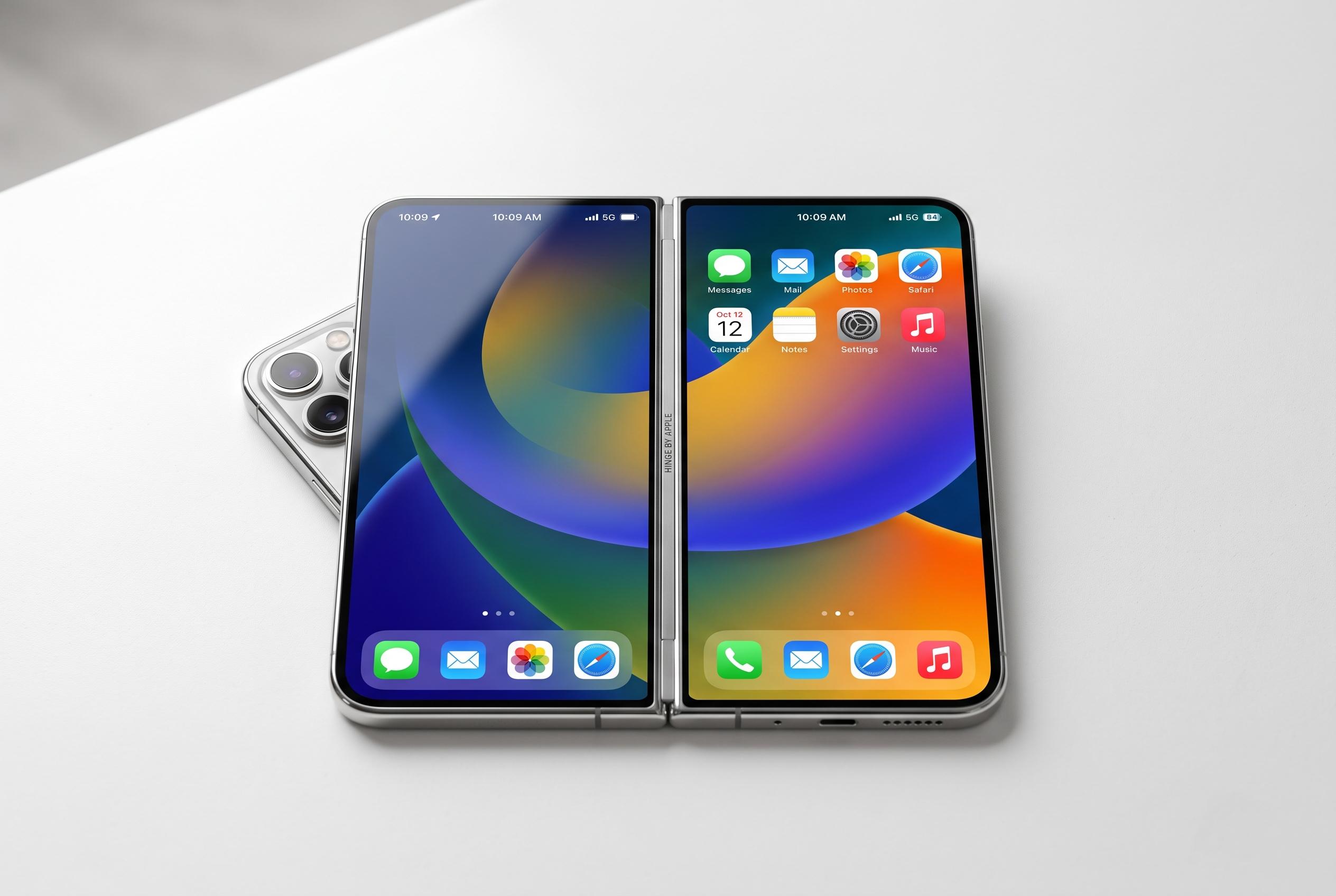

Apple’s upcoming foldable iPhone, expected in September 2026, may see a phased international rollout akin to early iPhone launches, with limited initial units and delayed availability in certain markets.
Apple’s first foldable iPhone is shaping up as one of the most closely watched launches of 2026, but the company may once again stagger availability rather than sell it in every market at once. Reports from supply-chain sources and analysts suggest Apple is preparing to unveil the device alongside the iPhone 18 Pro models in September 2026, while sales in some countries could follow weeks or even months later.
That would echo Apple’s earliest iPhone roll-outs. The original model went on sale in the United States on 29 June 2007 and never received an official launch in Spain, leaving buyers there to rely on grey-market imports. Spain did not get its first official iPhone until the iPhone 3G arrived on 11 July 2008 through Movistar, a gap of 378 days between the two milestones. From the iPhone 3G and 3GS onwards, Spain initially joined the first wave of countries, but that pattern did not last.
Later launches showed how uneven Apple’s distribution could be. The iPhone 4 reached the United States on 24 June 2010 and Spain only several weeks later. The iPhone 4S followed with a shorter delay, while the iPhone 5 narrowed the gap further. The starkest example came with the iPhone 5s and 5c, which shipped in the United States on 20 September 2013 but did not reach Spain until 25 October. The exception came in 2016, when the iPhone SE was sold in Spain on the same day as in the United States, beginning a run in which the country appeared to be in Apple’s first release group.
For the foldable model, however, early production appears to be the limiting factor. MacRumors reported that analyst Ming-Chi Kuo now expects only about 7 million to 8 million units to ship in 2026, a relatively small initial run for Apple and one that could force the company to ration stock, prioritising the United States first. Kuo also said the foldable iPhone may be positioned in the iPhone 18 family rather than as a separate product line, and that pre-orders could slip into the fourth quarter. Earlier reporting from MacRumors suggested production would begin in late 2025, after some supplier delays, with the handset folding like a book and using ultra-thin cover glass from Corning.
Pricing is expected to place the device firmly in the ultra-premium category. Separate reports have put the U.S. starting price anywhere from $1,999 to $2,499, while other outlets have suggested Apple may brand it as the iPhone Ultra or iPhone Fold. Bloomberg’s Mark Gurman has also been cited as saying the device is moving into a later production stage, which would keep a September unveiling plausible even if availability remains tightly constrained. In that scenario, Apple could repeat a familiar pattern: a major presentation first, then a slow international rollout that leaves some markets waiting longer than others.
Disclaimer: This content is intended for informational purposes only. Readers are advised to exercise their own judgement, conduct due diligence, or consult a qualified expert before acting on any information provided.