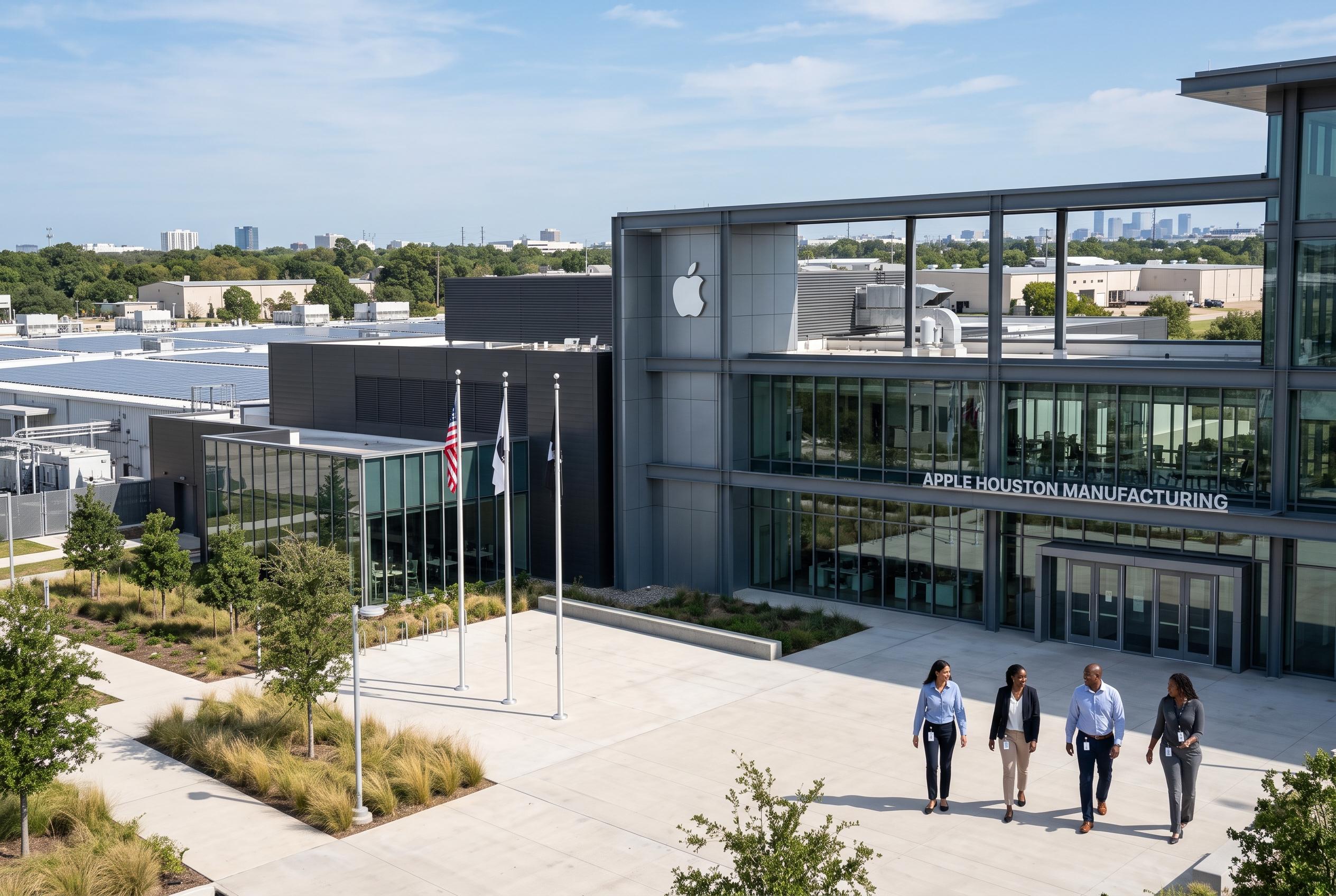

Apple’s plans to expand its advanced manufacturing centre in Houston highlight the company’s commitment to reshoring production and boosting US industrial growth, amid political pressure and a stable local labour market.
Apple’s expansion in Houston became a fresh political showcase on Thursday as Howard Lutnick praised the company’s growing US manufacturing footprint during a visit to its new advanced manufacturing centre. The commerce secretary said President Donald Trump’s push to revive domestic technology production was already delivering results, even as federal labour data show US manufacturing employment has edged lower over the past 12 months.
Apple said earlier this year that it would double the size of its 250,000-square-foot Houston site, including the 20,000-square-foot manufacturing centre. The company says the facility is the first in the United States to produce Mac minis, giving the project symbolic weight in a broader effort to localise more of Apple’s supply chain.
The Houston site sits within Apple’s much larger US investment plan. In August 2025, the company said it would raise its domestic commitment by $100 billion to $600 billion over four years through its American Manufacturing Programme. Apple said the initiative would help strengthen advanced manufacturing, expand research and development and support 20,000 direct hires in areas including silicon engineering, software development and artificial intelligence.
The programme also ties Apple more closely to a network of American suppliers. Apple said partners include Corning, Texas Instruments and TSMC, with the aim of building a more complete domestic silicon supply chain. The company has also said all iPhone and Apple Watch cover glass sold worldwide will be made in the United States, while much of the output from its US-based component work is expected to be exported.
Tim Cook used Thursday’s event to underscore that broader strategy, saying Apple believes in American workers and ingenuity. The remarks came against the backdrop of Trump’s tariff campaign, which the White House has framed as a tool to pressure companies to manufacture more in the United States. The Supreme Court has struck down some of those tariffs, but the administration has continued to pursue other import taxes.
For Texas, the headline announcement lands in a labour market that has been steadier than the national picture. Federal data show manufacturing jobs in Texas have remained roughly flat over the past year, even as the national total has slipped slightly. That contrast makes Apple’s Houston expansion a visible test case for whether large corporate investment pledges can translate into durable industrial growth.
Disclaimer: This content is intended for informational purposes only. Readers are advised to exercise their own judgement, conduct due diligence, or consult a qualified expert before acting on any information provided.