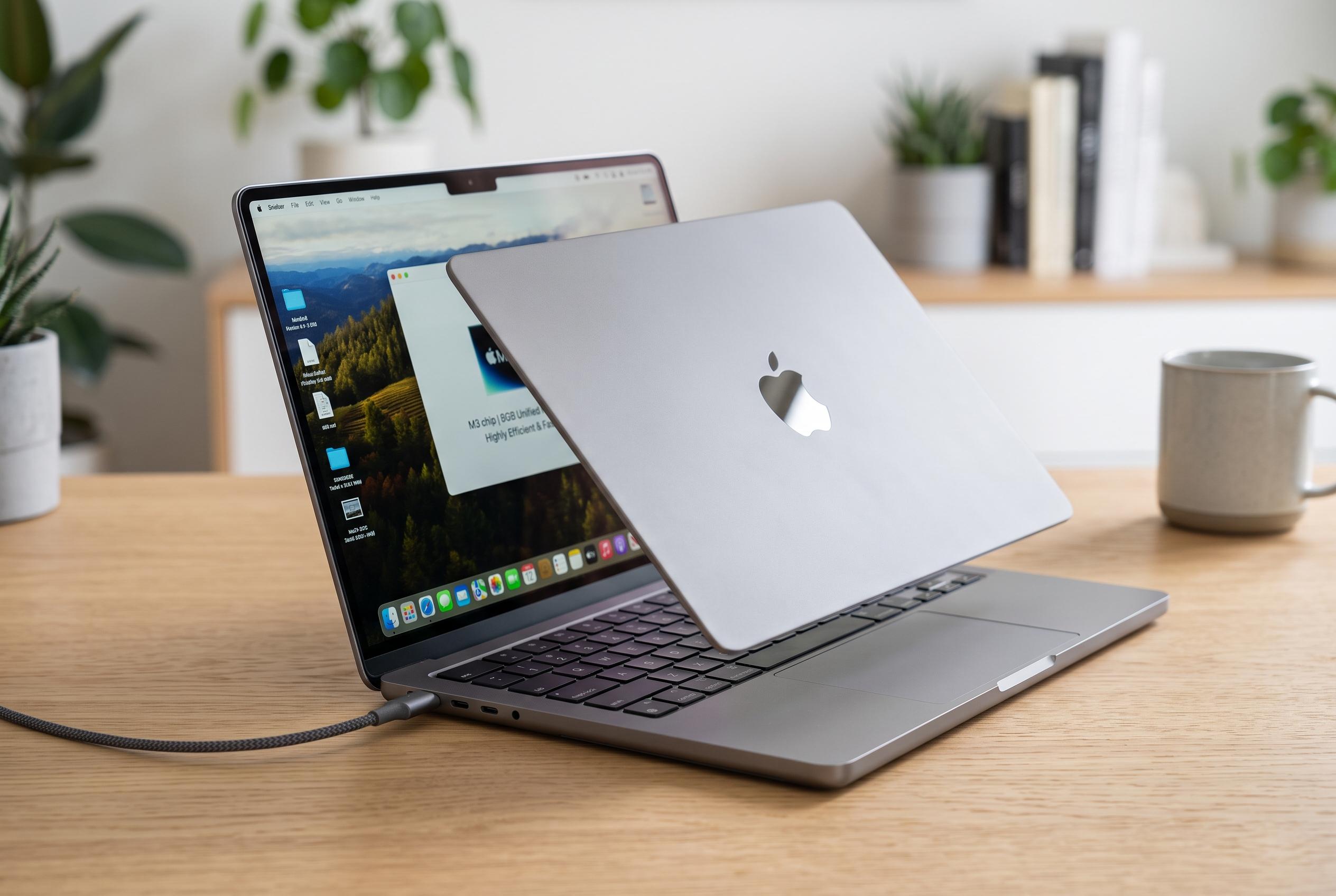

Apple’s innovative memory architecture in the MacBook Neo is challenging traditional notions of RAM adequacy, prompting a shift in industry standards and consumer expectations.
Apple’s low-cost MacBook Neo is forcing an awkward comparison across the laptop market: a machine with 8GB of memory is, in everyday use, often keeping pace with or overtaking Windows notebooks that ship with 16GB or more. The reason is not simply that Apple’s chip is faster. It is the way the memory is built into the system. TSMC’s InFO-PoP packaging places the MacBook Neo’s memory directly on the chip package, shortening the path between the processor and memory and reducing the overhead that conventional laptop designs still carry.
That packaging approach matters because Apple’s memory is unified across the CPU, GPU and neural processing hardware, rather than being split into separate pools that must constantly pass data back and forth. Tom’s Guide found the MacBook Neo could handle a demanding mix of Chrome tabs, Apple Music and Photoshop with surprisingly modest memory use, while a MacRumors review described the device’s 8GB as entirely suitable for routine productivity work. The point is not that 8GB is suddenly equivalent to 32GB. It is that Apple’s architecture uses that memory far more efficiently than a typical Windows laptop can.
Windows makers are not standing still, but they are working against structural limits. Byteiota explains that Apple’s memory is integrated at the chip-packaging stage, which means it cannot be upgraded later and is not assembled in the same way as a standard laptop module. TSMC says its InFO technology is designed to improve electrical and thermal performance while keeping the package thin, which helps explain why the MacBook Neo can run cool and quietly despite its modest specification. For PC manufacturers, matching that design is not a simple software tweak; it requires different silicon choices, a different supply chain and years of advance planning.
That is why the response from the Windows side is likely to come in stages. TechRadar notes that 8GB configurations are now appearing more widely across Dell, Acer, Microsoft and other vendors, particularly in lower-cost machines aimed at light computing. But those systems are still built around a traditional memory model, so they can imitate Apple’s price point without copying its efficiency. In practical terms, that means buyers are seeing cheaper Windows laptops, but not necessarily laptops that behave like the MacBook Neo under load.
For buyers, the result is a more complicated market than a spec sheet suggests. The MacBook Neo looks underpowered on paper, yet independent testing shows that its memory architecture gives it room to perform well in real workloads. Windows laptops may still offer advantages in display options, upgrade paths and some battery-life scenarios, but Apple has made 8GB feel less like a compromise than it once did. The wider industry is now trying to catch up to that idea.
Disclaimer: This content is intended for informational purposes only. Readers are advised to exercise their own judgement, conduct due diligence, or consult a qualified expert before acting on any information provided.