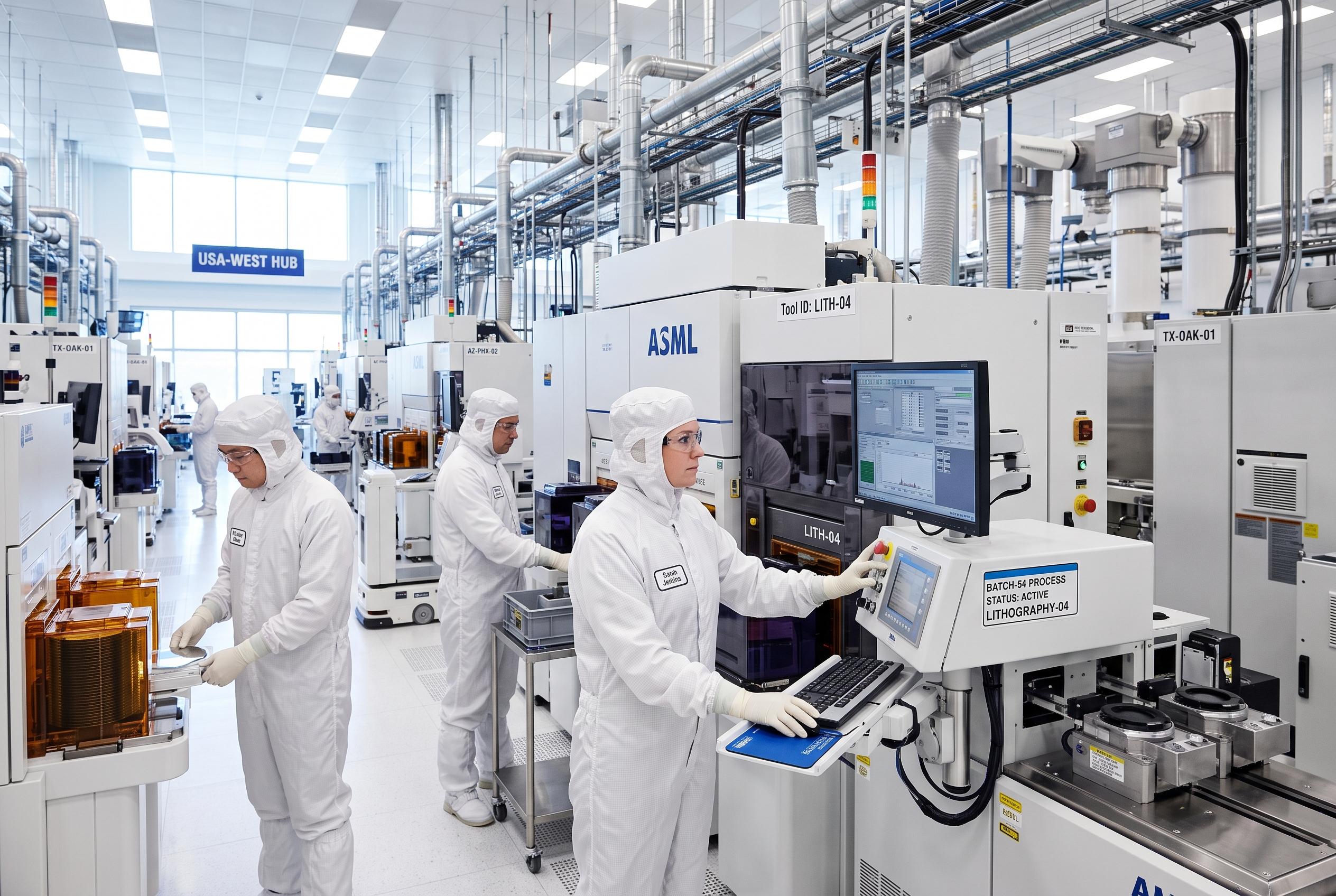

Apple’s ambitious US expansion aims to build a resilient, regionalised supply chain by developing manufacturing ecosystems across the country and supporting a broader semiconductor infrastructure, shifting away from Asian dominance.
Apple’s push to rebuild parts of its supply chain in the United States is no longer an abstract policy signal. In February 2025, the company said it would spend more than $500 billion in the US over four years, and by August 2025 it had lifted that commitment to $600 billion. That programme included a new Houston server factory, due in 2026, to support Apple Intelligence and Private Cloud Compute. Earlier reporting from Supply Chain Today argued that the strategic point was not simply final assembly, but the construction of a broader domestic manufacturing ecosystem.
The latest step came in February 2026, when Apple said it would begin making Mac mini computers in Houston later this year. The same site is also being expanded for advanced AI server production, and Apple said it will add a 20,000-square-foot Advanced Manufacturing Centre to train students, suppliers and smaller businesses in its production methods. In practical terms, that matters because supply chain resilience is built far upstream, not just at the final assembly line.
That upstream logic also helps explain Apple’s semiconductor strategy. The company is supporting a wider US chip base that includes wafer production in Texas, advanced fabrication in Arizona, and packaging and testing capacity in the same region. Supply Chain Today said this is the more important shift: Apple is helping create an alternative supply network rather than moving a single factory from one country to another. For a company whose products depend heavily on custom silicon, that creates more options if capacity, tariffs, transport or geopolitics disrupt a single geography.
Apple’s domestic expansion does not mean it is abandoning Asia. Taiwan remains central to leading-edge chip manufacturing, China still anchors a large part of the company’s supplier base, and India and Vietnam continue to grow in importance. The more realistic description is regional diversification. Apple appears to be splitting functions across several strong manufacturing clusters rather than betting on one country to do everything.
That approach carries costs as well as benefits. New plants need qualified suppliers, trained workers, stable yields and reliable logistics before they can match established Asian ecosystems. But Apple has spent years putting money into manufacturing capability, training and process control, suggesting it understands that factories are only one part of the equation. The larger change is strategic: Apple is using its scale to reduce concentration risk and build a supply chain with more redundancy, more flexibility and more regional depth.
Disclaimer: This content is intended for informational purposes only. Readers are advised to exercise their own judgement, conduct due diligence, or consult a qualified expert before acting on any information provided.