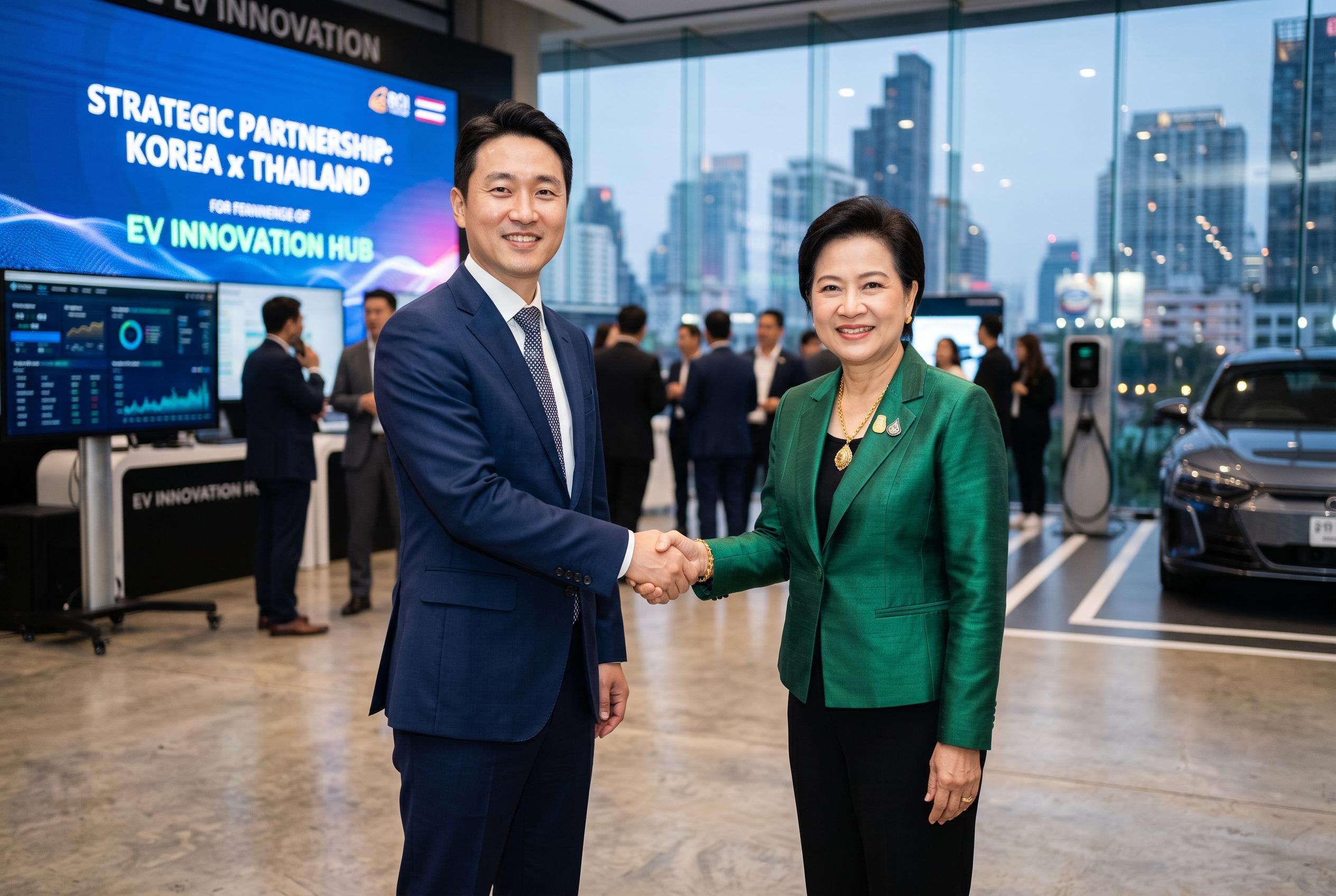

ASEAN nations, particularly Thailand, are increasingly demanding that foreign investments deliver local benefits, reshaping the landscape for Korean startups seeking regional growth in sectors like digital infrastructure and electric vehicles.
ASEAN’s ability to draw capital remains a major reason Korean startups are looking south, but the region is becoming more selective about the kind of investment it wants. UNCTAD’s ASEAN Investment Report 2024 said foreign direct investment into the bloc reached about $230 billion in 2023, underscoring its continued appeal even as global flows weakened. Yet the direction of travel is clearer now: governments are increasingly asking not just how much money will arrive, but what local benefit it will deliver.
That shift is especially visible in Thailand. The Thailand Board of Investment said it received 3,370 promotion applications in 2025 worth 1.876 trillion baht, or about $60.2 billion, a 67% rise from the previous year. The Nation Thailand reported that digital industries accounted for the largest share of value, driven mainly by data centre projects. The pattern suggests that Thailand is no longer treating foreign capital as a generic good; it is sorting proposals by strategic value.
Martin Knoss, a senior expert at Sanet Group who has worked across ASEAN industrial investment and previously served in leadership roles at Bosch Thailand and Kefico, said the region’s governments expect a return beyond capital. Speaking to KoreaTechDesk, he said ASEAN states are actively courting foreign investors but now want clear benefits for local society. In practical terms, that means proposals are judged on whether they create skilled jobs, transfer technology, strengthen domestic capability or support wider economic development.
Thailand’s investment regime reflects that logic. BOI incentives can include tax holidays, duty relief, permission to employ foreign specialists and land ownership rights for qualifying projects, but eligibility is increasingly tied to factors such as technology intensity, location and industrial importance. The government’s FastPass initiative, launched in June 2026, is designed to speed up strategic high-technology projects while linking support to outcomes such as skill creation, SME participation and regional development. For Korean founders, the message is plain: a product alone is rarely enough. They need a country-specific case for why their technology belongs in Thailand’s industrial plan.
The same principle is shaping electric vehicles and digital infrastructure. Thailand’s EV policy has moved from demand stimulation towards building domestic manufacturing depth, with Knoss saying the next phase is about producing vehicles in-country and expanding technology transfer. In data centres, the BOI requires high-efficiency facilities to meet a power usage effectiveness threshold of 1.3 before they qualify for corporate income tax benefits, alongside water management and labour-related commitments. Thailand also expects wider spillovers such as workforce training, research collaboration and supply-chain development.
For Korean startups in industrial AI, semiconductors, batteries, power electronics and advanced manufacturing, that creates an opportunity, but also a higher bar. A 2025 Korea Institute for International Economic Policy study reached a similar conclusion, urging stronger regional value chains and greater technology transfer as Korea expands cooperation in Southeast Asia. Market access remains important, but in Thailand and increasingly across ASEAN, it is only the starting point. The companies most likely to win support are those that can show how they will help build local capability, not merely sell into it.
Disclaimer: This content is intended for informational purposes only. Readers are advised to exercise their own judgement, conduct due diligence, or consult a qualified expert before acting on any information provided.