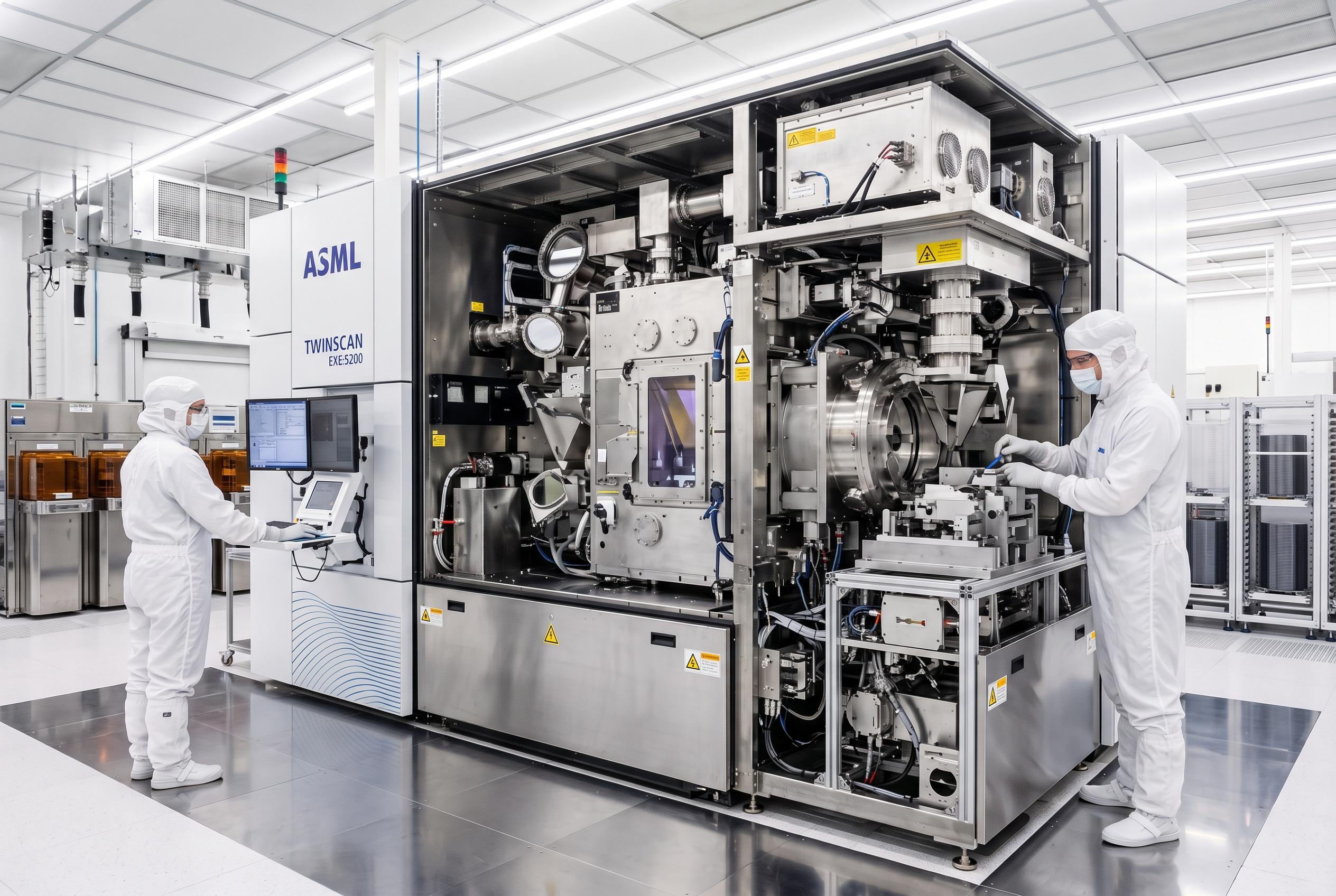

Dutch tech giant ASML rejects US allegations of EUV machine transfers to China, amid growing concerns over China’s advancing chip manufacturing capabilities and the evolving geopolitical battle in advanced semiconductor technology.
The latest dispute over ASML’s extreme ultraviolet lithography tools shows how one Dutch company has become central to the global contest over advanced chips. According to The Economist, the Dutch manufacturer is pushing back hard against US claims that one of its EUV machines may have reached China, insisting that the allegation is unsupported and that its equipment is tightly controlled throughout its life cycle.
ASML says it knows the location of all 340 EUV systems it has ever made, including machines no longer in use, and maintains that none are in China. The company has also said it has never shipped an EUV machine, or components designed specifically for one, to the Chinese market. Tom’s Hardware and TechCrunch both reported that ASML has described the rumours as inaccurate and harmful to its reputation.
The controversy began after US Commerce Secretary Howard Lutnick raised concerns that an EUV system could have ended up in China, despite American efforts since 2019 to block such exports. ASML rejects the suggestion that a full machine could have been moved without detection, pointing out that only its own engineers transport and install the most sensitive systems and that the company monitors them remotely. The Dutch government, while taking the US allegation seriously, has said it is not conducting its own inquiry.
Even so, the row reflects deeper anxieties in Washington about China’s progress in semiconductor manufacturing. Reuters reported in December that former ASML engineers in China had built a prototype EUV tool in 2025 and were testing it in a high-security laboratory in Shenzhen. The same report said Beijing wanted the machine to be able to make functional chips by 2028, although many industry specialists regard that timetable as unrealistic. Some analysts believe China could still be years away from a workable EUV system, but they also say the country is advancing faster than expected.
At the same time, Chinese chipmakers are stretching older deep ultraviolet, or DUV, tools far beyond their original purpose. Companies such as SMIC and Huawei are using multi-patterning to produce logic chips at dimensions below 7 nanometres, a process that is slower, costlier and more defect-prone than EUV but still potentially powerful enough to narrow the gap with the US in artificial intelligence hardware. A separate report from PC Gamer said a Chinese state-backed company has begun mass production of its own DUV tools, which would further reduce reliance on foreign suppliers.
The dispute is also feeding a broader transatlantic argument over export controls. Washington is pushing a new industrial coalition, sometimes described as Pax Silica, to align rules around energy, minerals, advanced manufacturing and AI. It is also backing legislation such as the MATCH Act, which would go well beyond EUV and restrict ASML’s maintenance, spare parts and software support for existing DUV systems in China. Dutch officials argue that such measures would be excessive and could expose European companies to retaliation, especially after The Hague’s own interventions in the chip sector have already drawn a sharp response from Beijing.
Disclaimer: This content is intended for informational purposes only. Readers are advised to exercise their own judgement, conduct due diligence, or consult a qualified expert before acting on any information provided.