
A new package of 54 mandatory standards, 465 recommended standards and one technical document also covers age-friendly digital services, household appliances and smart industrial parks.
China will bring a fresh batch of national standards into force on 1 November, with the State Administration for Market Regulation saying 54 mandatory standards, 465 recommended standards and one guiding technical document will take effect on that date. According to state broadcaster CCTV, the measures span industrial equipment, household appliances, electric-vehicle charging gear, digital public services and smart-park management, underlining the breadth of the latest regulatory update.
Among the most practical changes are new noise limits for tractors, harvesting machinery and earth-moving equipment. The mandatory rules set requirements for both external noise emissions and the sound levels experienced at the operator’s station, together with measurement methods. The State Administration for Market Regulation said the standards are intended to protect workers’ health, improve domestic manufacturing practice and support exports by bringing Chinese products into line with clearer technical expectations.
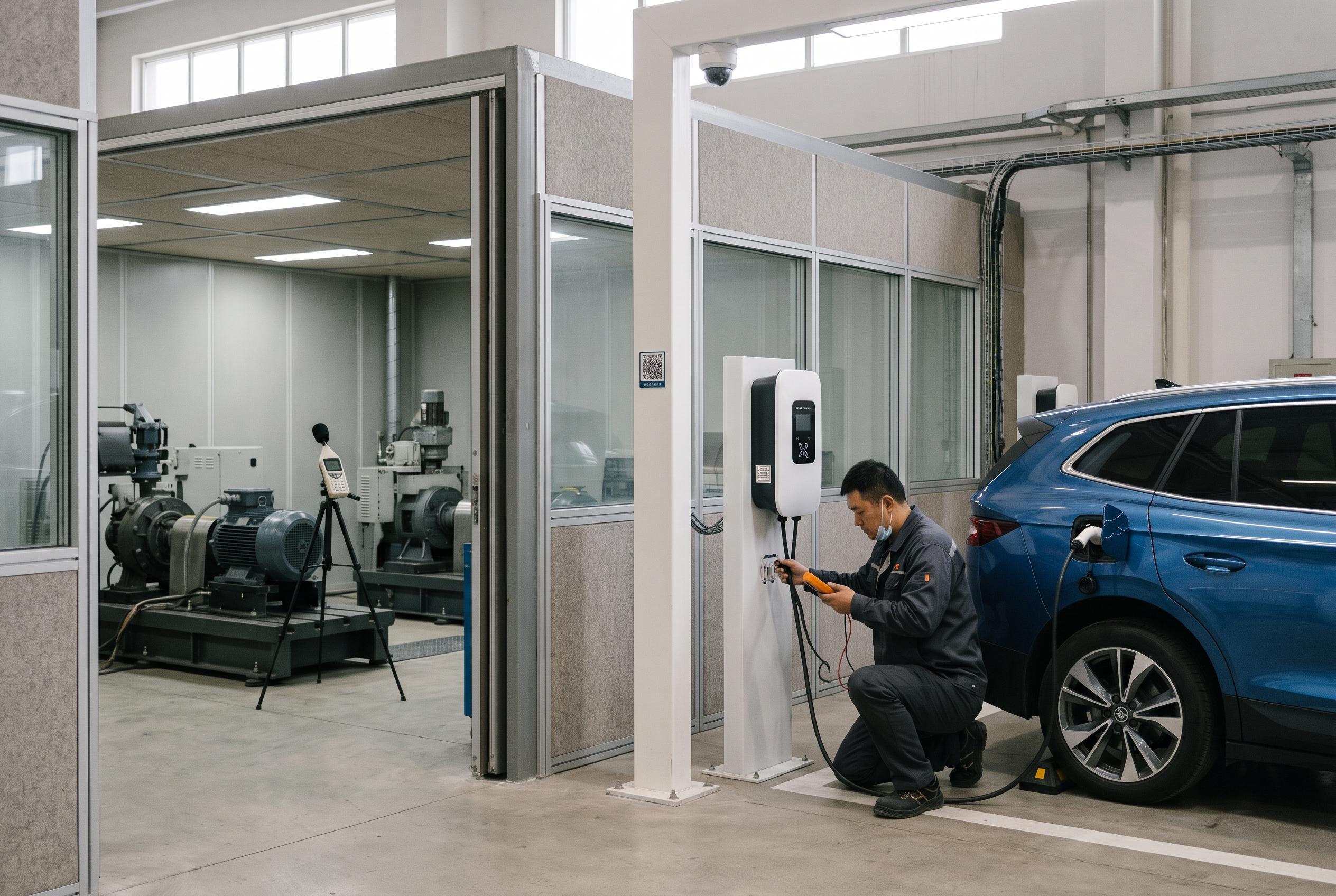
The package also includes energy-efficiency requirements for household range hoods, ventilating fans and multi-function appliances with ventilation features, as well as for electric-vehicle supply equipment. The official standards record for EV charging and supply equipment shows the standard is designated GB 46519-2025 and is due to begin on 1 November 2026, confirming the timetable for the new efficiency rules. Authorities said the aim is to raise energy performance, reduce waste and encourage further progress in low-carbon technology.
A separate cluster of standards is focused on age-friendly digital access. One recommended standard sets technical requirements for making mobile applications more usable for older people, covering perceptibility, operability, comprehensibility, compatibility and security, as well as testing methods. Another provides guidance for age-friendly government service platforms, addressing service design, accessibility, information barriers, security and privacy. An official standards entry confirms the government-platform guideline is a national recommended standard and identifies the State Council General Office as the responsible department.
Other measures cover credit-information use for individual businesses, safety requirements for electric clothes-drying devices and commercial vacuum packaging equipment, and a framework for the construction, operation and maintenance of smart industrial parks. The standards registry shows the smart-park document, GB/T 47874-2026, was published in July and will also take effect on 1 November. Taken together, the batch suggests Beijing is using technical standards not only to tighten product safety and efficiency, but also to steer industrial upgrading and reduce friction in public services.
Disclaimer: This content is intended for informational purposes only. Readers are advised to exercise their own judgement, conduct due diligence, or consult a qualified expert before acting on any information provided.