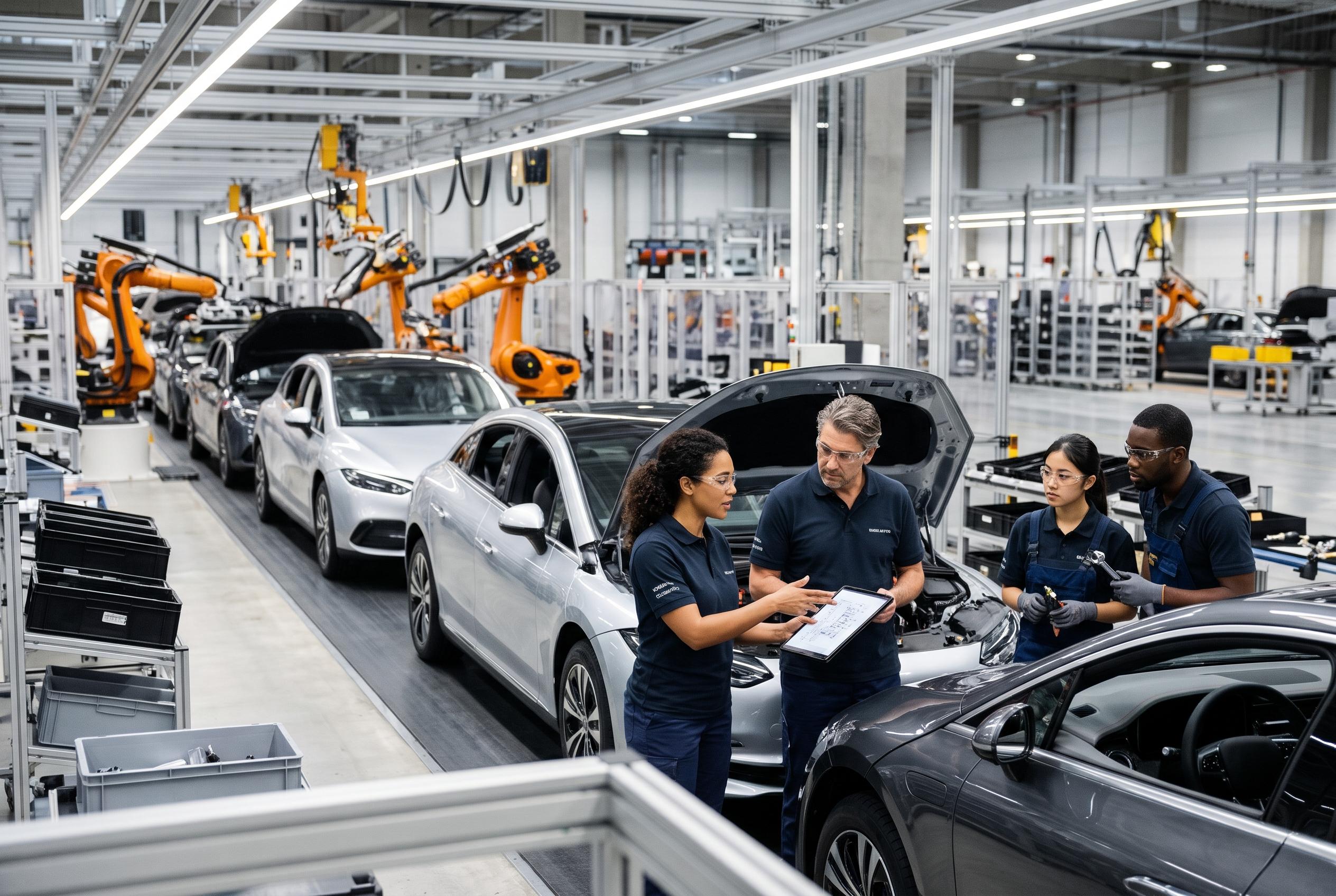

BYD, Chery and Geely are turning to European factories, partnerships and underused plants to cut tariff costs and build a lasting presence as competition intensifies in China.
Chinese automakers are stepping up their push into Europe, where higher trade barriers and weak demand at home are making local production more attractive. According to The Korea Herald, companies including BYD, Chery and Geely are moving beyond a simple export model and using European plants, local partnerships and unused factory capacity to establish a more durable foothold in the region. The shift comes as Chinese manufacturers face intense competition and excess capacity in their domestic market.
The clearest sign of that strategy is BYD’s planned factory in Szeged, Hungary, which is expected to begin production this year. The site is designed for an eventual annual output of 300,000 vehicles and is set to build compact electric models such as the Dolphin Surf and Atto 2, according to the report cited by The Korea Herald and an analysis from S&P Global Mobility. The broader aim is not only to get closer to European buyers, but also to test whether China’s strengths in scale, cost control and battery-electric technology can be transferred successfully overseas.
The commercial logic is straightforward. Chinese-made battery electric vehicles entering the European Union face a standard 10 per cent import duty, plus additional countervailing tariffs that vary by manufacturer. The report said BYD faces an extra 17 per cent levy, while Geely is subject to 18.8 per cent and SAIC Motor to 35.3 per cent. Building inside the bloc allows Chinese carmakers to avoid those charges, reduce freight costs and build stronger links with European suppliers.
The trend is also reshaping the competitive balance for established manufacturers. The Korea Herald said Hyundai Motor Group, which has spent decades building manufacturing capacity across Europe, now faces a more difficult challenge as Chinese brands expand on the continent. Automotive Manufacturing Solutions reported that some Chinese groups are also taking over underused sites and entering joint ventures, a sign that the strategy is spreading beyond greenfield investment. MarkLines data cited by The Korea Herald showed Chinese brands’ European sales rose 90.6 per cent year on year to 531,862 vehicles in the first half of 2026, while the brands are also broadening their line-up beyond battery electric cars into plug-in hybrids and conventional hybrids.
Disclaimer: This content is intended for informational purposes only. Readers are advised to exercise their own judgement, conduct due diligence, or consult a qualified expert before acting on any information provided.