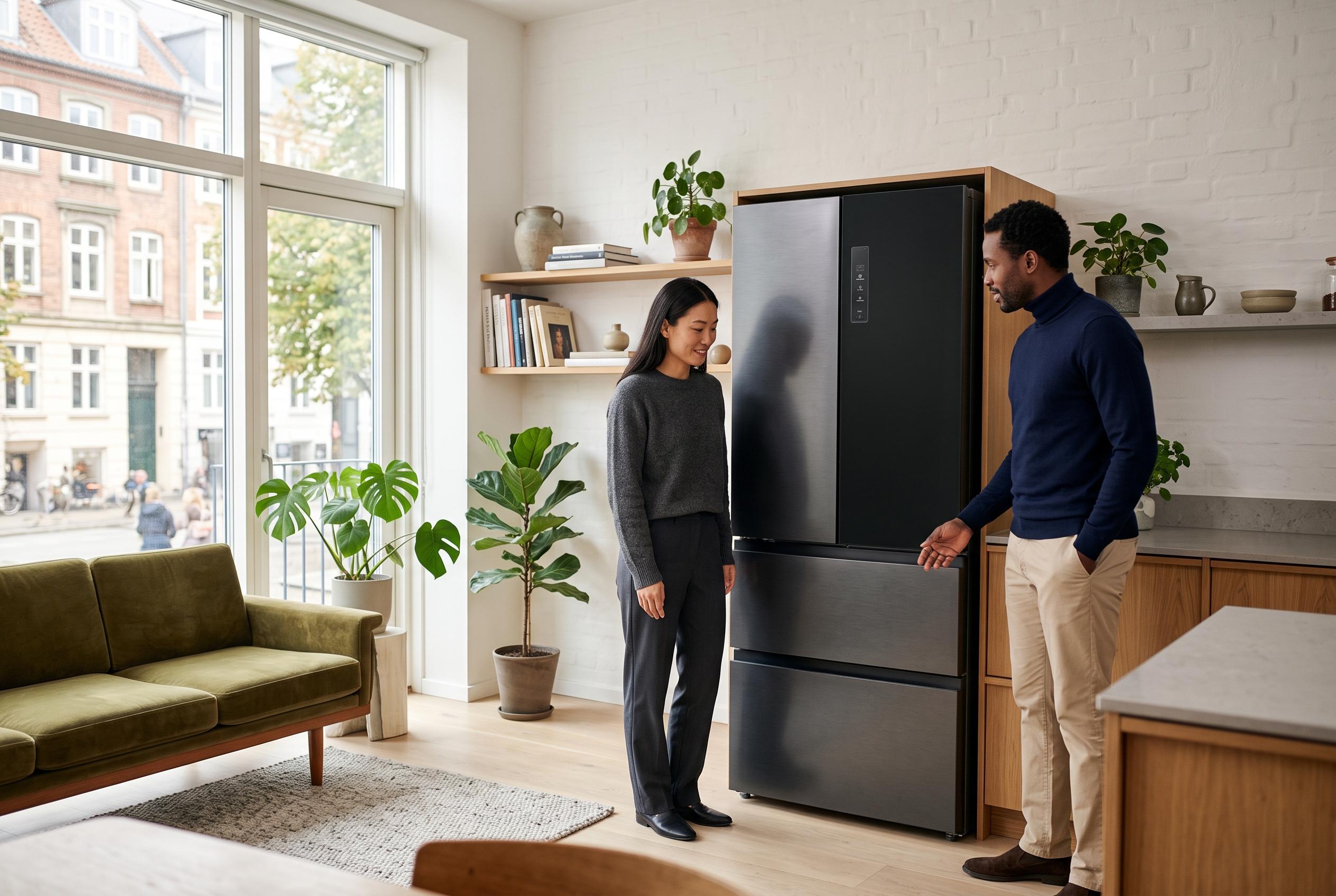

Leading Chinese home appliance manufacturers, facing waning domestic demand and rising costs, are pivoting towards premium products and global expansion, particularly in Europe, as they seek sustainable growth in a challenging market environment.
China’s biggest home appliance makers are finding that rapid expansion no longer guarantees momentum. According to reporting by Edaily, the country’s leading groups are now facing the same pressures that have already weighed on South Korean rivals: weaker demand, rising costs and a more difficult export backdrop. Instead of relying on scale alone, they are leaning harder into premium products, connected-home systems and overseas markets, particularly Europe.
The clearest signs of strain came in first-half results. Haier Smart Home posted revenue of 152.1 billion yuan, down 2.8% from a year earlier, while net profit attributable to shareholders fell 14.3% to 10.3 billion yuan. Its China sales declined 5.2% and overseas revenue slipped 0.4%, leaving little room for growth. Gree Electric’s revenue fell 8.2% to 89.4 billion yuan and net profit dropped 7.9% to 13.3 billion yuan, with its core consumer appliance business also contracting. Midea remained in positive territory, but its increase was modest by its own standards, with revenue up 3.6% to 260 billion yuan and net profit up 1.7% to 26.4 billion yuan, according to company results.
The slowdown is not confined to the top three. Edaily said Hisense’s appliance business recorded revenue of 46.8 billion yuan in the first half, down 5.2%, while net profit fell 20.2% to 1.66 billion yuan. Xiaomi’s IoT and lifestyle products division also weakened, with second-quarter revenue down 19.2% to 31.3 billion yuan. The picture suggests a broad cooling across China’s consumer electronics and home appliance sector.
Several forces are pulling in the same direction. Domestic demand has softened as the property market adjusts and consumer confidence weakens. Government support through the “trade-in old for new” policy has helped, but its effect is fading against a high comparison base from last year. Abroad, North American demand has also softened, while tariffs, higher input costs and currency moves are adding pressure to margins. Haier has said its weaker half-year performance reflected falling appliance demand in China and a softer US market.
That is helping push Chinese manufacturers towards a more international, more premium strategy. Recent presentations at IFA 2026 in Berlin showed how far that shift has gone. Haier, Midea and Hisense all used the event to promote AI-driven home platforms, connected ecosystems and higher-spec products, while Xiaomi made its first appearance as it seeks a stronger European foothold. Organisers said 932 Chinese companies attended this year’s show, underlining the scale of the push into overseas markets. The change mirrors a path already taken by South Korean appliance groups, which have moved towards premium devices, artificial intelligence and heating, ventilation and air conditioning systems as their own markets matured. Industry executives say the key question is no longer whether Chinese brands can sell abroad, but whether they can turn that expansion into durable profit growth.
Disclaimer: This content is intended for informational purposes only. Readers are advised to exercise their own judgement, conduct due diligence, or consult a qualified expert before acting on any information provided.