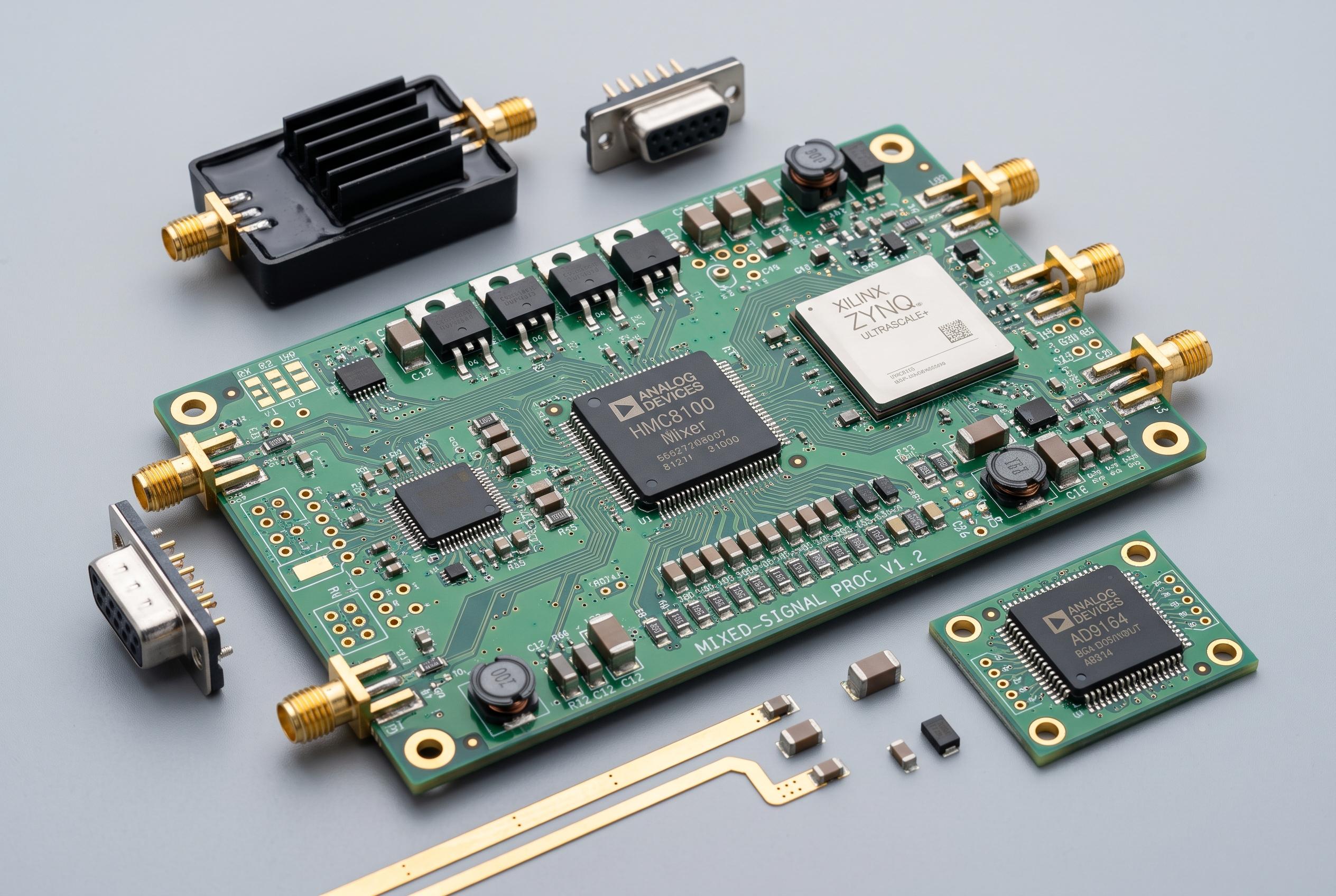

Cirrus Logic sees a broad growth opportunity in high-performance mixed-signal components amid ongoing supply pressures and delayed platform launches, focusing on AI, AR/VR, and industrial applications.
Cirrus Logic said it is seeing a broad pipeline of opportunities in high-performance mixed-signal chips even as it navigates supply-chain pressure and slower platform roll-outs in parts of its smartphone and PC businesses. Speaking at a KeyBanc Capital Markets event, Carl Alberty, executive vice-president of mixed-signal products, said the company has been working for years to move beyond audio and has increasingly been able to demonstrate its intellectual property in functioning silicon rather than just in presentations to customers. Cirrus Logic’s investor materials describe the company as a supplier of low-power, high-precision mixed-signal components for smartphones, laptops, wearables and AR/VR devices.
In smartphones, Alberty said the company does not expect to introduce a wholly new custom silicon product this year, but it still sees room to lift content through higher attachment rates and broader use of existing audio and mixed-signal parts. He pointed to a power integrated circuit under development for 3D sensing, saying its eventual content value could be similar to the power-conversion chip Cirrus Logic already ships. He also said the company sees more room for its camera-controller line, which has now reached a fourth generation in development after three previous iterations over the past five to six years.
Chief financial officer Jeff Woolard said the cost environment remains difficult, with pressure extending beyond memory into system-on-chip supply and back-end manufacturing. He said Cirrus Logic is nearing the end of one foundry agreement and moving towards another that should give it more certainty over both capacity and pricing. Woolard added that the company is also buying some test equipment for outsourced assembly and test partners, a move he said can improve returns and create flexibility if capacity needs shift between providers.
The PC market has been more complicated. Alberty said delayed new-platform launches, supply allocation constraints, memory shortages and weaker second-half demand have slowed programmes that would carry more codec and amplifier content. Even so, he said customer interest remains strong and Cirrus Logic has gained share in commercial PCs and some mainstream tiers. The company is also pushing voice-enablement features for AI PCs, centred on low-power codecs that combine digital signal processing with analogue signal paths for always-on voice detection. Alberty said wider AI functionality remains outside Cirrus Logic’s control, but the company views its voice technology as a key contribution to the category.
Beyond smartphones and PCs, Cirrus Logic is targeting physical-AI applications including voice, force and touch sensing, as well as robotics, autonomous machines, wearables, augmented and virtual reality devices and industrial systems. The company is also deploying a high-performance analogue front end in smart utility metres, starting with electricity metering, and says the same technology could later be adapted for electric-vehicle charging, solar, energy storage, metrology and data-centre uses. Woolard said the group will keep operating expenses disciplined while funding internal growth areas, with mergers and acquisitions remaining its second capital priority after organic investment.
Disclaimer: This content is intended for informational purposes only. Readers are advised to exercise their own judgement, conduct due diligence, or consult a qualified expert before acting on any information provided.