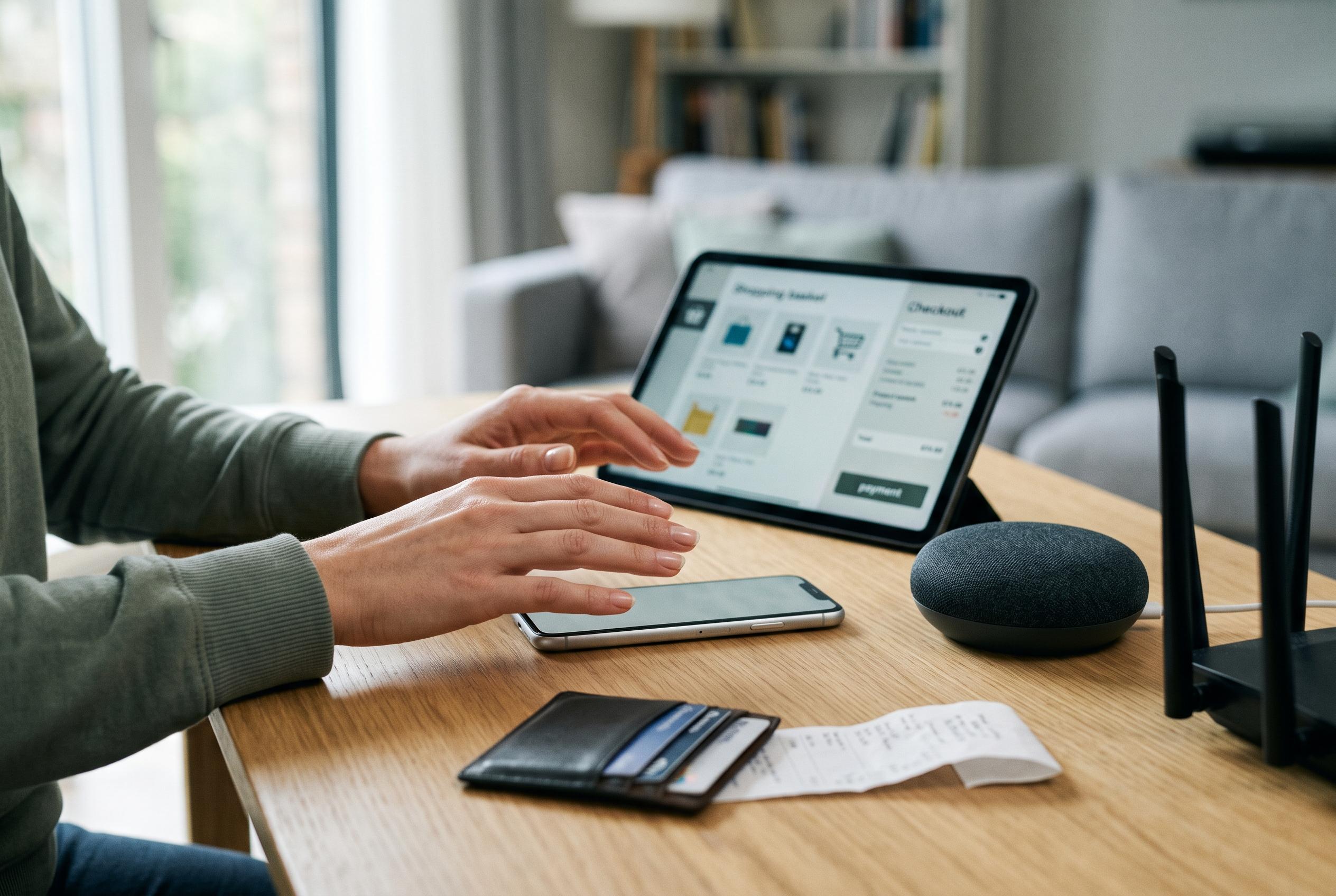

A new survey reveals that nearly half of Americans are now willing to let AI handle purchases, with consumer trust shaping the scope and categories of AI-driven shopping support, signalling a significant shift in retail dynamics.
Consumers are becoming markedly more willing to let artificial intelligence play a direct role in shopping, including some purchases that involve real money and routine household spending. A survey from Global Payments found that nearly half of Americans have either already used, or would consider using, an AI shopping agent, suggesting that the technology is moving beyond product discovery into transaction support.
The company’s research also points to a swift rise in expectations. A year ago, respondents said they thought AI agents would account for 9% of their purchases within five years. That figure has now increased to 15%. The shift suggests that consumers are no longer treating AI as a novelty in retail, but as a tool that could increasingly sit between buyer and seller.
The appetite for AI assistance is strongest where shoppers see convenience and speed rather than high emotional or financial risk. Global Payments said 69% of respondents use AI to find better deals and 63% use it to save time. In the space of a year, shoppers have become more than twice as likely to say they are comfortable letting AI spend up to $50, with especially sharp gains for movie tickets, meal delivery or pickup, gift cards and subscriptions. Even so, trust still appears bounded by price and category, with most consumers willing to allow AI to spend up to $100 on groceries, clothing and footwear, though enthusiasm eases for electronics and luxury items.
That caution is consistent with other recent research. NielsenIQ said in May that 42% of consumers had used at least one AI tool to shop in the previous month, but added that most were still not ready to hand over full decision-making to autonomous agents. A separate NIQ report released on 24 September 2026 said the share of US consumers using at least one AI shopping tool in the prior month had risen to 51%, the first time it had moved above half of respondents, with product recommendations and personal shopping assistants among the most common uses.
The broader market data also shows that AI is now shaping shopping habits well beyond the checkout. An Interactive Advertising Bureau study with Talk Shoppe found AI had become the second most influential source in consumer shopping decisions after search engines, ahead of brand websites and personal recommendations. Earlier Accenture data, as reported by Statista, pointed to the strongest early adoption in travel and leisure categories such as flights, hotels and resorts, while lower-stakes retail lines, including clothing, beauty and electronics, attracted more limited but still meaningful interest. Taken together, the surveys suggest a market that is moving steadily towards AI-assisted commerce, even if most shoppers still want to keep the final say.
Disclaimer: This content is intended for informational purposes only. Readers are advised to exercise their own judgement, conduct due diligence, or consult a qualified expert before acting on any information provided.